
Camping at Indiana Dunes: 3 NPS Campgrounds, Reservations & Fees
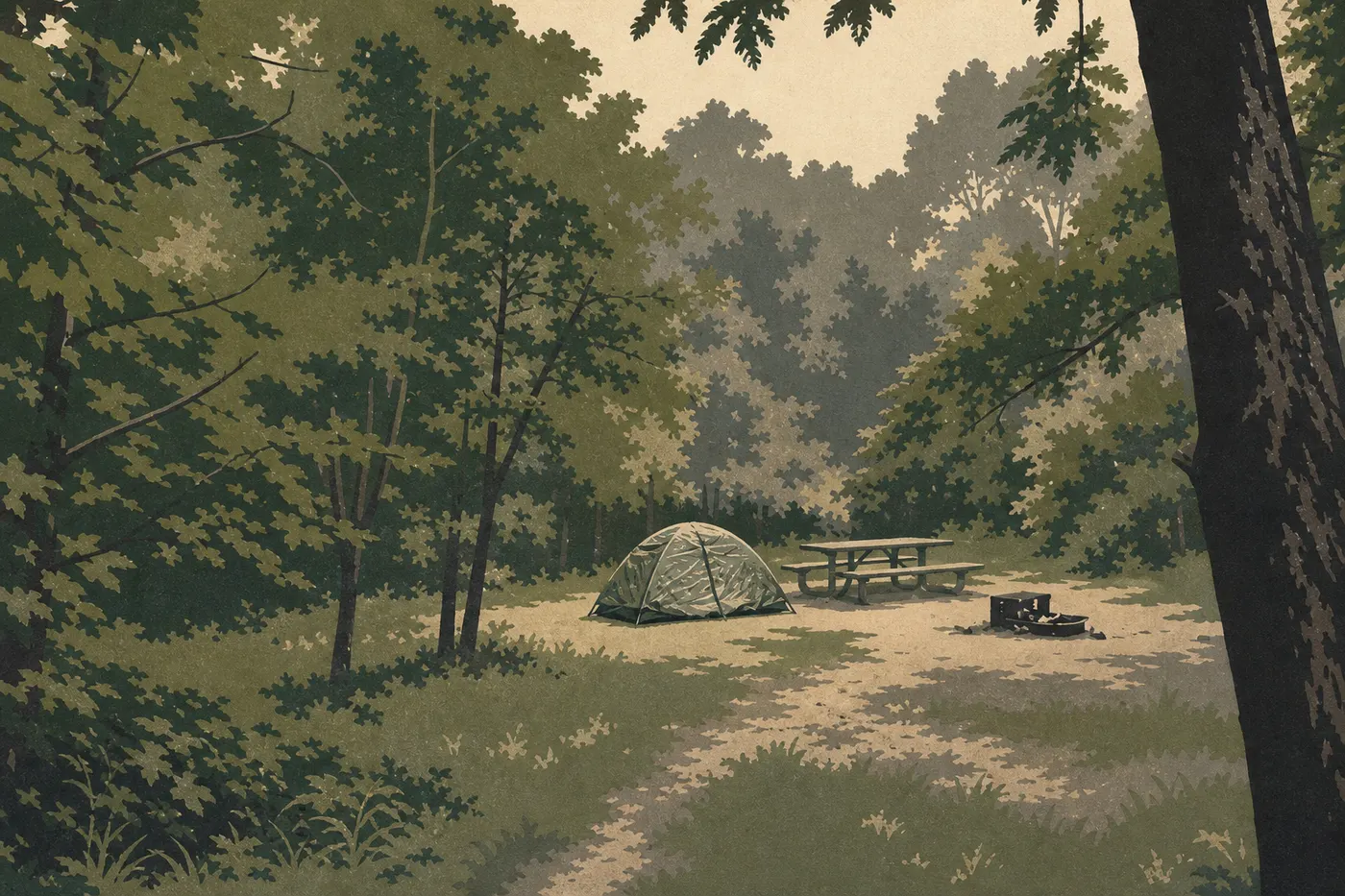
The short answer: yes, you can camp at Indiana Dunes National Park. The NPS manages three campgrounds with 72 sites in all, and you can reserve every one through Recreation.gov. Dunewood Campground is the largest, with 66 sites for tents and RVs. Two smaller options round out the lineup: five walk-in sites at Central Avenue Walk-in Sites and one group site at Dunbar Group Site. In summer, sites disappear within hours on weekends from June through August.
Campgrounds in the park (3)
- Campground Dunewood Campground recreation.gov · 66 sites Directions ↗
- Campground Dunbar Group Site recreation.gov · 1 sites Directions ↗
- Campground Central Avenue Walk-in Sites recreation.gov · 5 sites Directions ↗
 Base map © OpenStreetMap · © CARTO
 Indiana Dunes campgrounds by the numbers
3 official campgrounds inside the park, 72 campsites in total, 72 of them reservable.
| Campground | Sites | Booking | Fee / night | Open | Amenities |
|---|---|---|---|---|---|
| Dunewood Campground | 66 (66 tent only, 53 RV only) | Reservation | from $25 | Closed Nov 2 to Mar 31 | toilets*, showers*, potable water*, dump station*, cell service |
| Central Avenue Walk-in Sites | 5 (5 tent only) | Reservations and first come | from $25 | Closed Sep 30 to May 1 | toilets*, cell service |
| Dunbar Group Site | 1 (10 tent only, 30 group) | Reservation | from $100 | Closed Nov 2 to Mar 31 | toilets*, cell service |
Source: National Park Service (NPS API), retrieved October 6, 2026. Fees and dates change: check the campground page before you go.
Can you camp inside Indiana Dunes?
Yes. Dispersed camping is prohibited, so you can't spend the night outside a designated site, but the NPS maintains three official campgrounds that are generally open from April through October. None stays open year-round. The park's general areas are accessible year-round, while some areas such as West Beach have their own hours. Check the NPS website before you arrive.
Indiana Dunes is a compact park wedged between Lake Michigan and the Chicago metropolitan area. You don't come here for complete isolation. You come for the unusual combination of dunes, forest, and beach less than two hours from the city.
Campgrounds in the park
Dunewood Campground
This is the national park's largest campground, with 66 tent and RV sites in a wooded setting close to several trails. On-site amenities include restrooms, showers, running water, a dump station, and cell service. It's open from April 1 through October 31 and closed from early November through late March. The fee is $12 per night. Reservations are required through Recreation.gov. Showers and a dump station are unusual amenities for an NPS campground this size, and they're a real advantage if you're arriving in a self-contained RV or after a long hike.
Dunewood is intentionally simple. Birds at sunrise and sunsets over the dunes more than make up for the lack of electrical hookups.
Two other NPS campgrounds round out the options in the park. Central Avenue Walk-in Sites has five sites for tents only, accessed on foot, and operates on a mixed system: some sites are reservable through Recreation.gov, while others are first-come, first-served. It's open from early May through late September and closed from October through early May. The fee is also $12 per night. Dunbar Group Site is for groups, with room for 30 people in tents. Reservations are required, and the fee is $100 per night. It's open from April 1 through October 31 and closed from early November through late March. The difference between the two fees, $12 versus $100, comes entirely from capacity. Dunbar only makes sense for a group.
Indiana Dunes State Park Campground
This campground is managed separately by the State of Indiana, not the NPS. It's in the adjacent state park, a few miles from the national park. Electrical hookups for RVs are available, and there are more sites. Reserve through ReserveAmerica (indiana.reserveamerica.com). Note that the state park entrance fee is separate from the national park pass.
RV vs. tent camping: choosing a site
RVs are allowed at Dunewood (NPS), but there are no hookups. The dump station and running water are available on-site to help you manage your supplies. Central Avenue Walk-in Sites is for tents accessed on foot, and Dunbar is for tent groups only. None of the three NPS campgrounds offers electrical hookups. A maximum vehicle length may apply at some Dunewood sites, so check the details on Recreation.gov before booking.
For a full-hookup RV site, Indiana Dunes State Park Campground is the most immediate option. Private campgrounds along U.S. Highways 12 and 20 and outside the park add more choices. See the next section. For a deeper look at visiting by RV, the Indiana Dunes RV camping guide covers RV-friendly campgrounds and rules specific to RVs.
For tent campers, Dunewood works well for two or three nights. It's shady and quiet, and it's well placed for combining beach time and trails from the campground.
Camping nearby: private campgrounds outside the park
When the park fills up, which happens often on July and August weekends, private campgrounds along U.S. Highways 12 and 20 take over. The towns of Chesterton, Portage, and Michigan City have most of the options, including tent sites, RV sites with water, electric, and sewer hookups, and sometimes rental cabins. Rates are often higher than the NPS's $12, but the extra services make up the difference.
For alternatives to camping, the Indiana Dunes lodging overview and the selection of hotels and lodges near the park round out your options.
Dispersed camping and backcountry camping
Indiana Dunes doesn't offer backcountry camping in the strict sense. The park is too small and too intertwined with a developed area to allow overnight stays outside designated sites. Spending the night anywhere other than an official campground is prohibited.
If fully self-sufficient backcountry camping appeals to you, other parks in the region offer more developed backcountry programs. Every Indiana Dunes trail works as a day hike or half-day outing from the campground.
How and when to reserve a campsite at Indiana Dunes
For the three NPS campgrounds, Dunewood, Central Avenue Walk-in Sites, and Dunbar Group Site, reserve through Recreation.gov up to six months in advance. That's the general NPS rule. June, July, and August weekends go within the first few hours after the reservation window opens. Central Avenue Walk-in Sites offers a few first-come, first-served sites, but those five spots fill early during peak season.
For Indiana Dunes State Park, reserve through ReserveAmerica (indiana.reserveamerica.com), a separate system with its own booking window.
Practical tip: if you're targeting a July weekend, open Recreation.gov on the exact day the six-month window opens, at 8 a.m. Eastern Time. Wait a few days and you'll usually be choosing among weekday dates and the least requested sites.
In the off-season, from September through May, last-minute reservations are still possible and can even be easy to find on weekdays.
Fees: how much does a night of camping cost at Indiana Dunes?
NPS fees are fixed and listed on Recreation.gov: $12 per night at Dunewood Campground and Central Avenue Walk-in Sites, and $100 per night at Dunbar Group Site. Recreation.gov service fees are added to the reservation.
The park entrance fee, $25 per private vehicle, $15 per person on foot or by bicycle, and $20 for motorcycles, is not included in the camping fee. Pay it separately at the entrance unless you already have an Annual Pass ($45 per year) or an America the Beautiful Pass. Our National Park Fees & Passes page explains entrance fees and passes.
Camping safety and good practices
Indiana Dunes has no bears or alligators, but a few rules are worth spelling out.
Nighttime wildlife: raccoons and foxes regularly visit the campgrounds at night. Never leave food out in the open, even for a few minutes. Store food, trash, and scented products in your vehicle's trunk or in the provided storage lockers. Keeping food in your tent is a sure way to attract unwanted visitors.
Fires: fires are allowed only in designated fire rings. During drought conditions, the NPS may impose a total fire ban. Check current alerts on the park website before you leave.
Swimming: Lake Michigan can produce strong rip currents, especially with a north wind. Colored flags indicate the risk level at each beach. A red flag means swimming is prohibited, no exceptions. Don't underestimate these conditions, even if you're a strong swimmer. The Indiana Dunes guide covers swimming conditions and the safety rules to follow.
Weather: summers are hot and humid. The average summer temperature is above 77°F, and the park's all-time record is close to 106°F, recorded in 1934. Severe thunderstorms are common in June, the wettest month, and July. Check the forecast every evening and set up camp away from isolated tall trees. Indiana Dunes temperatures and precipitation, month by month can help you choose the best time to visit.
Which campground should you choose?
You're arriving by tent for two or three nights. Dunewood Campground is the logical base: the largest of the three NPS campgrounds with 66 sites, centrally located in the park, with direct trail access, on-site showers, and reservations through Recreation.gov for $12 per night.
You prefer a walk-in site without a car at the campsite. Central Avenue Walk-in Sites has five tent-only sites and offers that option, with a few sites available first-come, first-served. It's open from May through late September.
You're organizing a group outing. Dunbar Group Site is the only NPS site set up for groups, with room for up to 30 people. Reservations are required through Recreation.gov at $100 per night, and it's open from April through late October.
You're traveling by RV and need hookups. Start with Indiana Dunes State Park Campground or private campgrounds along U.S. Highways 12 and 20. Dunewood allows RVs, but it has no hookups.
You're visiting in the off-season or during the week. Dunewood and Dunbar stay open through late October, while Central Avenue stays open through late September. Outside those periods, the NPS campgrounds are closed, so look to the state park or private campgrounds instead.
You're visiting with kids. Dunewood works well for quiet nights. Pair it with the family activities guide for Indiana Dunes and our Things to Do page to plan your days. The Indiana Dunes guide brings together everything you need to prepare for your visit.
Frequently asked questions
Can you camp at Indiana Dunes?
Yes. Indiana Dunes National Park has three NPS-managed campgrounds with 72 sites in all. Dunewood Campground is the largest, with 66 tent and RV sites. Central Avenue Walk-in Sites has five sites, and Dunbar Group Site rounds out the options for walk-in campers and groups.
Which campground should you choose at Indiana Dunes?
To stay in the national park with direct trail access and on-site showers, Dunewood Campground is the natural choice, with 66 sites at $12 per night. For a walk-in site without a car, Central Avenue Walk-in Sites works well for tent campers. For a group, Dunbar Group Site is the only suitable option at $100 per night. For electrical hookups, Indiana Dunes State Park Campground better meets RV campers' needs.
When should you reserve a campground at Indiana Dunes?
As early as possible, ideally six months ahead for June through August weekends. The reservation window opens on Recreation.gov exactly six months out, at 8 a.m. Eastern Time. Central Avenue Walk-in Sites offers a few first-come, first-served sites, but those five spots go quickly during peak season. In the off-season, a few days' notice is usually enough.
How do you camp at Indiana Dunes?
Reserve a site through Recreation.gov for the three NPS campgrounds, pay the park entrance fee when you arrive ($25 per private vehicle), and then set up at your designated site. Camping outside an official site is prohibited throughout the national park.
How much does a night of camping cost at Indiana Dunes?
$12 per night at Dunewood Campground and Central Avenue Walk-in Sites, and $100 per night at Dunbar Group Site. Recreation.gov service fees are added to the reservation. The park entrance fee, $25 per vehicle, is separate unless you have an Annual Pass ($45 per year) or an America the Beautiful Pass.