
Hot Springs Wildlife: Animals to See and Where to Find Them
Hot Springs National Park is a place of contrasts. It's tucked inside a city, crossed by thermal springs reaching 144°F, yet covered in Ouachita hardwood forest that supports a surprisingly rich variety of wildlife. The five species to know before you even arrive are the white-tailed deer, wild turkey, nine-banded armadillo, raccoon, and great horned owl. You can find all of them year-round, starting on the park's first trails.
Hot Springs' Signature Animals
White-tailed Deer
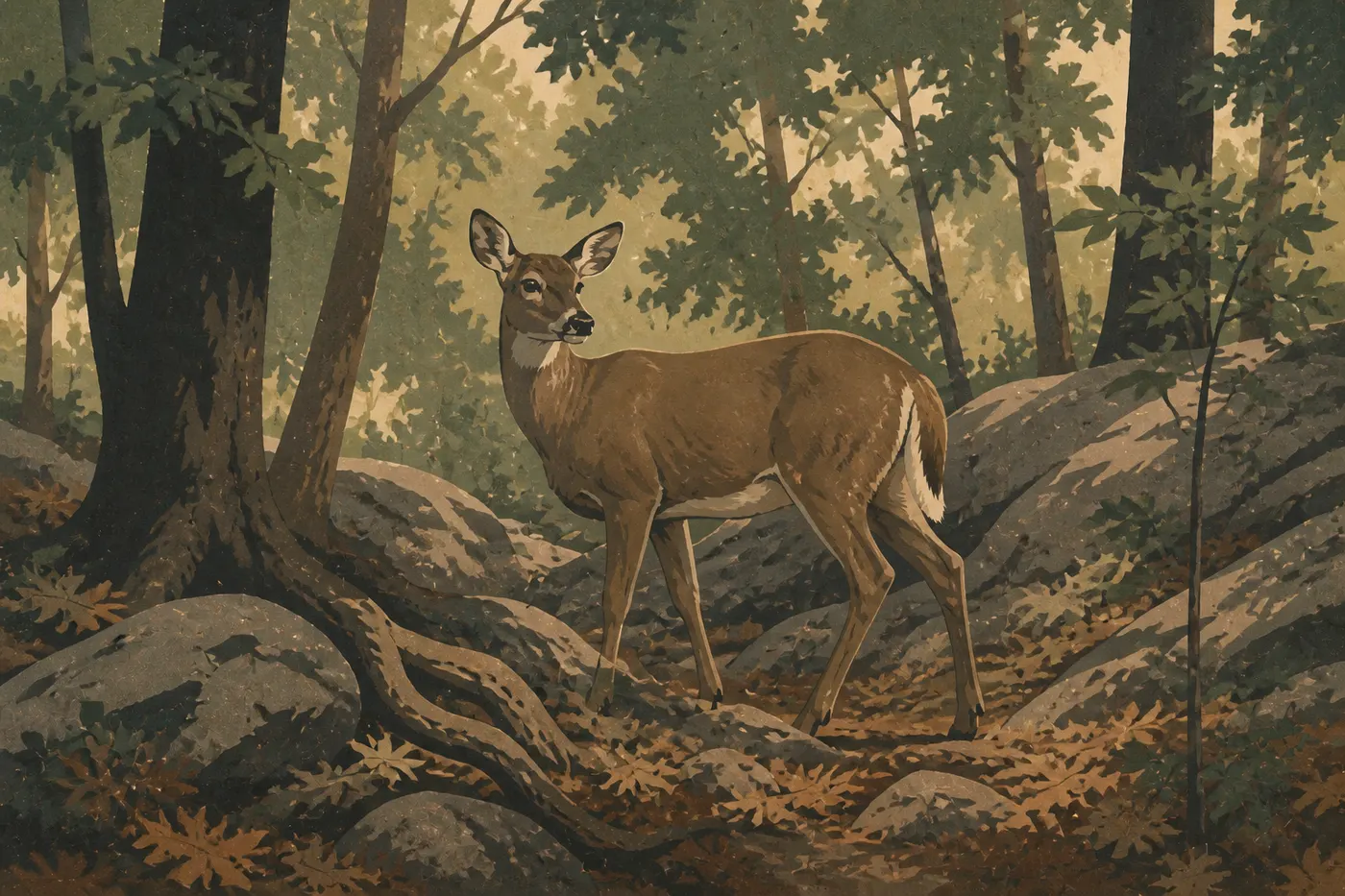
The white-tailed deer (Odocoileus virginianus) is the most visible resident of the park's wooded hills. Its tawny coat turns grayish brown in winter. Bucks grow antlers from June through January, then shed them and grow new ones in spring. An adult stands about 35 to 39 inches at the shoulder.
Deer frequent forest edges at sunrise and sunset, especially on the slopes of Hot Springs Mountain and North Mountain. Set out before 8 a.m. on the Sunset Trail or Hot Springs Mountain Trail. Your chances of spotting a group are very good, especially in fall during the rut.
Wild Turkey
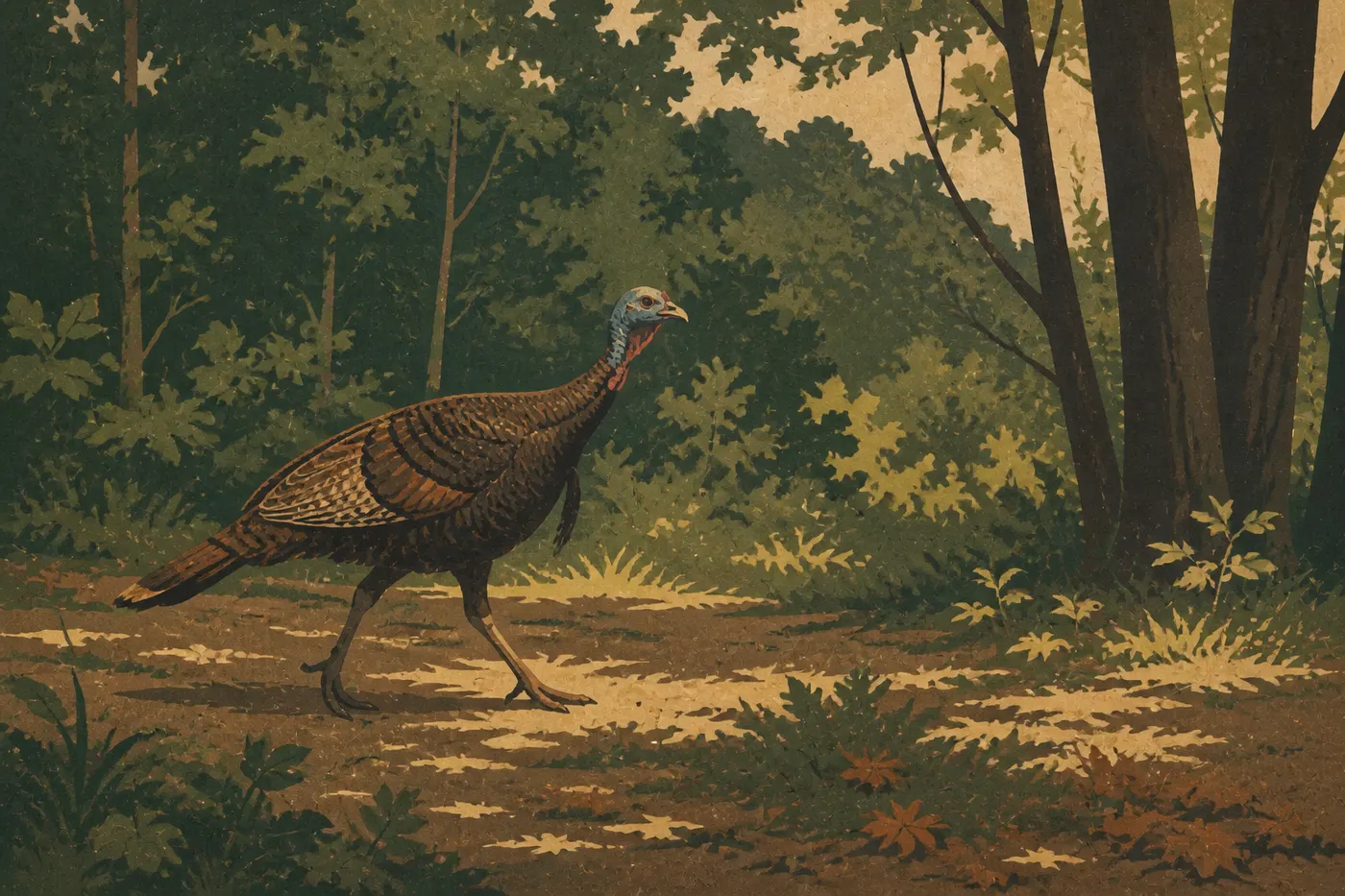
The wild turkey (Meleagris gallopavo) is the park's largest land bird. Males can weigh more than 22 pounds and grow over 43 inches long. Their plumage has an iridescent bronze sheen with green and copper highlights that shift in the light. A male's bright red wattles are easy to recognize from a distance.
Turkeys travel in groups, especially in the morning, searching beneath oak trees for acorns, berries, and insects. In April and May, males display with their tails fanned out, making their feathers vibrate with a low rustle. That's the easiest time to spot them.
Nine-banded Armadillo
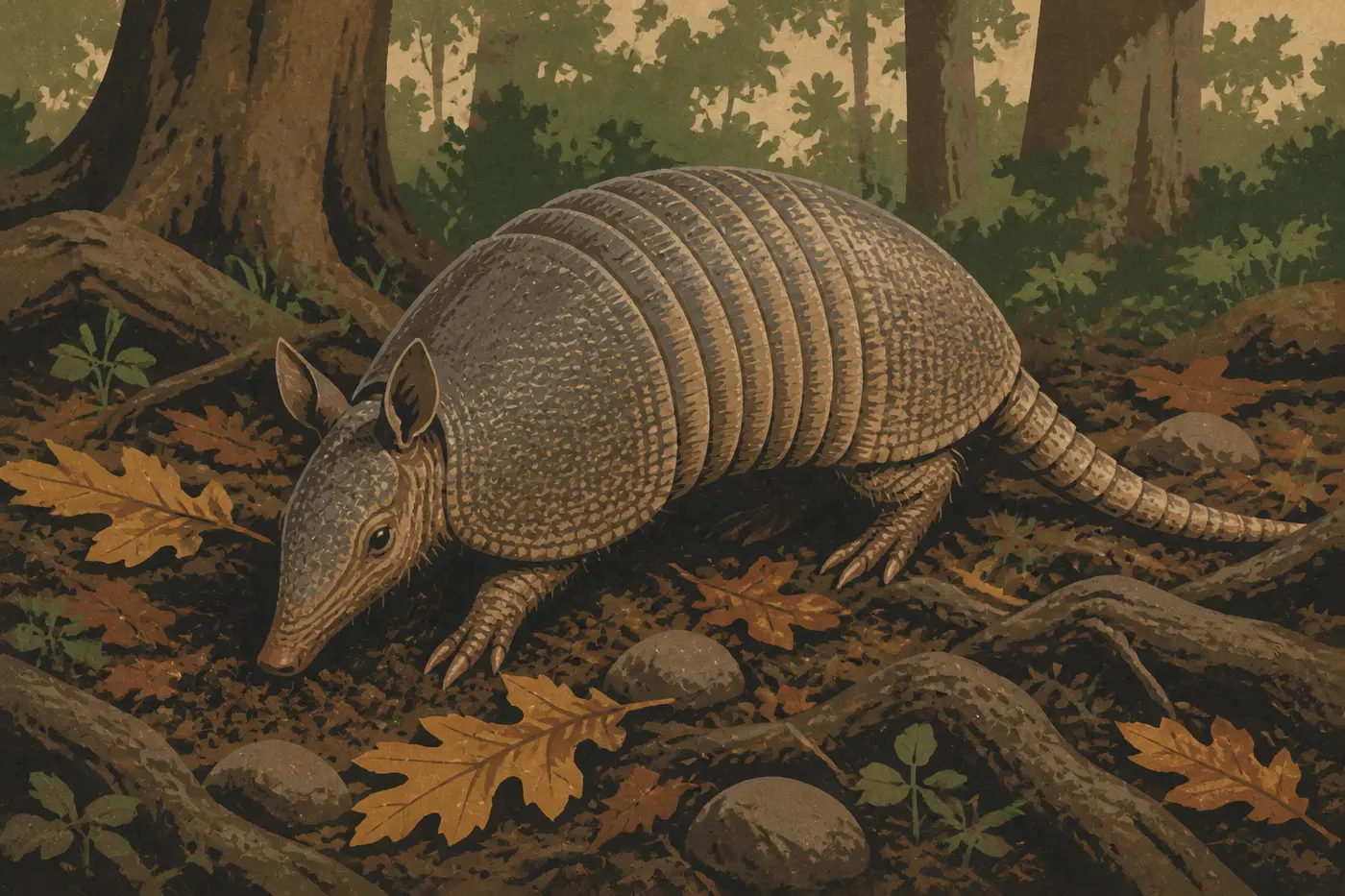
The nine-banded armadillo (Dasypus novemcinctus) is one of Arkansas's most unusual species. Its jointed shell, elongated snout, and rolling gait make it unmistakable. It measures about 16 to 22 inches long, including the tail.
It rummages through the forest floor for insects, larvae, and worms. Its eyesight is poor, so it relies on its sense of smell. You can sometimes get surprisingly close, as long as you don't make any sudden noise. Contrary to popular belief, it doesn't roll into a ball. Only South America's three-banded armadillo can do that.
Raccoon
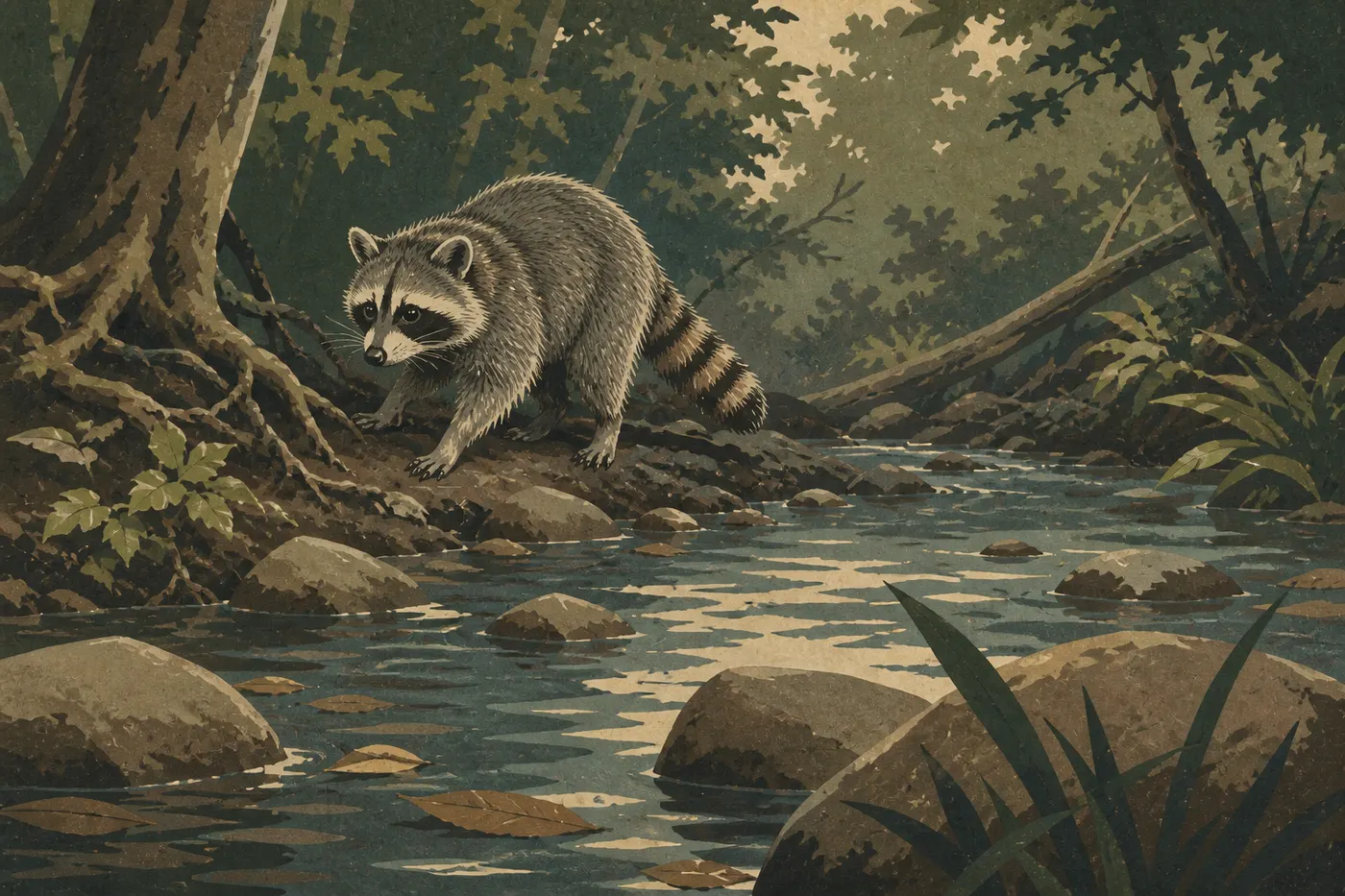
The raccoon (Procyon lotor) is a born opportunist. Its dexterous front paws and tolerance of people make it a natural resident of urban edges, which is exactly the setting around Hot Springs. It's mainly nocturnal. During the day, only its tracks, with five distinct toes like a tiny hand, give away its presence along the streams.
Don't feed it. A raccoon that gets used to people loses its natural wariness, may become aggressive, and can carry leptospirosis or, more rarely, rabies.
Great Horned Owl
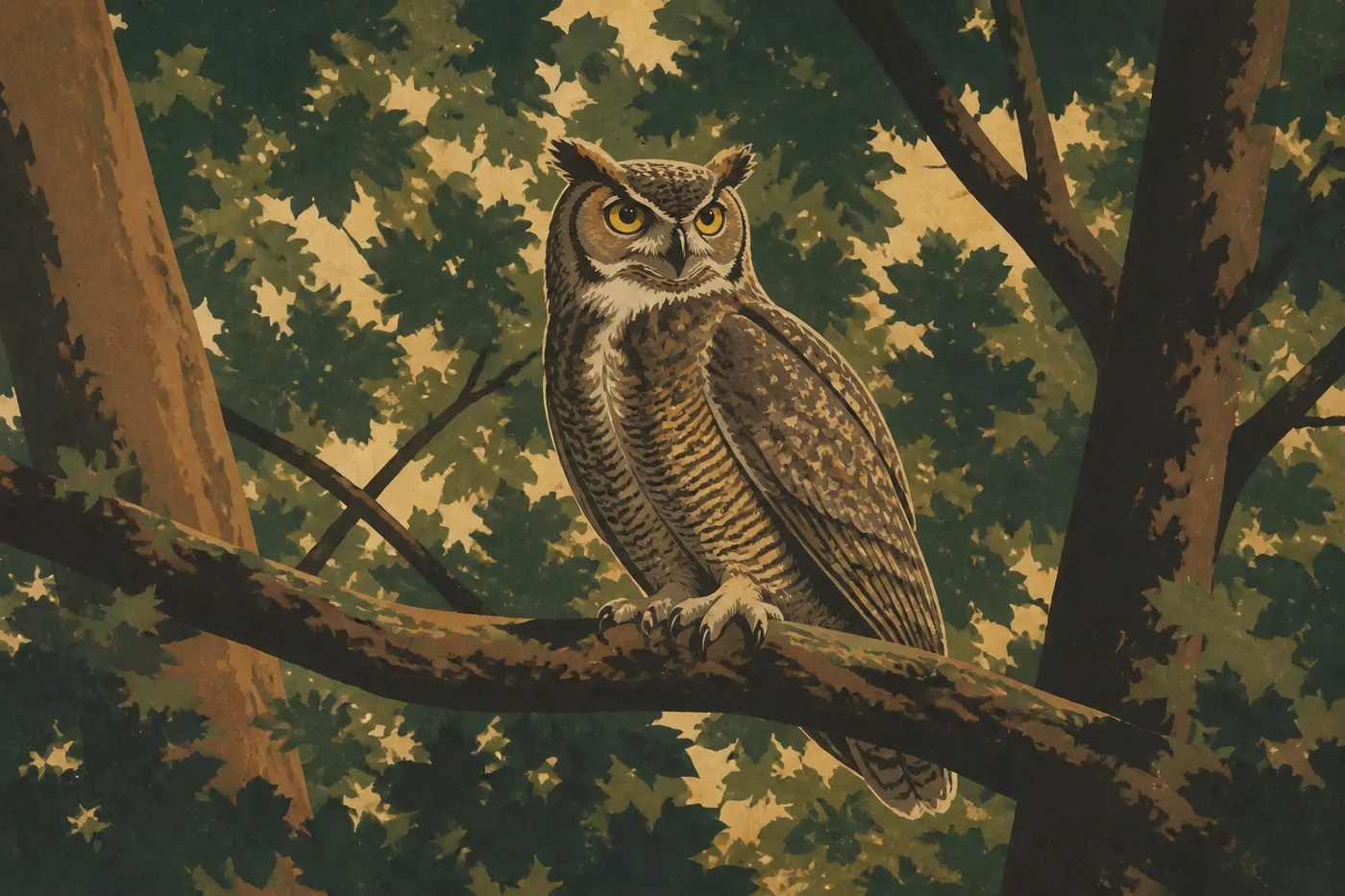
The great horned owl (Bubo virginianus) is the region's largest nocturnal raptor. Its feather tufts rising above its yellow eyes create an unmistakable silhouette. It starts hooting as night falls from the mature trees on the slopes.
It hunts rabbits, raccoons, rodents, and even other raptors. The best time to hear it is January and February, during courtship, when males and females call back and forth from their respective perches.
Where to See Wildlife in Hot Springs
The park sits on three wooded elevations: Hot Springs Mountain, North Mountain, and West Mountain. You can reach each one by car from 8 a.m. to 10 p.m. This is where most of the wildlife gathers, away from downtown.
Sunset Trail (about 8.0 miles for the full loop, accessible from several trailheads). This is the park's main long-distance trail. It winds along wooded ridges where deer and turkeys are common at dawn and dusk. You'll also see woodpeckers, including hairy and red-headed woodpeckers, in the old oaks.
Hot Springs Mountain Trail. This shorter trail climbs toward the observation tower and offers open views. Eastern gray squirrels (Sciurus carolinensis) are nearly everywhere, often seeming to escort you along the path. Look toward the heights for red-tailed hawks gliding overhead.
Grand Promenade and the area around Bathhouse Row. The setting is more urban, but nearby wooded areas attract blue jays, American crows, and black-capped chickadees. After dark, raccoons and Virginia opossums (Didelphis virginiana) visit the area.
Streams and wetlands. Several park streams receive a mix of thermal and cold water, so they stay slightly warmer in winter. Eastern box turtles (Terrapene carolina) favor the shady banks of these waterways. They move slowly, which makes them one of the easiest species to observe.
When to Watch Wildlife in Hot Springs
Dawn and dusk are the two windows you shouldn't miss. Arkansas's summer heat, with the heat index sometimes topping 109°F in July and August, drives most mammals into hiding during the middle of the day. In winter, the wind chill can drop below 16°F, but animals remain active and are often easier to see because the vegetation has thinned out.
Spring, from March through May, is bird breeding season. Songs, displays, and nesting are in full swing. Fall, from September through November, is deer rutting season. Bucks move around more and are easier to spot, sometimes at the edges of mountain roads.
Nocturnal species, including great horned owls, raccoons, armadillos, and opossums, become active at sunset. Mountain roads stay open until 10 p.m., leaving a good evening window for watching from your vehicle. For month-by-month climate details, the When to Visit Hot Springs guide provides seasonal benchmarks.
Predators and Large Animals in Hot Springs
Hot Springs isn't a park known for large predators. Fragmented habitat and the nearby city explain why black bears and mountain lions are absent from the park itself. The predators that are present are medium-sized.
The coyote (Canis latrans) is the main land predator. You may hear one howl from the ridges as night falls. It hunts rabbits and rodents and occasionally takes young deer. In areas near town, it adapts to human garbage, which is one more reason never to leave food scraps accessible in picnic areas.
The copperhead (Agkistrodon contortrix) is the only venomous species in the park that warrants serious caution. It favors piles of dead leaves, flat rocks, and damp undergrowth. Its reddish-brown camouflage against the forest floor makes it hard to spot. Watch where you step, especially off trail.
The red-tailed hawk is the main daytime raptor. Its wingspan reaches about 47 inches. It soars above the ridges, spots rodents from above, and dives silently. Cooper's hawks are smaller and faster. They hunt in dense forest, waiting for birds to come within range.
The white-tailed deer is still the largest wild mammal living in the park. An adult buck can weigh between 132 and 287 pounds, depending on the season and its condition.
Watching Wildlife Safely
Required distance: at least 100 feet from any wild mammal and 50 feet from birds and reptiles. These are legal minimums. If an animal changes its behavior when it sees you, such as stopping, staring, or changing direction, you're too close. Back away calmly.
Never feed any animal. The rule applies to bread crusts for raccoons just as much as peanuts for squirrels. An animal conditioned to receive human food loses its survival instincts and often ends up being euthanized by the park because it poses a public safety risk.
Copperheads. If you're bitten, call 911 immediately. Immobilize the affected limb by keeping it level with your heart, stay calm, and get to emergency care. Don't try to suck out the venom, apply a tourniquet, or make an incision.
When hiking off marked trails: Wear high-top shoes that cover your ankles, and look before placing your hands on rocks or logs. Snakes often warm themselves on flat rocks exposed to the sun.
Trash and food: Always use the wildlife-resistant trash cans in picnic areas. Raccoons and coyotes quickly learn to associate certain spots with human food.
In Brief: Species Not to Miss and Where to Find Them
| Species | Best spot | Best time |
|---|---|---|
| White-tailed deer | Sunset Trail, Hot Springs Mountain | Dawn / dusk |
| Wild turkey | Oak woods, clearings | Early morning |
| Nine-banded armadillo | Forest edge, leaf litter | Dusk / evening |
| Raccoon | Streams, Grand Promenade | Night |
| Great horned owl | Mature trees on the slopes | Night (Jan. and Feb.) |
All of these animals live here year-round. Because the park is compact, a morning on the Sunset Trail already covers the main wildlife-viewing spots. The Hot Springs hiking guide covers the routes, their elevation gains, and advice on choosing the right footwear. If you're planning your trip, the complete Hot Springs guide brings together the park's essentials in one place.
Frequently Asked Questions
What kinds of animals live in Hot Springs' hot springs?
No vertebrates live in the thermal springs themselves. Water temperatures at the spring outlets reach about 144°F, which is lethal to animals. Thermophilic microorganisms, including cyanobacteria and archaea, colonize the cooling channels. The park's visible wildlife lives in the surrounding hill forests, not in the springs.
Do animals go into the hot springs?
Animals don't visit the high-temperature springs. Some streams fed by a mix of thermal and cold water can attract mammals, including deer and raccoons, for drinking in winter because they're warmer than ordinary waterways. The behavior is subtle and difficult to observe from the trails.
What's the most common animal in Hot Springs?
The most common animal is the eastern gray squirrel (Sciurus carolinensis), which appears on every trail at all hours. Among medium-sized mammals, white-tailed deer and wild turkeys are the species visitors report most often.
What's the largest animal in Hot Springs?
The largest wild animal living in the park is the white-tailed deer. An adult buck stands 35 to 39 inches at the shoulder and can weigh up to 287 pounds in a good season.
What predators live in Hot Springs?
The park's predators include coyotes, the main land predator, along with red-tailed hawks and great horned owls. Large predators such as black bears and mountain lions are absent from the park. The copperhead is the only venomous animal to watch for.
What animals are active at night in Hot Springs?
Great horned owls, raccoons, Virginia opossums, and nine-banded armadillos are the main nocturnal species. Armadillos become active at dusk, even in winter. Since the mountain roads stay open until 10 p.m., a slow drive with the windows down is a good way to spot them.