
Hot Springs National Park: The Complete Visitor Guide
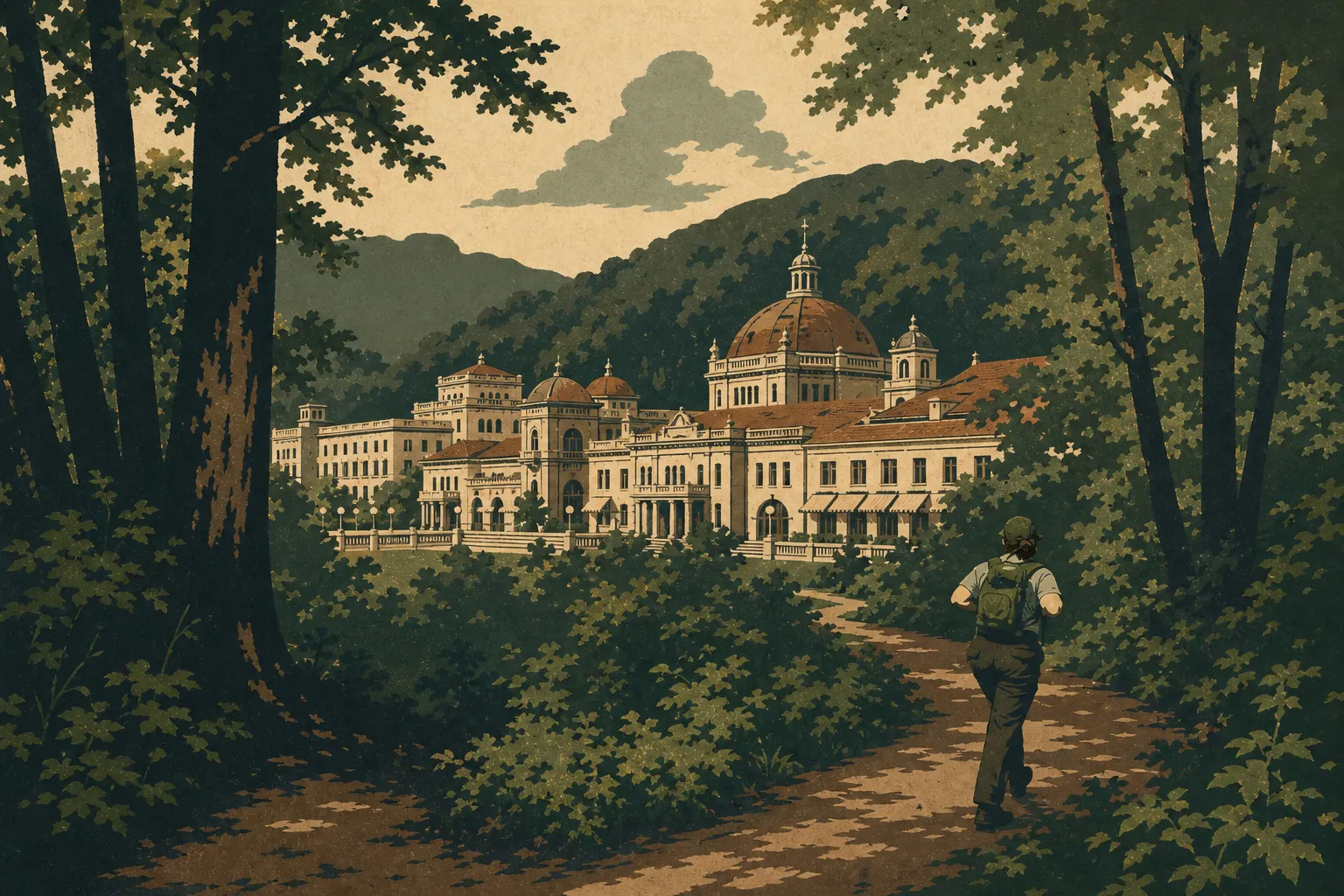
Hot Springs is the most unusual national park in the American West. It has no gated entrance or canyon views. Instead, a city wraps around it, and 47 hot springs bubble up at the foot of a wooded mountain in the heart of Arkansas. Visitors come to stroll along Bathhouse Row, fill a water bottle with naturally hot spring water, take a real thermal bath in a century-old bathhouse, and climb to the top for views of the Ouachita Mountains. Allow half a day for the highlights, or one to two days if you want to take your time. This is a park for leisurely exploring, not athletic achievement, and that is exactly what makes it so relaxing.
Think of the park as a small spa town combined with a forest preserve. Here's how to organize your visit, area by area, with the practical information you need.
Hot Springs at a glance: where the park is and how to get there
The park lies in Arkansas, in the south-central United States, and straddles the city that shares its name. It is unusual in that the park and downtown are woven together. Bathhouse Row runs along Central Avenue, the main thoroughfare, and the protected hills begin just steps from the shops.
From Little Rock, the state capital and nearest airport, plan on about an hour's drive southwest. Take Interstate 30 toward Texarkana, then Exit 111 onto US 70 West, before reaching Central Avenue from the north. From Texarkana, take I-30 East and then Arkansas 7. The park is open year-round, and there is no entrance fee.
Little Rock is the obvious gateway if you're flying in or taking a road trip. For route details, regional shuttles, and downtown parking, see our Access & Transportation page.
Entrance fees, passes, and reservations
The good news for your budget is that entering Hot Springs National Park is free. There is no entrance station, entrance fee, or pass to show when you walk along Bathhouse Row, take the Grand Promenade, or drive into the park's mountains. You don't need an America the Beautiful pass here.
What costs money are the activities: a traditional bath in a bathhouse, admission to the Hot Springs Mountain observation tower, and some camping stays. Bath prices vary by establishment and package, whether you choose a bath only, a massage, or other treatments. We cover the prices of paid experiences and how federal passes work on our editorial Fees & Passes page.
Here's a practical tip. If you want a traditional thermal bath on a busy weekend, book ahead with the bathhouse. Appointments fill quickly during the high season.
Reservations, permits, and rules to follow
Reservations
You don't need any reservation to enter the park. Unlike Yosemite or Zion, there is no timed entry permit. Arrive, park, and explore.
You should, however, book thermal treatments ahead of time at Quapaw Baths & Spa, especially on weekends or during local festivals. The Jazz & Blues Festival and Hot Springs Oktoberfest draw plenty of visitors. Buckstaff Baths operates on strict appointment times, so check availability before you leave.
Permits
You don't need a permit to hike in the park. The trails are open to everyone.
Rules to follow
- Pets: allowed in the park on a leash no longer than 6 feet. They're not allowed inside the bathhouses.
- Natural springs: never bathe in the wild springs. The water reaches about 144°F as it emerges from the ground, so the risk of serious burns is real. For a thermal bath, use one of the authorized bathhouses.
- Public areas (Arlington Lawn, Grand Promenade, Bathhouse Row sidewalks, Reserve Street, and Fountain Street): open from 5 a.m. to 10 p.m. Outside those hours, traffic is allowed only to pass through.
- Drones: prohibited within park boundaries without prior NPS authorization.
Getting around Hot Springs
There are two ways to experience the park, and the good news is that you can combine them in one day.
Start on foot. You can explore the entire thermal district, including Bathhouse Row, the Grand Promenade, and the hot water fountains, from downtown. It is flat, compact, and pleasant. Park once and leave the car behind for a few hours.
Then get in the car to gain some elevation. Scenic roads climb toward the summits of Hot Springs Mountain, North Mountain, and West Mountain. These mountain roads are open to traffic from 8 a.m. to 10 p.m. The park's public areas, including Arlington Lawn, the Grand Promenade, the Bathhouse Row sidewalks, Reserve Street, and Fountain Street, are accessible from 5 a.m. to 10 p.m. Stick to these hours because the summit-road gates close at night.
Because Bathhouse Row is right in town, traffic and parking can get tight on summer weekends. Our parking recommendations and alternatives are collected on our Getting Around page.
How much time do you need to visit Hot Springs?
A half-day is enough for the highlights: strolling along Bathhouse Row, visiting the Fordyce Bathhouse Visitor Center and Museum, walking the Grand Promenade, and tasting the water from the hot water fountains.
A full day lets you add a real thermal bath, a drive or hike to the Hot Springs Mountain tower, and one or two forest hikes.
Two days is the comfortable pace. You can take a bath without rushing, hike more, and still have time for the lakes and natural areas around town. After that, Hot Springs works better as a base for exploring the Ouachita Mountains region. Use our Itinerary & Timing page to build an hour-by-hour plan.
Plan your visit
What to see and do in Hot Springs
The park breaks down into three distinct areas: the thermal district below, the springs and promenade halfway up, and the forested mountains above. Here's how to explore each one.
Road trip journal · 3 areas
Bathhouse Row, the thermal heart of the park
This is the soul of the park. Bathhouse Row lines up eight former bathhouses from the early 20th century, all with carefully designed architecture. Two are essential stops. The restored Fordyce Bathhouse now serves as the visitor center and a free museum, where you can see period treatment rooms, stained glass, and marble tubs. Buckstaff Baths still operates traditionally, making it the place to experience a thermal bath much as visitors did a century ago. Other buildings now house a brewery, a hotel, or a shop. Give the row and its museum at least an hour.
The Grand Promenade and hot springs
Just behind Bathhouse Row, a paved walkway winds along the hillside: the Grand Promenade. You can see the springs bubbling up and, most importantly, touch the water. It emerges from the ground at nearly 144°F, carrying a long underground history. A classic park ritual is to fill your water bottle at the hot or cold water fountains scattered through the district. The water is drinkable, and refills are free. Bring a bottle that can handle the heat.
The park's mountains
Above town, the forest takes over again. The road up Hot Springs Mountain leads to a fee-based observation tower with 360-degree views over the Ouachita Mountains. On a clear day, you can see a long way across the wooded ridges. West Mountain and North Mountain have their own scenic roads and overlooks, with fewer people. You can reach these summits by car or trail between 8 a.m. and 10 p.m.
Explore the park
The best hikes in Hot Springs
Don't come here looking for big elevation gains or technical sections. Hot Springs offers gentle hikes beneath oak and pine trees, on a trail network that connects the thermal district with the summits. The Grand Promenade is a good warm-up. From there, several loops climb toward Hot Springs Mountain and descend again by way of North Mountain. West Mountain has its own quieter routes. These are forest walks that work especially well in the morning, before the summer heat sets in.
Trail details, including distances, elevation gains, trailheads, and difficulty levels, live on our Hiking page. This hub gives you the big picture, while the trail-by-trail details are there.
The detailed guide Hot Springs Hiking: The Best Trails for Every Skill Level Hot Springs National Park trails by area, with practical trail notes, safety… Read the guide →Wildlife and plants to look for
Hot Springs protects a hardwood and conifer forest typical of the southern Ouachita Mountains, and this wooded cover shelters discreet wildlife. You may see white-tailed deer, squirrels, nine-banded armadillos, a rich variety of birds, and reptiles in the understory. Keep your distance from animals, don't feed them, and watch for snakes on the trails in summer. Fall brings beautiful foliage, while spring brings a carpet of wildflowers. Our Wildlife page covers the species to look for and the best places to see them.
The detailed guide Hot Springs Wildlife: Animals to See and Where to Find Them White-tailed deer, armadillos, wild turkeys, coyotes, and more Read the guide →When to visit Hot Springs
The climate stays mild for much of the year, but extremes do occur. Summer can be hot and humid, with temperatures around 90°F and a heat index that sometimes reaches 109°F. Plan your hikes for early morning when that happens. Winter temperatures rarely plunge, but wind chill can bring them down to about 16°F. Spring and fall bring the most rain, and they're also the most pleasant seasons for combining hikes and baths.
Our quick verdict is that spring and fall offer the best balance of mild weather, color, and manageable crowds. For month-by-month details and crowd forecasts, head to our When to Go page. For seasonal temperatures and precipitation, see our Weather page.
The detailed guide When to Visit Hot Springs: Best Times, Weather, and Seasons The best times to visit Hot Springs are March-April and October-November Read the guide →Where to stay in Hot Springs
Finding a place to stay is easy because the city of Hot Springs surrounds the park and concentrates most of the lodging. You'll find historic hotels on or near Central Avenue, places along Lake Hamilton and Lake Catherine, and more affordable chains on the outskirts. Staying downtown lets you walk to Bathhouse Row and go from the museum to a bath to dinner without getting back in the car.
For a more natural setting, the park also has a forest campground that works for both tents and vehicles. This hub lays out the main options. The full comparison is in the related pages.
Stay in the park
Around Hot Springs: things to do nearby
The national park is only one part of the destination. The surrounding region is well suited to a longer stay. Lakes Hamilton and Catherine invite you to swim, boat, and fish. The Ouachita Mountains unfold in forests, trails, and scenic roads that offer a real breath of fresh air. In town, Oaklawn's racetrack, the art galleries along Central Avenue, and historic ice cream parlors extend the thermal district's leisurely stroll.
Hot Springs also makes a good stop on a longer route through Arkansas and the southern United States. To work it into a regional itinerary or road trip, use our Region and Road Trip sections. If you're collecting national park stamps, visit our editorial Passport & Stamps page before you leave.
Our take: is Hot Springs worth a visit?
Yes, as long as you know what you're coming for. Hot Springs does not compete with the great parks of the West when it comes to spectacle. It offers something different: history, thermal bathing, and relaxation. When we visited, the pleasure came precisely from that slow pace: a bath in the morning, a forest walk in the afternoon, and a water bottle filled with hot spring water at the fountain. This is a perfect stop on a road trip through the South, or a two-day getaway from Little Rock. It is not a destination worth crossing an ocean for on its own, but it is a distinctive experience that fully deserves its place in the national park system.
One last practical note before you go: see our Practical Information, Rules & Safety page for exact hours, park rules, and summer heat guidance.
Frequently asked questions
How much time do you need to visit Hot Springs?
You need half a day for the Hot Springs highlights and one to two days to enjoy the park fully. A half-day covers Bathhouse Row, the Grand Promenade, and the fountains. A full day adds a thermal bath and a drive or hike to the summits. Two days gives you time for hikes and the nearby lakes as well. Our Itinerary & Timing page offers detailed plans.
How much does it cost to enter Hot Springs?
There is no entrance fee at Hot Springs. The park is free, with no entrance station or admission charge. Only certain activities cost extra, including traditional thermal baths, the observation tower, and camping. Prices are listed on our editorial Fees & Passes page.
Can you visit Hot Springs by car?
Use a car for the mountains and your feet for the thermal district. The scenic roads on Hot Springs Mountain, North Mountain, and West Mountain are open from 8 a.m. to 10 p.m., while Bathhouse Row and the Grand Promenade are best explored on foot. Parking details are on our Getting Around page.
What is the best time to visit Hot Springs?
Spring and fall are the best times to visit Hot Springs because the weather is milder and the colors are better. Summer is hot and humid, with a heat index of up to 109°F. Winter stays moderate but can be windy. Find month-by-month details on our When to Go page, and seasonal climate information on our Weather page.
What is worth seeing in Hot Springs?
Start with Bathhouse Row and its century-old bathhouses, including the Fordyce museum and the still-operating baths at Buckstaff. Add the Grand Promenade, the hot water fountains, and the Hot Springs Mountain observation tower. All the activities are collected on our Things to Do page.
The American Parks shop
Bring Hot Springs home
Our park-inspired creations, made to order and shipped to your door.
Latest park news
- Hot Springs: A New Ten-Year Deal for the Buckstaff BathhouseSince September 22, 2026, a new contract expands access to the Buckstaff's traditional baths, with extended hours and advance reservations.