
When to Visit the Grand Canyon: A Month-by-Month Guide
The best time to visit Grand Canyon is April, May, and October, when temperatures on the South Rim stay between 59 and 73°F, the canyon floor is manageable, and crowds are well below the summer peak.
The short answer: April through May and September through October are the two ideal windows. Temperatures on the South Rim are comfortable (59 to 73°F), the canyon floor remains manageable, and the North Rim is open. Outside those windows, summer calls for serious heat precautions, while winter can be a wonderful surprise for well-equipped travelers.
The Grand Canyon spans about 4,900 feet of elevation, from the canyon floor at 2,500 feet to the North Rim at 8,400 feet. That range creates dramatic microclimates. On the South Rim, it can be 41°F in the morning while Phantom Ranch, along the Colorado River, is at 100°F. Always check the Grand Canyon weather before heading down. Conditions change quickly.
Grand Canyon Weather Month by Month
The table below covers the South Rim (elevation around 6,900 feet). The canyon floor (Phantom Ranch, around 2,500 feet) is consistently 18 to 27°F warmer. In July, expect 100 to 109°F below while it's 82°F above. For detailed readings and updated forecasts, see our Weather page.
| Month | South Rim High | Low | Precip. | What to Expect |
|---|---|---|---|---|
| January | 39°F | 19°F | 30 mm | Snow is common on the rims |
| February | 45°F | 23°F | 28 mm | Gradual thaw |
| March | 54°F | 30°F | 25 mm | An uncertain spring |
| April | 64°F | 39°F | 15 mm | Ideal window |
| May | 73°F | 46°F | 12 mm | Excellent time to visit |
| June | 84°F | 55°F | 7 mm | Canyon floor: 100 to 109°F |
| July | 82°F | 61°F | 38 mm | Arizona monsoon |
| August | 81°F | 59°F | 42 mm | Sudden storms and flash floods |
| September | 73°F | 50°F | 22 mm | Very good time to visit |
| October | 63°F | 37°F | 19 mm | Ideal, with fall colors |
| November | 48°F | 27°F | 22 mm | Quiet and clear |
| December | 41°F | 19°F | 28 mm | A winter atmosphere |
Grand Canyon in January
The South Rim is open, quiet, and sometimes snowy. The canyon floor reaches mild highs of 54 to 59°F, making it a good time to hike down to Phantom Ranch. Bring microspikes if Bright Angel Trail is icy.
Grand Canyon in February
The cold lingers, with nighttime temperatures as low as 23°F, but visitor numbers are at their lowest. Hikes on the canyon floor are pleasant, far more so than in summer, and you'll practically have the trails to yourself.
Grand Canyon in March
Temperatures vary around 54°F on the South Rim, with possible rain showers and wind. The North Rim is still closed, and crowds remain very light, especially early in the month.
Grand Canyon in April
This is an ideal window, with 64°F on the rim, manageable temperatures on the canyon floor, and dry trails. Crowds pick up around Easter, so visit on a weekday to avoid the crush at the overlooks.
Grand Canyon in May
Temperatures are perfect, with 73°F on the rim and 77 to 86°F on the canyon floor. The North Rim generally reopens around May 15, and a Rim-to-Rim hike becomes possible late in the month.
Grand Canyon in June
The South Rim is pleasant in the morning, with highs around 84°F, but the canyon floor is already scorching at 100 to 109°F at Phantom Ranch. Start hikes below the rim before 9 a.m., and carry plenty of water.
Grand Canyon in July
Extreme heat on the canyon floor, reaching 108 to 109°F, combines with afternoon thunderstorms. The NPS advises against descending between 10 a.m. and 4 p.m. Flash floods in side canyons can be deadly. Never enter a wash when storms are threatening. In peak season, parking lots fill before 8 a.m.
Grand Canyon in August
The monsoon is at its peak, with daily thunderstorms and the same flash-flood risks as in July. Stick to the Rim Trail and the scenic overlooks.
Grand Canyon in September
The monsoon begins to ease, and temperatures drop toward 73°F on the rim. Crowds thin out after the school year starts in the U.S., making this a very good and often overlooked time to visit.
Grand Canyon in October
October is the best month overall: 63°F on the South Rim, low golden light on the cliffs, yellow cottonwoods along the Colorado River, and sharply reduced crowds. The North Rim generally closes in mid-October, so plan for the first half of the month if you want to include it.
Grand Canyon in November
Quiet and cool, with highs around 48°F and nighttime temperatures near 27°F. Snow is possible late in the month. Hotels in Tusayan are significantly cheaper, making this a good time for travelers who value space over guaranteed warmth.
Grand Canyon in December
Visitor numbers hit their yearly low, and the South Rim is sometimes snow-covered. The canyon floor remains accessible and considerably milder than the rim.
Grand Canyon by Season
Winter (December through February)
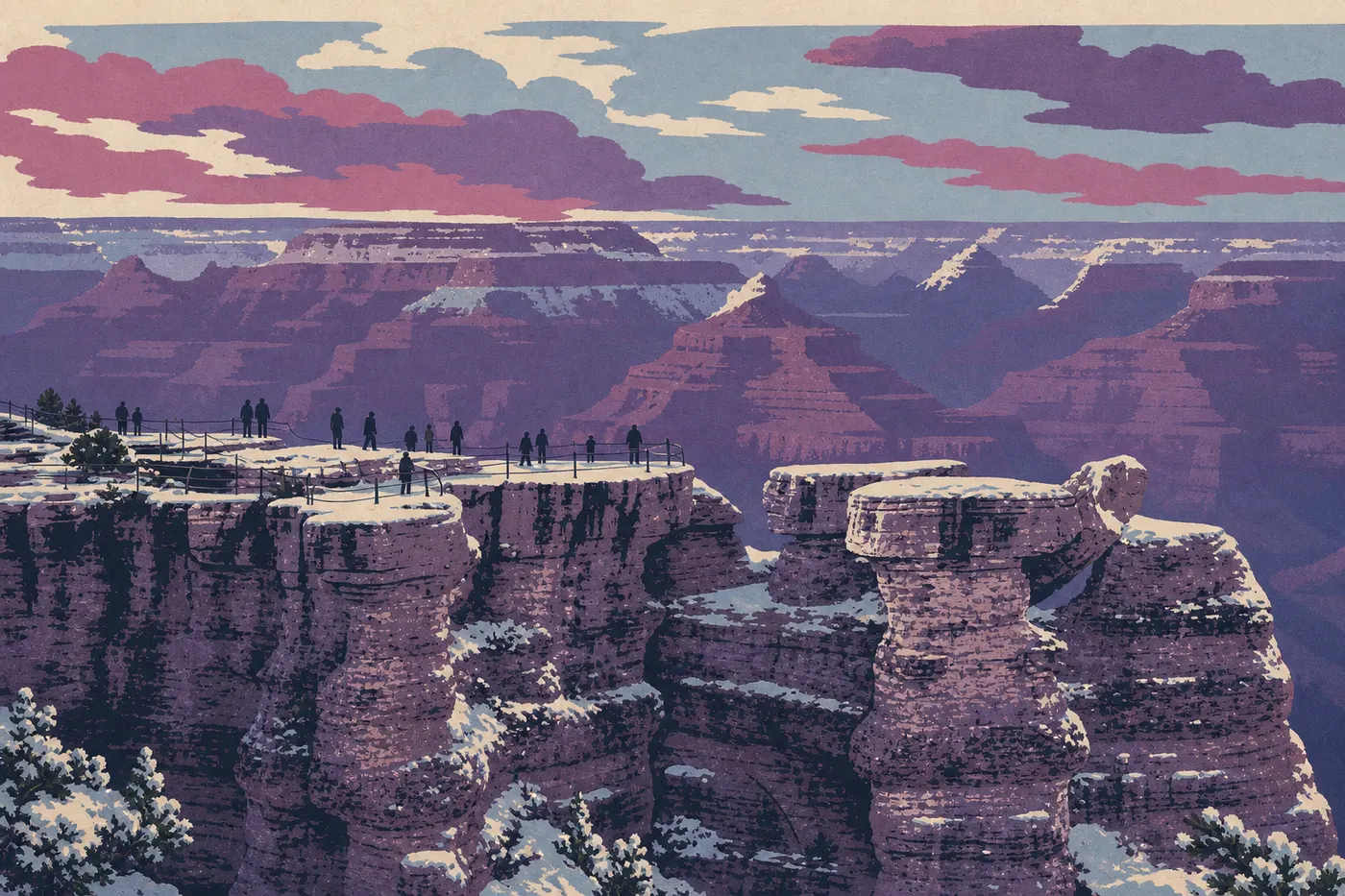
The South Rim stays open 24 hours a day, 365 days a year, including in the snow. Daytime temperatures on the rim range from 32 to 45°F. In January, the canyon floor reaches highs of 54 to 59°F. Paradoxically, this is the most comfortable season for hiking down to Phantom Ranch, far from the summer heat.
I hiked down Bright Angel one January morning. Fewer than 20 hikers were on the entire trail, the silence was absolute, and frost streaked the cliffs. It was nothing like the summer experience.
Two practical cautions matter here. Ice can make sections of Bright Angel Trail dangerous after a snowfall, and light traction devices (microspikes) are recommended from December through March. The North Rim closes in November and does not reopen until mid-May.
Spring (March through May)
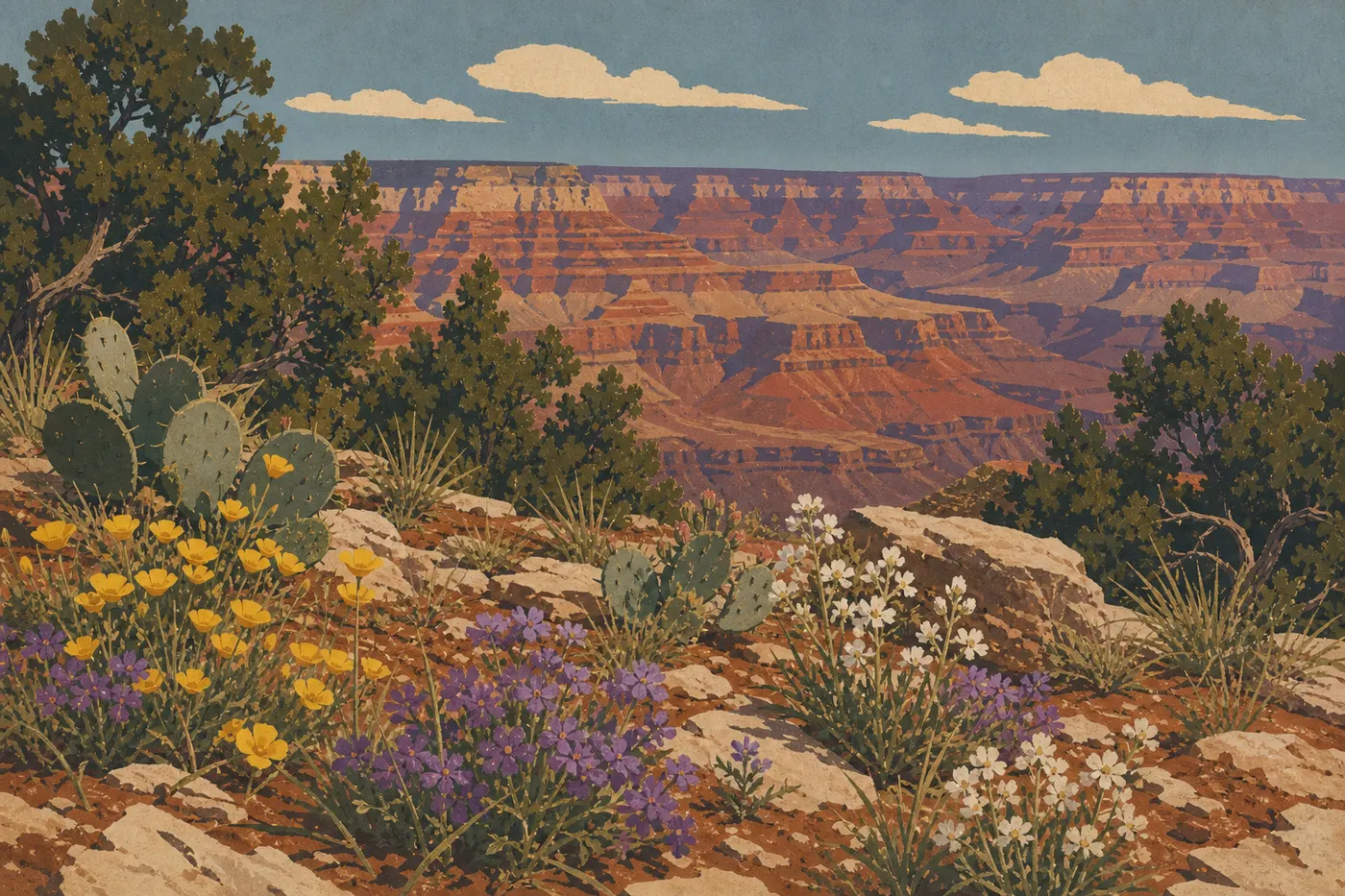
This is our favorite season at Grand Canyon. March starts slowly, with highs around 54°F, but April and May bring nearly perfect conditions: cool mornings, sunny days at 64 to 73°F on the South Rim, and a still-manageable canyon floor, reaching 77 to 86°F in May.
The North Rim generally reopens around May 15. If you want to connect the South and North Rims on a Rim-to-Rim hike, late May is the window to target.
Wildlife comes back to life. California condors soar above the cliffs, and wildflowers add color to the South Rim plateaus. Be careful, though: visitation surges around Easter. During school vacation weeks, get to Mather Point before 7 a.m. to avoid the crowds.
Summer (June through August)
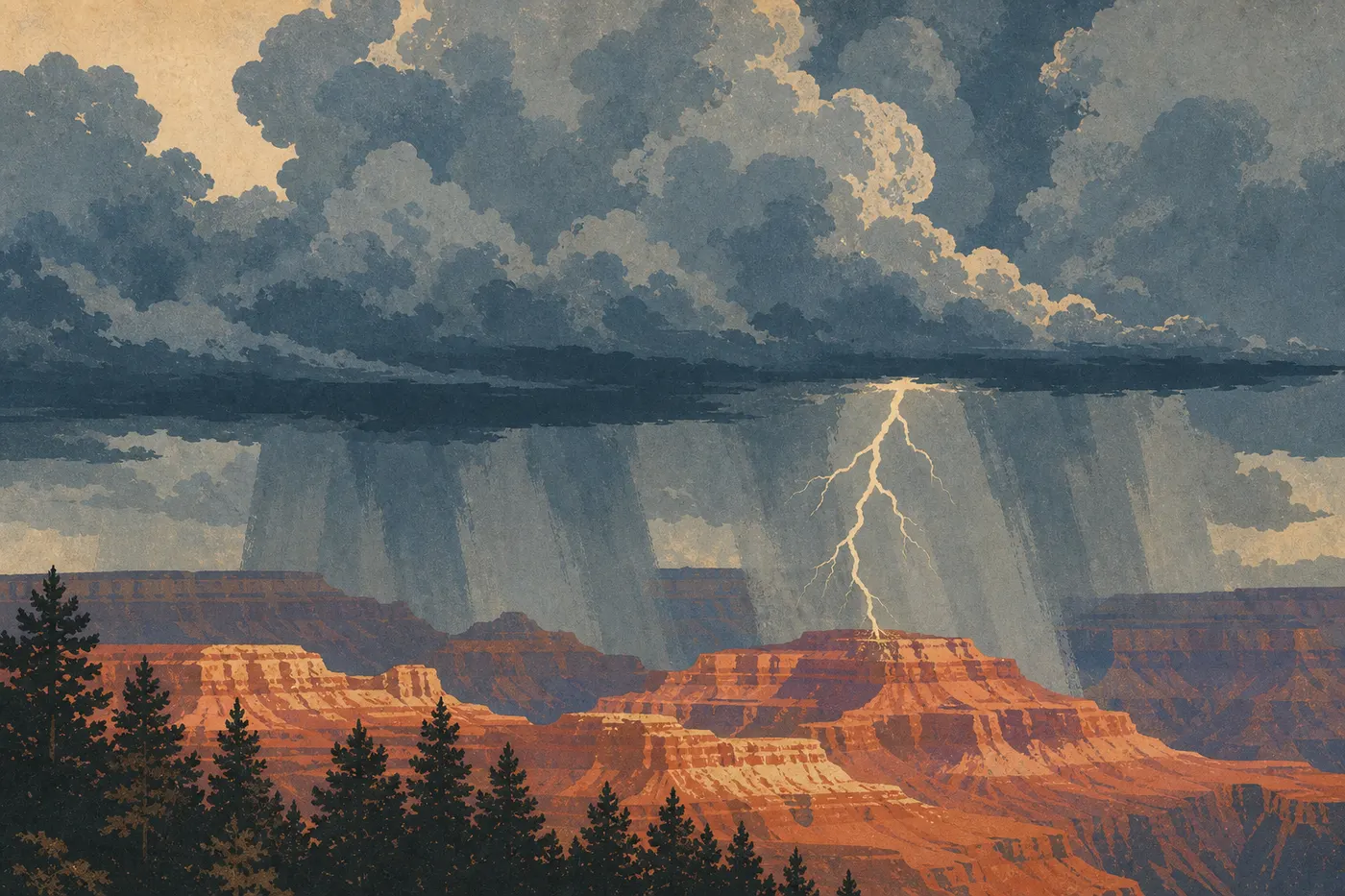
June can still be tolerable on the rims, with highs around 84°F, but the canyon floor turns into an oven, reaching 100 to 109°F at Phantom Ranch. Day hikes beyond the first water stop on Bright Angel, 1.5 Mile Resthouse, become physically dangerous. The NPS strongly advises against descending between 10 a.m. and 4 p.m. in July and August.
July and August bring the Arizona monsoon, with intense thunderstorms erupting in the late afternoon. Flash floods in the side canyons kill hikers every year. The absolute rule is simple: never enter a wash or narrow canyon if storms are threatening, even when it isn't raining where you are.
Yet this is also peak tourist season. American families on vacation pack the South Rim, parking lots fill before 8 a.m., and shuttles are crowded all day.
Fall (September through October)
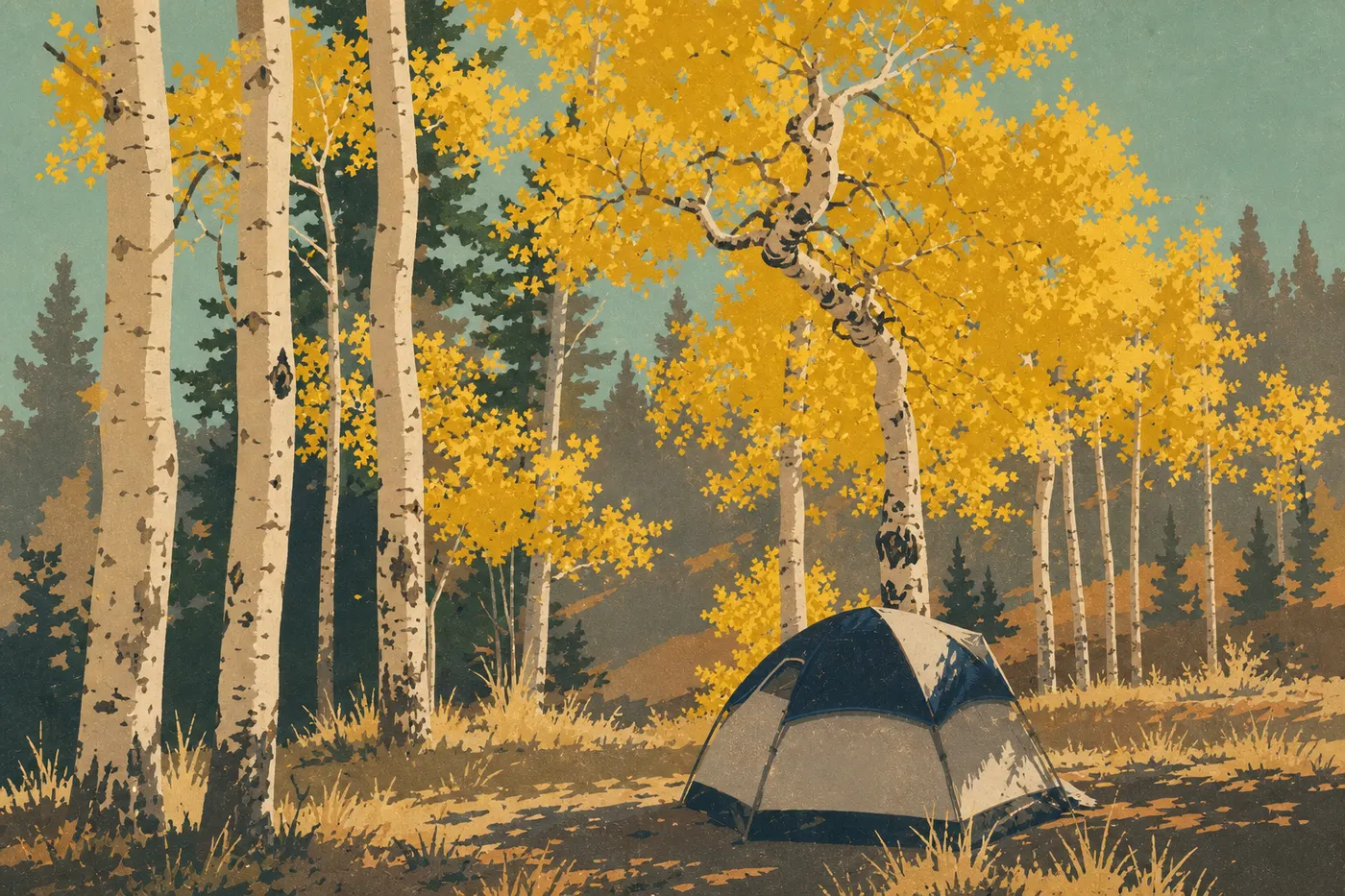
September marks the end of the monsoon. Showers become less frequent, and temperatures drop. October is our best month overall, with highs around 63°F on the South Rim, 77 to 86°F on the canyon floor, low golden light on the cliffs, and yellow cottonwoods along the Colorado River.
The North Rim closes in mid-October. If you want to visit it, plan your trip for the first half of the month. Wildlife is especially active then, with mule deer on the trails and condors riding thermals above the cliffs.
Crowds: When to Avoid Them
Grand Canyon welcomes more than 6 million visitors a year. They are spread very unevenly:
- Peak season (June through August): waits at the South Entrance can last up to two hours between 9:30 a.m. and 4 p.m., parking lots fill before 8 a.m., and lodges sell out months in advance.
- Shoulder season (April through May, September through October): busy but manageable. Mather Point and Desert View remain accessible without excessive waits.
- Winter (November through March): the park is nearly empty on weekdays. This is the only season when you can stroll freely along Rim Trail without jostling for space.
Our recommendation, whatever the season: avoid weekends. Most visitors arrive from Phoenix or Las Vegas on Saturday and Sunday. Leaving midweek changes the experience completely.
Reservations and Seasonal Access
You don't need an advance timed entry reservation for the South Rim. Pay the entrance fee, $35 per vehicle, when you arrive. Two types of reservations are especially important, depending on your plans.
Lodges in the park: Reservations open 13 months ahead for Bright Angel Lodge and El Tovar Hotel. During peak season, rooms disappear within the first few hours. See our Grand Canyon lodging guide for options outside the park in Tusayan and Flagstaff.
Permits for hikes below the rim: Any overnight stay below the rim at Bright Angel Campground, Havasupai Gardens, or Phantom Ranch requires a permit issued by the Backcountry Information Office. Applications open on the first of the month, four months before the stay. In April and October, spots disappear within hours. For the complete Recreation.gov process and opening calendar, see the Grand Canyon access guide.
Best Time to Visit on a Budget
Prices follow the crowd calendar:
- Winter (November through March): Hotels in Tusayan are 30 to 50% cheaper than in July. Flights to Flagstaff or Phoenix are also less expensive.
- Shoulder season: Prices rise, but remain below the summer peak. This is the ideal balance of price and conditions.
- Summer (June through August): Rates are at their highest, and you need to book months ahead. Camping remains an affordable option. Find detailed options in our guides to camping at Grand Canyon and RV camping.
For the entrance fee, consider the America the Beautiful pass. It covers all federal national parks for one year and pays for itself after your second park on a road trip. Find pass prices and options on our National Parks Passes & Fees page.
When to Go Based on Your Travel Style
Hikers and trail runners: April through May or September through October, without question. If you visit in summer, start before 6 a.m., head back up before 10 a.m., or stay cool until 4 p.m. Carry at least 0.5 liters of water per hour of hiking. The Grand Canyon hiking guide organizes trails by difficulty and length.
Wildlife watchers: Spring for condors and wildflowers, fall for mule deer and canyon wildlife. The Grand Canyon wildlife guide identifies viewing areas and the best times to go.
Photographers: October for golden light and the colors of the cottonwoods. Winter for the contrast between snow and red rock at sunrise on the South Rim. Always reach the viewpoints within an hour of sunrise.
Families with kids: Spring or fall. Manageable heat, accessible trails, and plenty of wildlife. Our Family guide lists activities and hikes suited to younger visitors.
Travelers on a tight budget: November through March, preferably on weekdays. Fewer people, cheaper lodging, and the same spectacular views.
In Summary: The Best Time for Your Travel Style
| Travel style | Recommended time |
|---|---|
| Hiking and outdoor sports | April through May or September through October |
| Wildlife | April through May (condors) or October (deer) |
| Photography | Late September through October, or winter (snow) |
| Families | April through May or September |
| Tight budget | November through March (weekdays) |
| Any traveler | October (weather, wildlife, colors, prices) |
Our Grand Canyon guide covers everything you need to plan your trip, from reservations to your on-site itinerary.
The Worst Time to Visit Grand Canyon
Avoid July and August if you want to hike on the canyon floor. Temperatures reach 108 to 109°F at Phantom Ranch, monsoon storms make side canyons deadly, and the South Rim is at its busiest. Parking lots fill before 8 a.m., lodges sell out months ahead, and shuttles are packed all day.
June is already partly affected from the second half of the month onward. The canyon floor turns scorching, and the first pre-monsoon storms can trigger flash floods. If summer is your only option, stick to the panoramic views from the South Rim, start before dawn, and skip daytime descents.
Frequently Asked Questions
What's the best time to visit the Grand Canyon?
The best time to visit the Grand Canyon is October, with ideal temperatures on both rims, around 63°F on the South Rim, fewer crowds than in summer, and fall colors in the canyon. April and May are excellent spring alternatives.
When is the rainy season at Grand Canyon?
The rainy season at Grand Canyon is the Arizona monsoon, from early July through late August. Severe thunderstorms erupt in the late afternoon and can cause flash floods in side canyons and narrow trails. Never enter a wash or narrow canyon when storms are threatening, even if it isn't raining directly where you are.
Can you visit Grand Canyon in winter?
Yes. The South Rim is open year-round, including in the snow. Temperatures are cold on the rim, dropping as low as 19°F at night in January, but the canyon floor stays mild and nearly empty. It's an excellent season to hike down to Phantom Ranch. Bring microspikes from December through March for icy trails.
What is the least crowded month?
January and February are the quietest months, with very few visitors, accessible parking at any hour, and nearly empty trails on weekdays. November and December are similar, except around Christmas.
When is peak season at Grand Canyon?
Peak season runs from June through August, with a July high point. More than 6 million people visit each year overall, bringing entrance-line waits, full parking lots before 8 a.m., and lodges booked months ahead. Reserve lodging and hiking permits as early as possible if you're visiting during this period.
How long do you need to visit the Grand Canyon?
Plan on at least two days to see Grand Canyon properly. Our Itinerary guide offers plans for every trip length.
When is the best time to visit Monument Valley?
The best time for Monument Valley is also spring, from April through May, or fall, from September through October. For a complete Arizona road trip, our Road Trip guides offer ready-to-use itineraries.