
Gateway Arch Wildlife: Which Animals to See and Where to Find Them
Gateway Arch National Park is full of surprises. Set in the heart of St. Louis along the Mississippi River, this urban park supports far more wildlife than a typical city lawn. Its biggest asset is the river. The Mississippi River is one of North America's busiest migration corridors, and St. Louis sits right along it.
Here are five animals to look for before you go: the bald eagle (a spectacular winter visitor along the river), the peregrine falcon (an urban nester that patrols the heights), the great blue heron (a year-round resident along the banks), the white-tailed deer (easy to miss in the green spaces), and bats (several species become active at sunset). Add roughly 100 bird species recorded throughout the seasons, and Gateway Arch reveals a natural side you might never expect from the esplanade.
Gateway Arch's Signature Wildlife
Bald Eagle
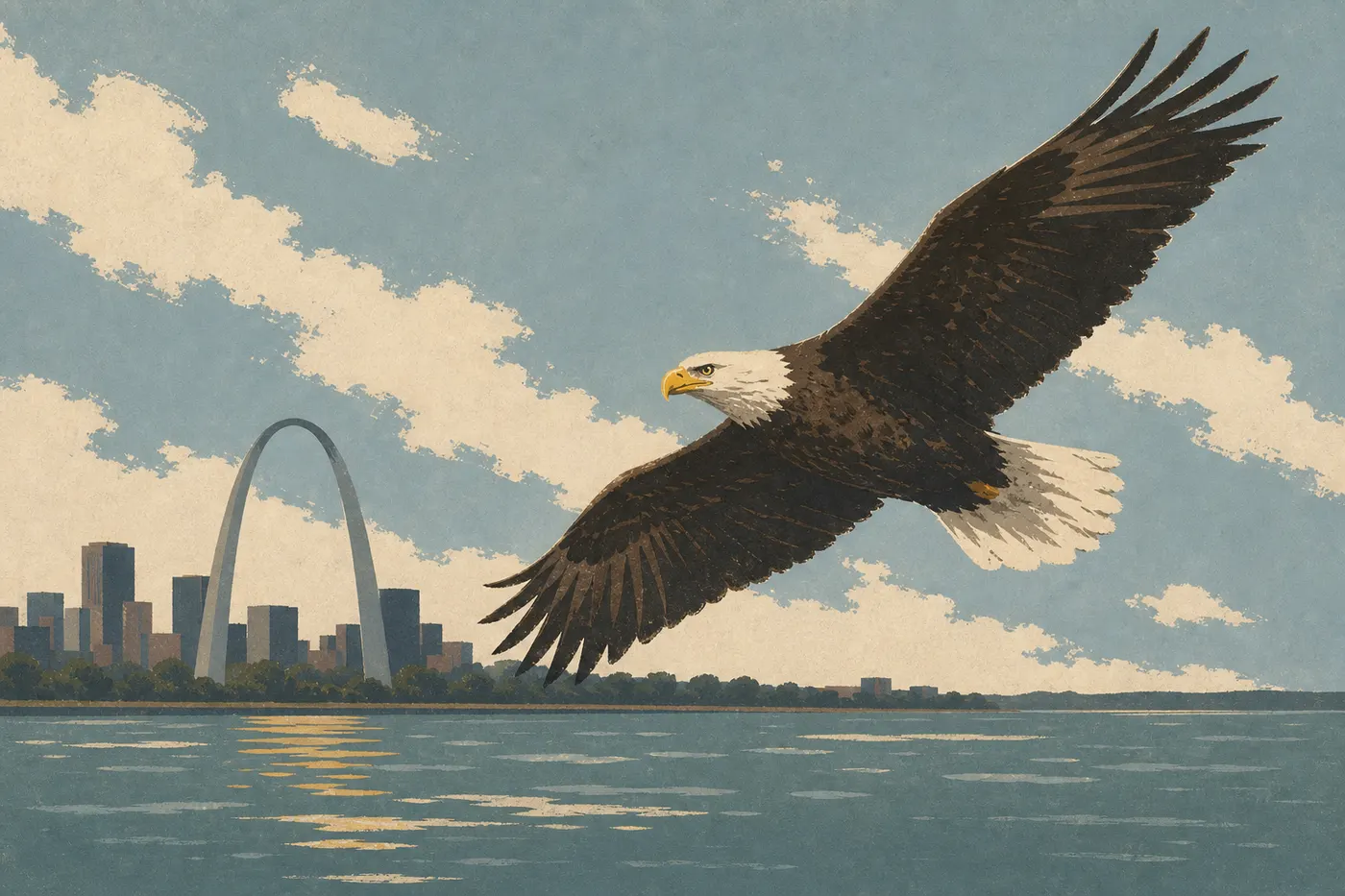
The bald eagle (Haliaeetus leucocephalus) is the park's most striking wildlife sighting, and you'll need to come in winter to see it. From December through early March, eagles move up and down the Mississippi River looking for open water where fish are accessible. Adults are unmistakable in flight, with their white heads and tails. Juveniles are mottled brown and can take up to five years to develop their definitive plumage.
Their wingspan reaches 6 to 7.5 feet. They often perch on dead branches and bridge piers while digesting their catch. We recommend the riverfront walkway along the Mississippi River, early in the morning, as the best place to look.
Peregrine Falcon
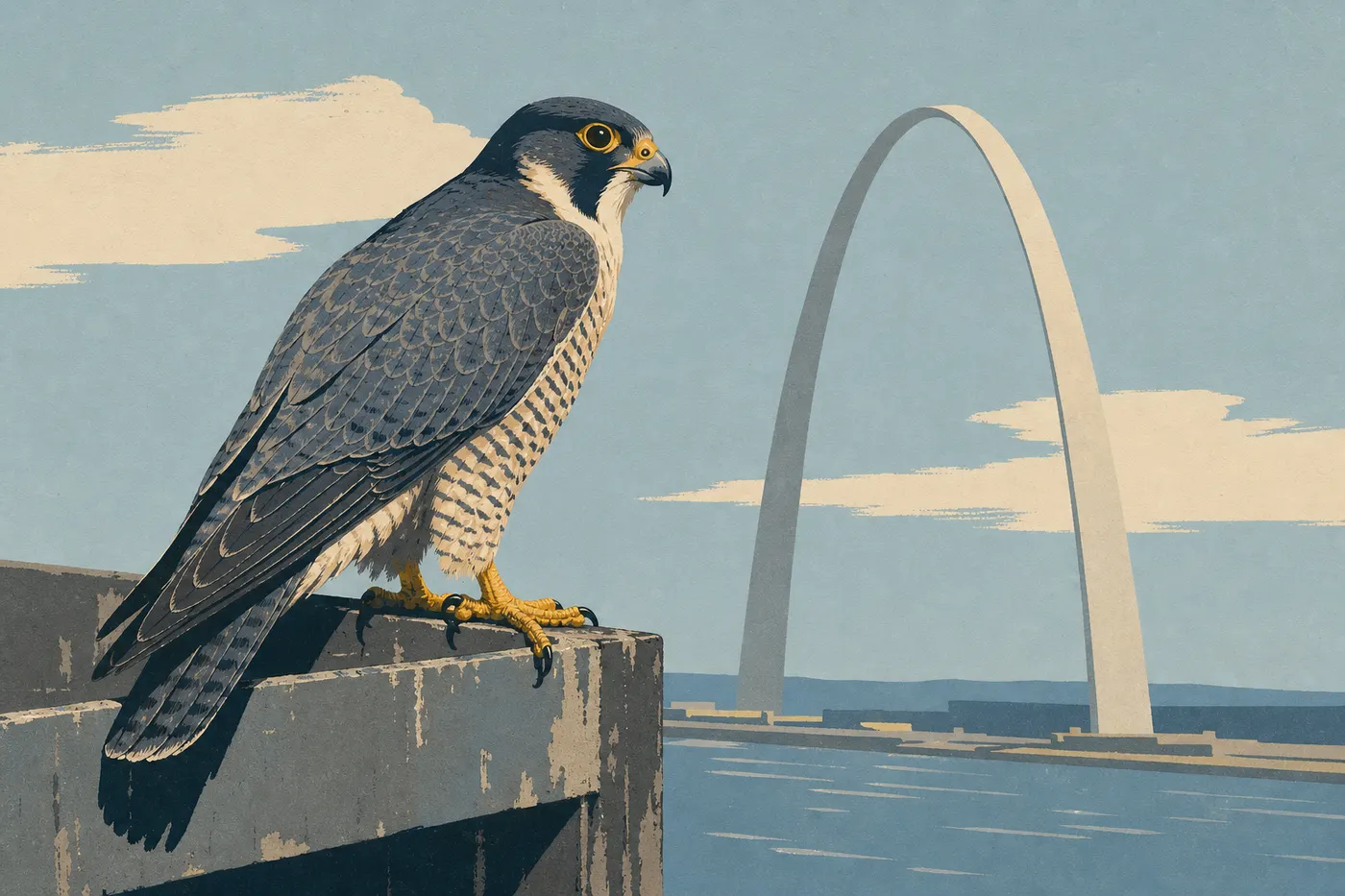
The peregrine falcon (Falco peregrinus) has reclaimed North America's major cities since the 1990s, after nearly disappearing because of DDT. In St. Louis, buildings and bridges have replaced natural cliffs, and the species has established itself for good. Look for its sickle-shaped silhouette, black cheeks, and flight pattern, which alternates rapid wingbeats with tight glides.
It mainly hunts other birds in a dive, at documented speeds above 185 mph. Look for it perched high up on metal structures, roof ledges, and the edges of walkways. On calm spring and fall mornings during migration, it's especially active above the park.
Great Blue Heron
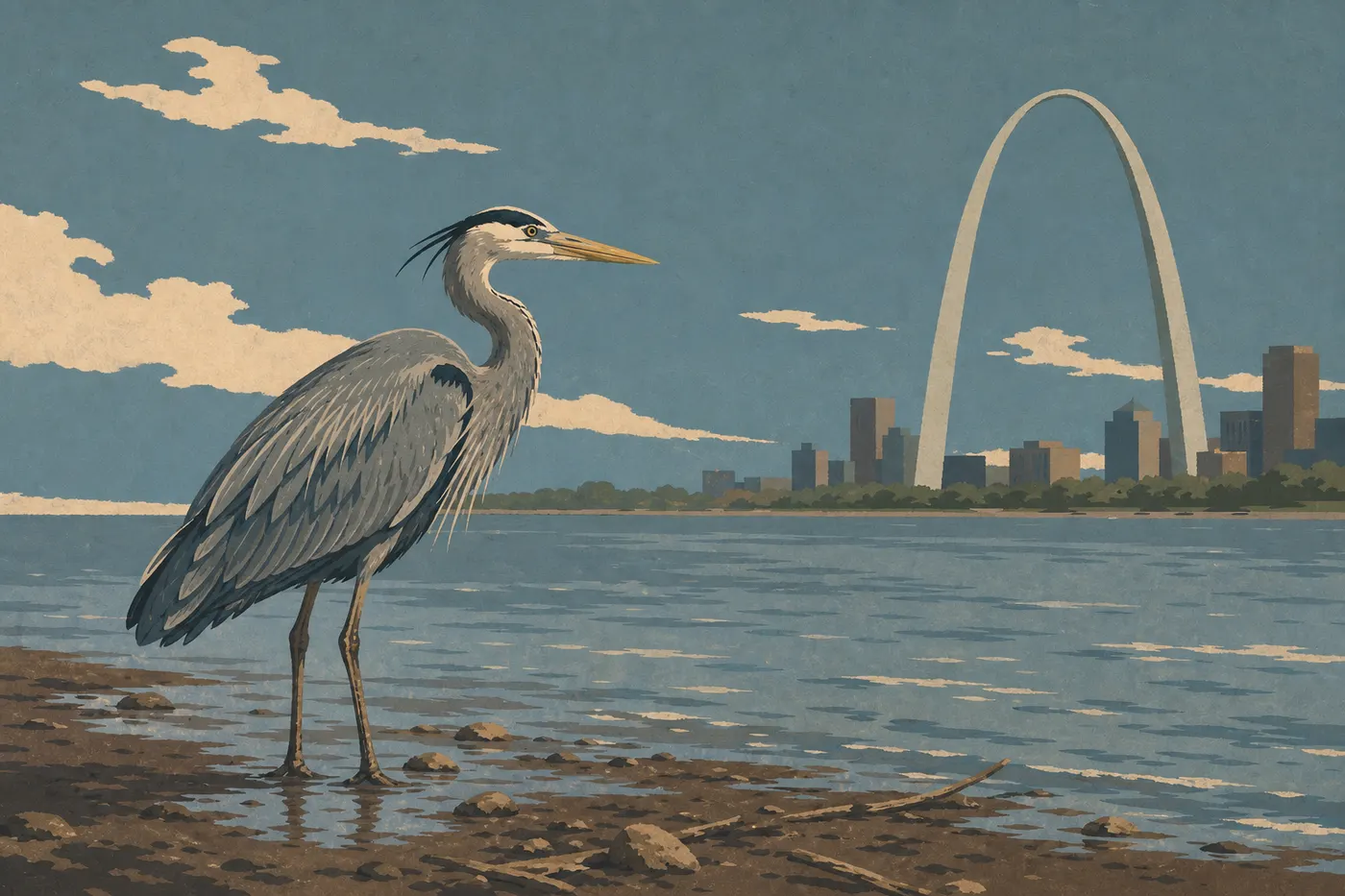
The great blue heron (Ardea herodias) is the most visible year-round resident along the banks. Standing at the water's edge, sometimes motionless for several minutes, it waits for a fish to come within reach of its spear-like bill. It stands nearly 4 feet tall and can have a wingspan of up to 6.5 feet.
In flight, its folded S-shaped neck and long trailing legs make it unmistakable. It frequents the banks of the Mississippi River year-round. Its regular presence points to a river ecosystem that still functions, which matters in a park at the heart of a major city.
White-Tailed Deer
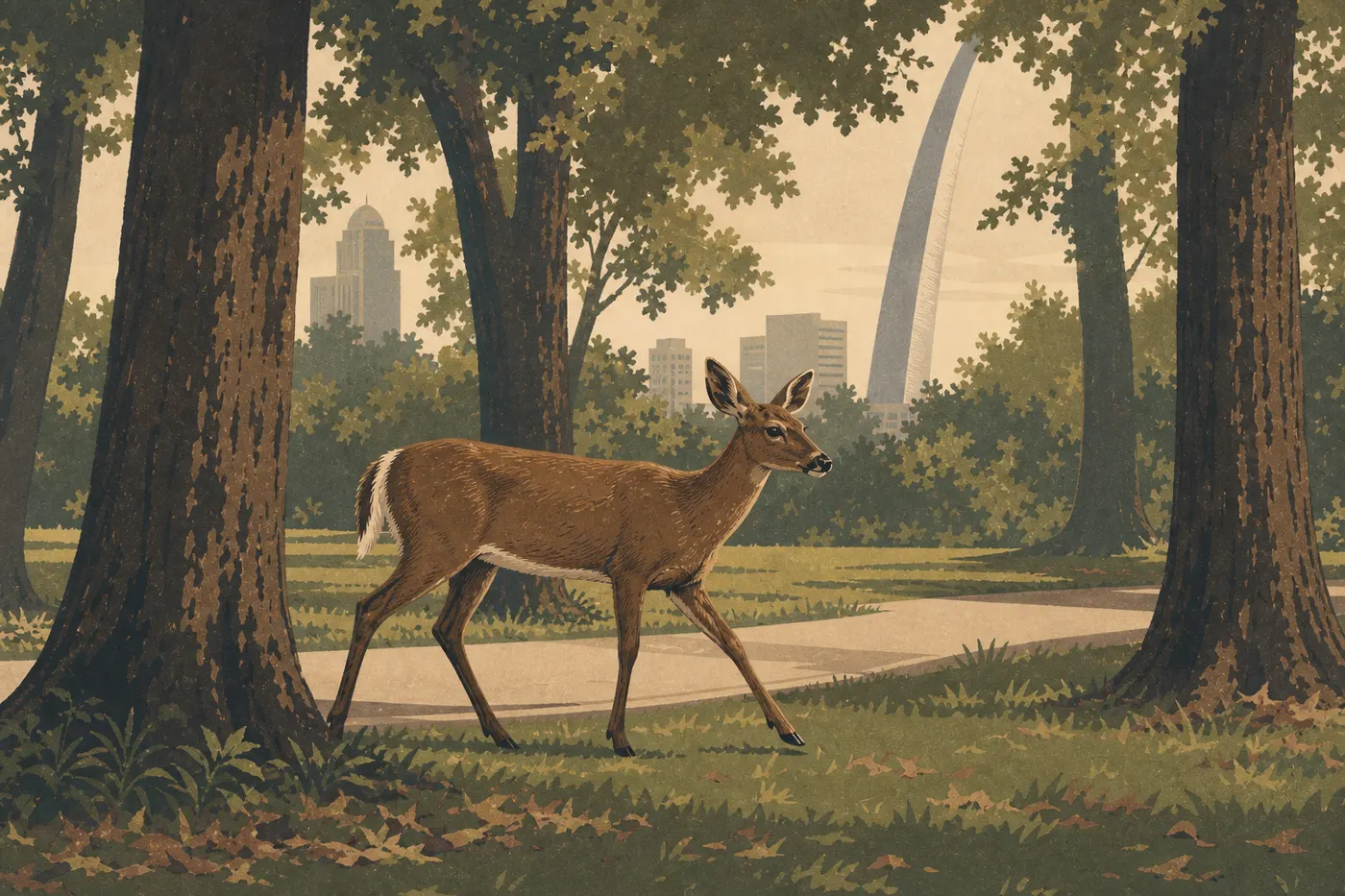
White-tailed deer (Odocoileus virginianus) survive in this urban park thanks to the green corridors that cross St. Louis and connect with the park's open spaces. Hard to spot in daylight, they use edges and tall grass at dawn and dusk. Their summer reddish coat and winter brown-gray coat make them easier to pick out against snow.
Does and fawns, born in May and June, stay hidden during the day. Bucks carry their antlers from May through January, then shed them after the fall rut.
Bats
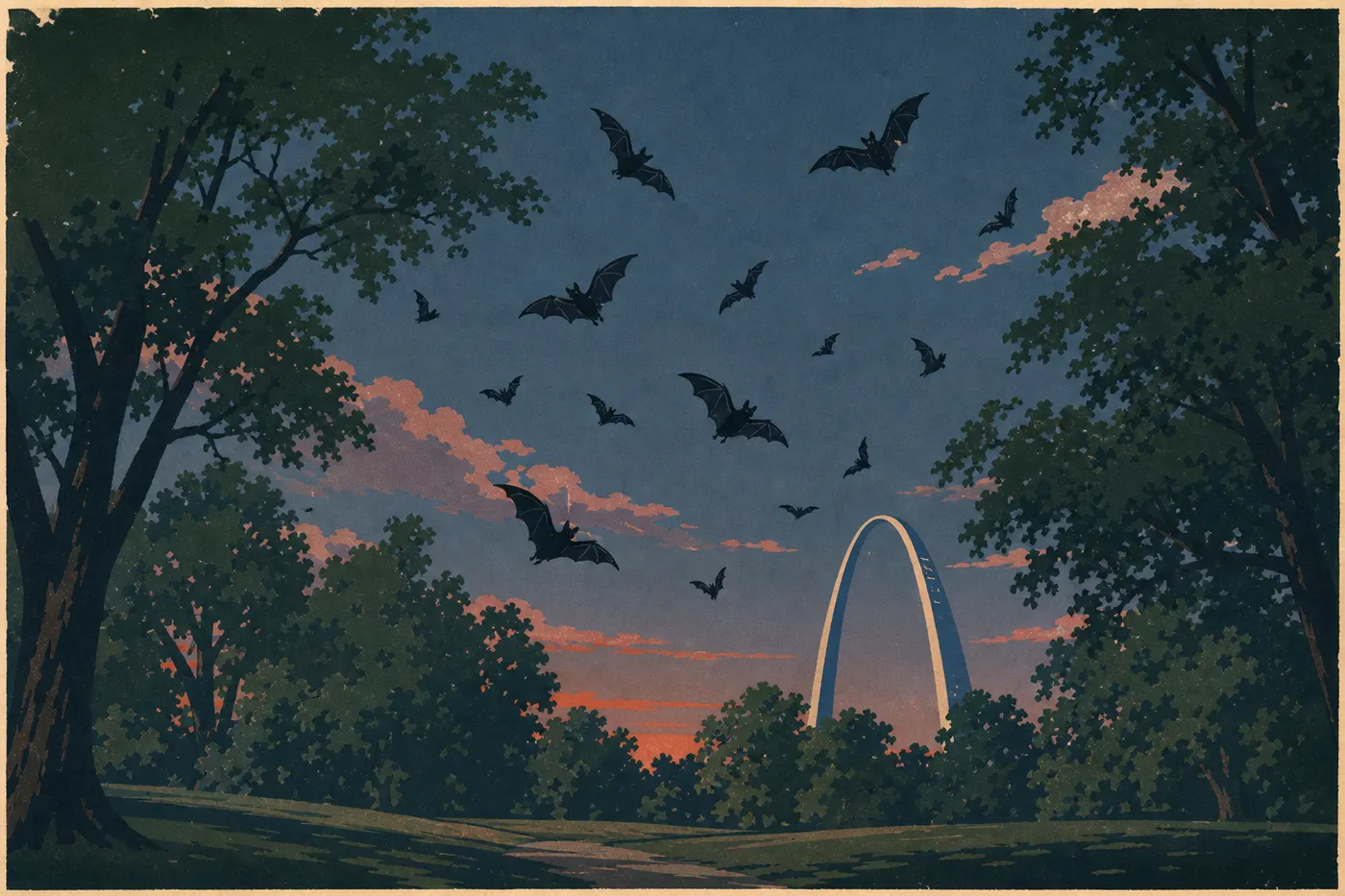
Several bat species visit the park after dark, including the big brown bat (Eptesicus fuscus) and various myotis species. They hunt insects in flight at low altitude over the lawn and water. In summer, when the light fades around 8:30 p.m. and mosquitoes become active, bats are often the first wild animals you'll notice from the park paths.
A single colony can consume several thousand insects a night, making bats valuable allies for public health in an urban park. Watch them from a distance and don't approach them.
Where to See Wildlife in Gateway Arch
The park breaks down into three overlapping zones, and each one attracts its own species.
The riverfront walkway along the Mississippi River is the best place to look for waterfowl and migrating birds. You may see a great blue heron on the rocks, diving ducks in winter, or a bald eagle flying above the river. Bring binoculars. Birds often stay far out on the water.
The lawns and paths on the west side, between the Arch and the old downtown, attract songbirds during the May and September-October migrations. The park's mature trees give warblers, thrushes, and woodpeckers a place to rest amid a densely built environment. This is where white-tailed deer appear at dawn, before the tourist crowds arrive.
The heights belong to the peregrine falcon. Look up toward the Arch's metal structures and the roof ledges of nearby buildings to spot one perched or hunting.
For bats, any spot in the park works after dark. They show a slight preference for lit areas, where insects gather around the streetlights.
When to Watch for Wildlife
The best time to look depends on the species you're hoping to see.
Winter, from December through early March, is peak bald eagle season. Temperatures regularly drop below freezing, averaging 29°F in January, and the Mississippi River may freeze in places, concentrating eagles around open water. Visitor numbers are low, and the birds face less disturbance.
Spring, from April through May, is the best window for migrating songbirds heading north along the Mississippi River. Temperatures rise from 57°F to 66°F, and newly leafed-out trees provide cover and insects for passing warblers.
Summer, from June through August, is hot and humid, with July temperatures around 77°F to 81°F. Wildlife stays out of sight during the day. Go before 9 a.m. or in the evening, when bats become active.
Fall, from September through October, brings southbound migration, spread out over a longer period than spring migration. Deer enter the rut and become easier to spot along the edges. Eagles return to their winter range.
For monthly temperature and precipitation details, our Gateway Arch Weather page provides complete NPS averages. To plan your trip around the best window, our When to Go guide brings together weather, wildlife, and visitor levels.
Predators and Large Animals in Gateway Arch
Gateway Arch is an urban park. It has no bears, mountain lions, or wolves. The peregrine falcon is the functional apex predator in this ecosystem, hunting pigeons and starlings with documented efficiency.
The great blue heron is the park's leading aquatic predator. Fish, frogs, and small rodents make up its diet, depending on the season and water levels.
Some history is worth noting. Plains bison (Bison bison) roamed this region for thousands of years. Westward expansion decimated them in the 19th century. Museum at the Gateway Arch features a life-size model, a tangible reminder of the wildlife that disappeared and that the Arch itself commemorates as a symbol of the Frontier.
Urban coyotes (Canis latrans) live in the St. Louis metropolitan area and may cross the park at night. Direct encounters remain rare and generally aren't dangerous.
How to Watch Wildlife Safely
The rules are less restrictive than at Yellowstone, but they still matter.
Don't feed the animals. Canada geese (Branta canadensis), which are common on the lawns, quickly get used to human food. That disrupts their natural behavior and damages the green spaces. The same rule applies to squirrels and crows.
Stay at least 100 feet from large birds, including herons, eagles, and falcons. If a bird takes off when you approach, your presence has interrupted its search for food.
Never touch a bat. The risk of rabies is well documented, and a healthy animal won't let you get close. If your skin comes into contact with a bat, see a doctor immediately.
Dogs are allowed in the park, but they must stay on a leash at all times. This rule protects wildlife as well as other visitors.
For the park's general guidelines, including thunderstorms on the esplanade and visitor rules, find all the practical information on the Gateway Arch home page.
In Brief: Species You Shouldn't Miss and Where to Find Them
Bald eagle. Along the Mississippi River from December through March, preferably in the morning.
Peregrine falcon. On high structures year-round, and easier to spot in spring and fall.
Great blue heron. Along the banks of the Mississippi River year-round, especially early in the morning.
White-tailed deer. On the lawns and along the west-side edges, at dawn and dusk from spring through fall.
Bats. Anywhere in the park from sunset, April through October.
Migrating songbirds. In the park's mature trees in May and September-October, especially in the morning.
Gateway Arch confirms that an urban national park isn't nature stripped down. It's an interface, and the Mississippi River makes it one of the region's most active.
Frequently Asked Questions
What are the signature animals of Gateway Arch National Park?
Gateway Arch's five signature animals are the bald eagle (a winter visitor on the Mississippi River), peregrine falcon (an urban nester), great blue heron (a year-round resident along the banks), white-tailed deer (in the green spaces), and bats (active at night from April through October).
What is the most common animal in the park?
The most common animals at Gateway Arch are birds. Canada geese and gray squirrels are present on the lawns year-round. Among the birds, several songbird species are abundant during spring and fall migration.
What is the largest animal in Gateway Arch?
The largest animal currently found in the park is the white-tailed deer. Historically, plains bison dominated the region. A life-size replica is on display at Museum at the Gateway Arch.
What predators live in Gateway Arch?
Gateway Arch's predators include the peregrine falcon, an aerial apex predator that hunts pigeons and small birds in a dive, and the great blue heron, an aquatic predator. Urban coyotes live in the metropolitan area but are rarely seen in the park.
Which animals are active at night in Gateway Arch?
At night, bats hunt insects over the water and lawns. Raccoons and urban coyotes may also visit the park after closing. Nocturnal songbird migration is active in spring and fall.
Are dogs allowed in Gateway Arch National Park?
Yes. Dogs are allowed in the park's outdoor areas, but they must stay on a leash at all times. Pets aren't allowed in Museum at the Gateway Arch or on Tram Ride to the Top.