
Carlsbad Caverns Wildlife: What You Can See and Where
Carlsbad Caverns is first and foremost an underground spectacle. But the Chihuahuan Desert surrounding the caves supports far more wildlife than you might expect. In short, the five species you won't want to miss are the Mexican free-tailed bat (in colonies numbering several hundred thousand), desert mule deer, javelina, mountain lion, and Texas horned lizard. Nothing is guaranteed, but you might see any of them if you're in the right place at the right time.
Carlsbad Caverns' iconic animals
Mexican free-tailed bats: the park's stars
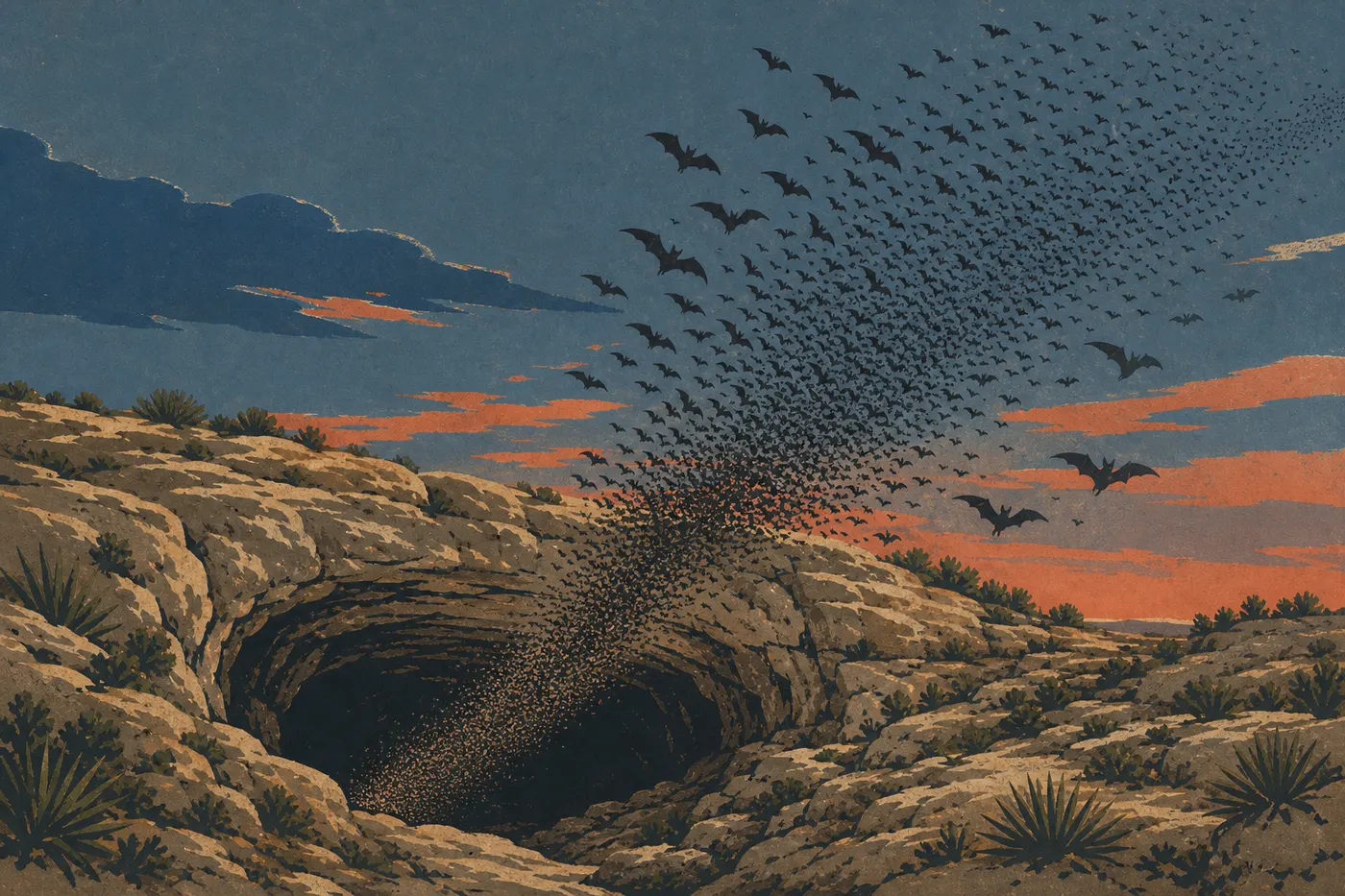
This is what everyone comes to see. Every summer, from May through October, several hundred thousand Mexican free-tailed bats (Tadarida brasiliensis) fill the Natural Entrance cave. At dusk, they spiral up and out of the cavern, a vortex of small brown bodies rising for several dozen minutes while visitors watch from the open-air amphitheater.
These bats measure about 3.5 inches and weigh less than 0.5 ounces, but their wingspan reaches 16 inches. Their long tails extend well beyond the tail membrane, making them easy to identify. Each bat eats the equivalent of its own body weight in insects every night. The colony therefore controls insect populations for miles around without a single pesticide.
Where: the amphitheater at the main entrance. When: May through October, at sunset. The exact time changes every evening, and the NPS posts it at the visitor center in the early afternoon.
Desert mule deer
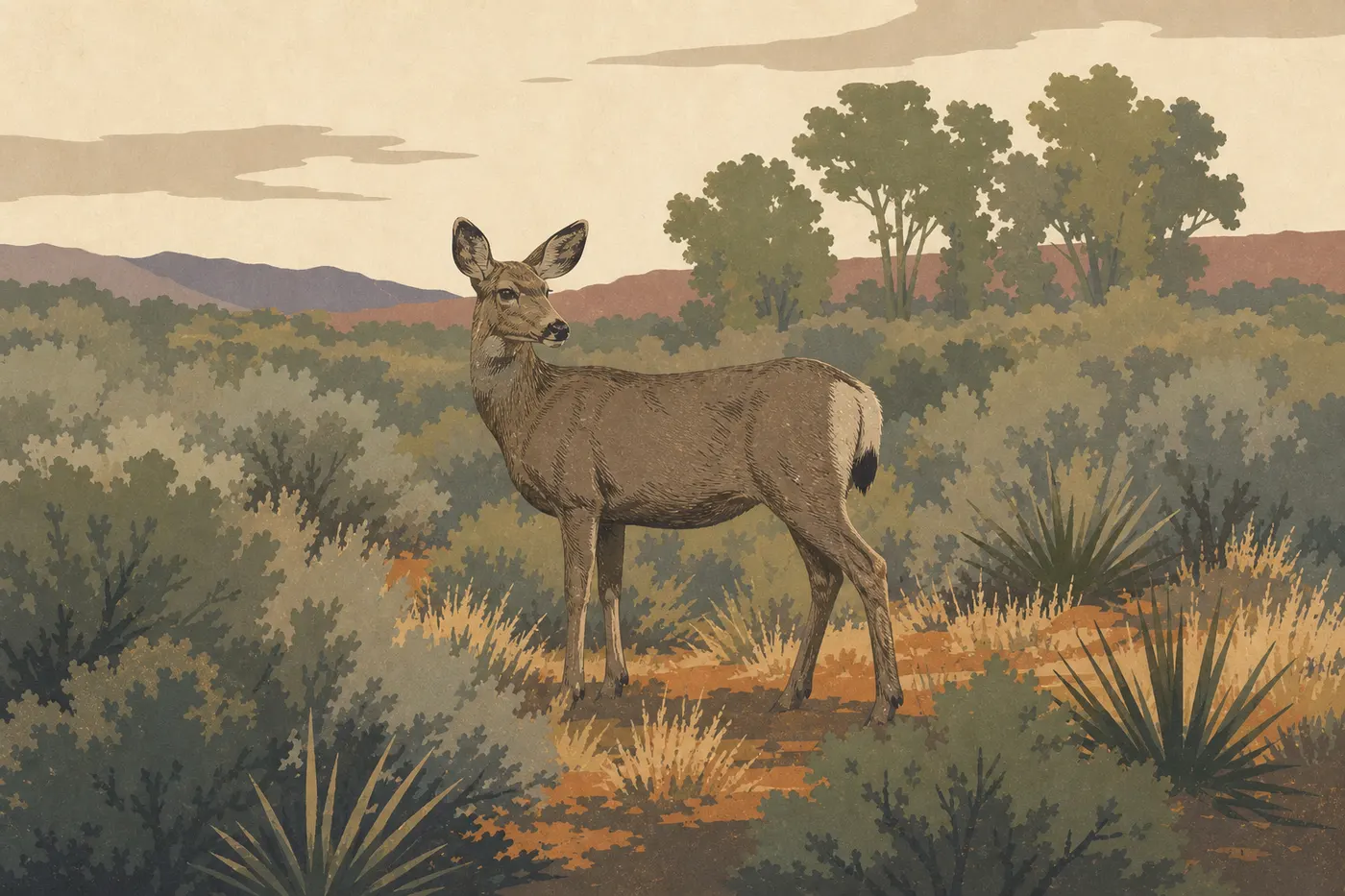
The mule deer (Odocoileus hemionus) is the easiest large animal to spot in the park. Its large, funnel-shaped ears, which give it its name, and its white rump with a thin, black-tipped tail make it instantly recognizable. Males grow branched antlers from May through December.
It is most active at dawn and dusk, then retreats into the shade of low vegetation during the hottest hours. You'll often see it along the access road and right around the visitor center, grazing calmly as if humans didn't exist.
Season: present year-round, and more visible on fall evenings during the rut.
Javelina
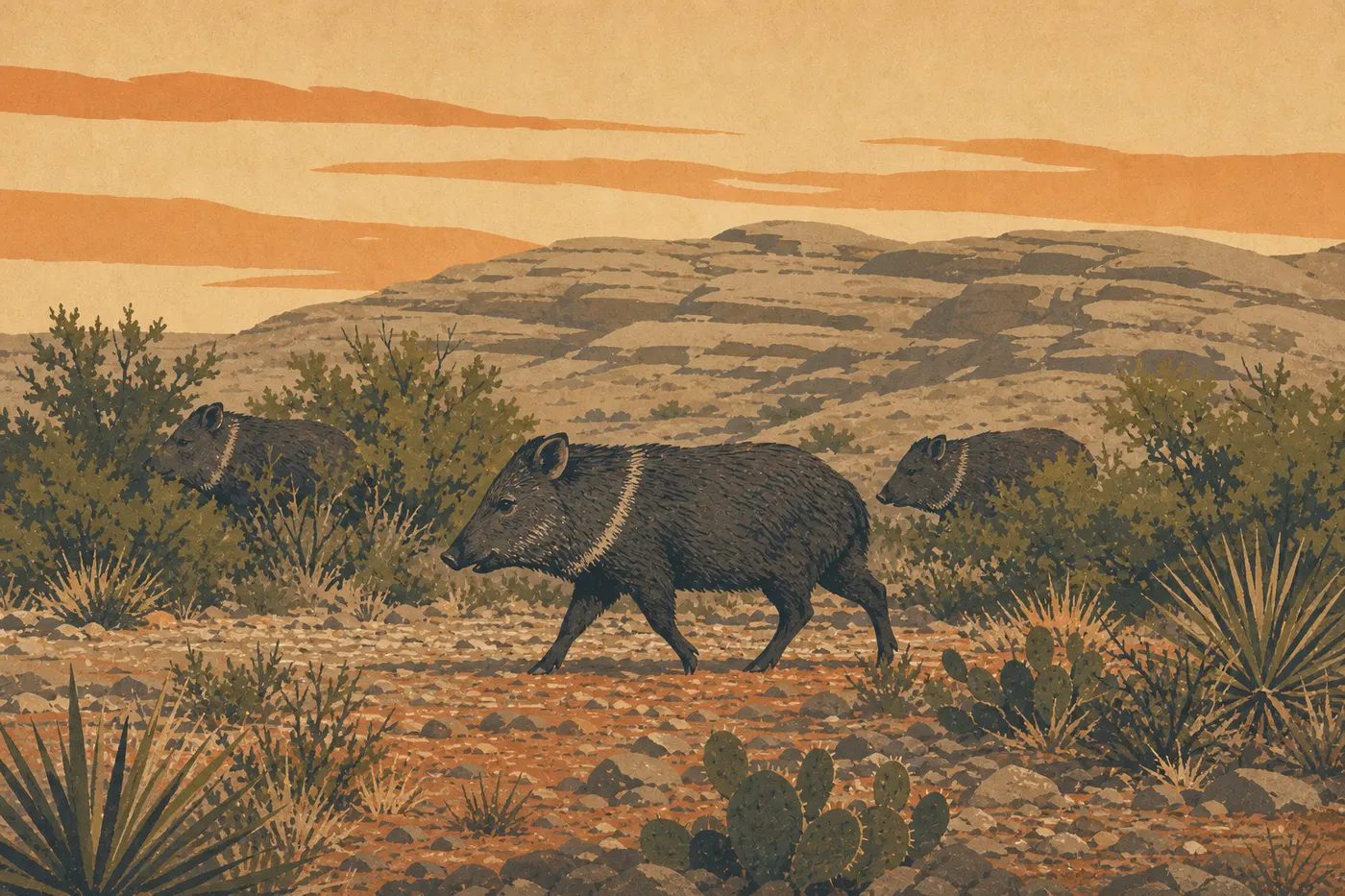
The javelina (Pecari tajacu), also called a collared peccary, looks like a stocky wild pig with an upturned snout and short tusks. Its yellowish-white collar around the neck is its most reliable identifying mark. Don't confuse it with a European wild boar. They are only distant relatives and behave very differently. Javelinas live in groups of six to twenty, eat cactus, including the pulp and spines, roots, and small lizards, and give off a musky odor that you can recognize from a good distance.
They aren't particularly skittish, but they can be unpredictable, especially when the group is tightly packed. If you encounter one, keep at least 33 feet away.
Where: Walnut Canyon and the scrubland south of the park.
Mountain lion
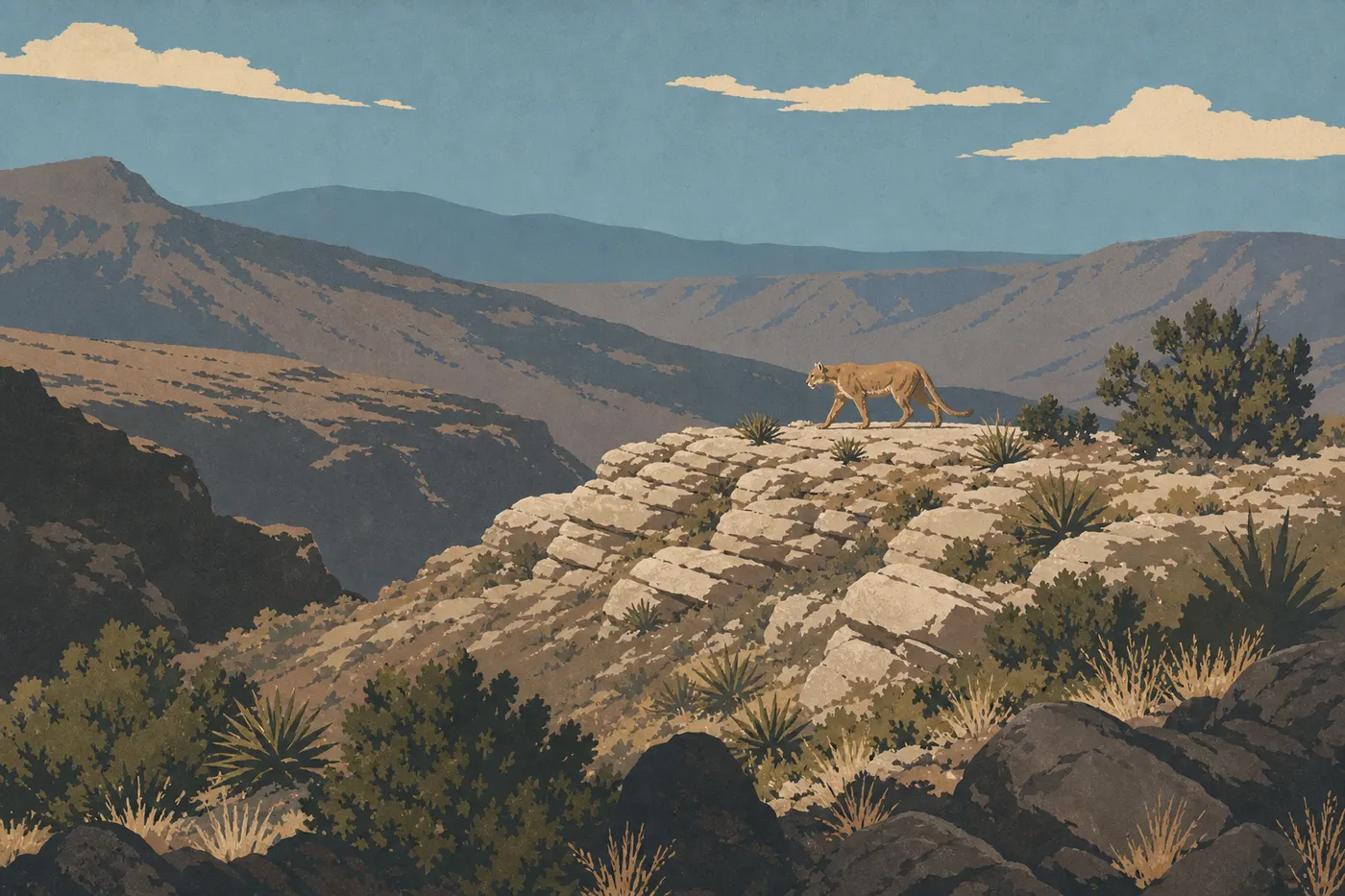
Mountain lions (Puma concolor) live in the park, but they actively avoid people. Seeing one on foot is extremely unusual. These cats hunt mainly at night and around dawn, and NPS camera traps regularly confirm their presence even though direct sightings remain exceptionally rare. An adult male can weigh between 143 and 198 pounds, making it the park's largest predator.
If you spot a large tawny shape slipping between the rocks at sunrise, you've had extraordinary luck. You'll also have a memory for life.
Tip: don't hike alone outside daylight hours, and keep kids close on isolated trails.
Texas horned lizard
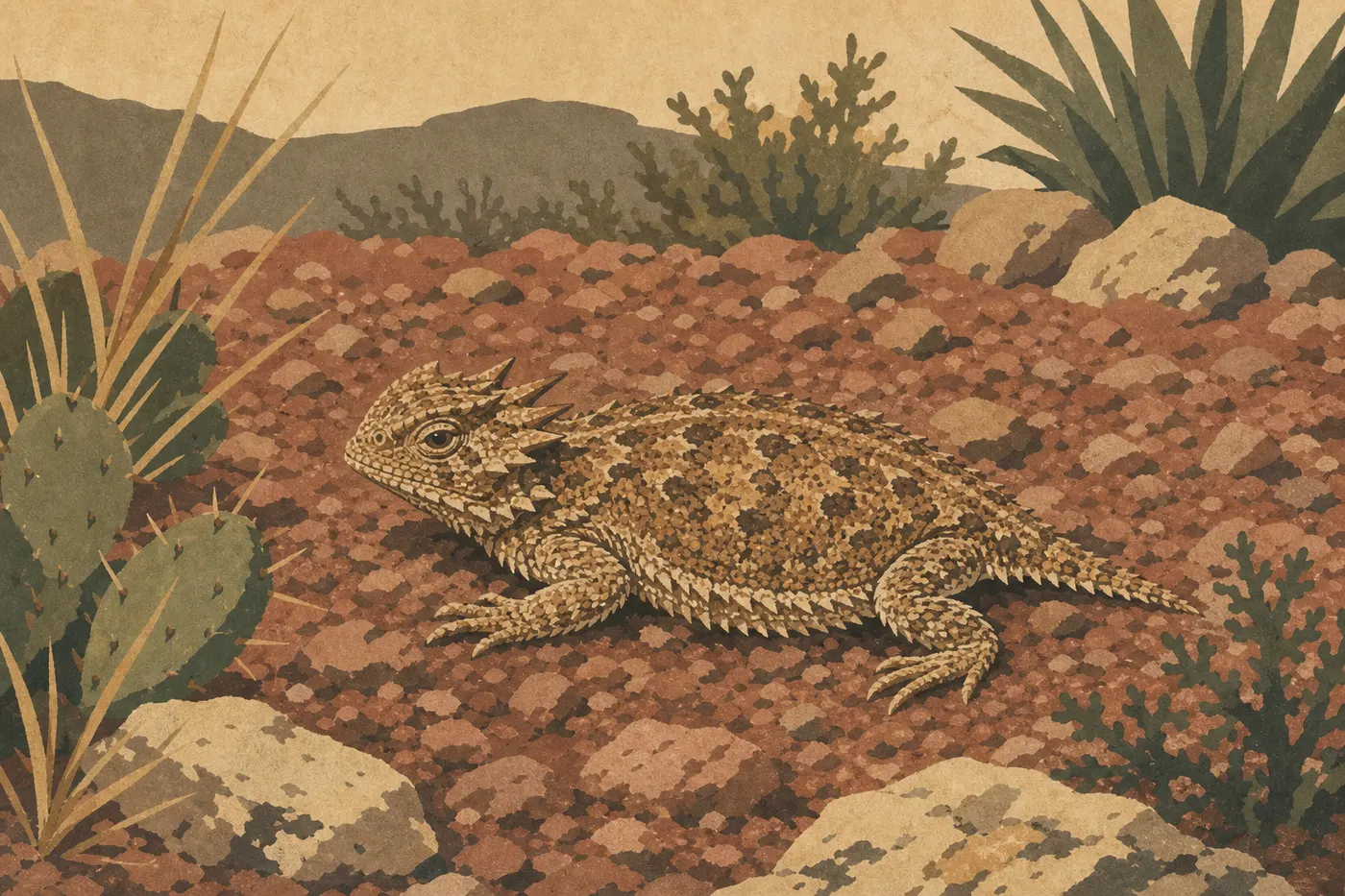
The Texas horned lizard (Phrynosoma cornutum) is one of the Chihuahuan Desert's most unusual creatures. Flat and colored from sandy tan to rust, it wears a crown of bony horns on its head. Its first line of defense is absolute stillness. Unless you're looking very closely, you'll walk right past it without seeing it.
Fact checked: when it truly feels cornered, it can shoot a thin stream of blood from its eyes as far as 5 feet, a chemical defense that works well against canids and much less well against curious humans. You are most likely to see one on sun-exposed trails in the middle of the morning.
Cave swallow: resident of the Natural Entrance
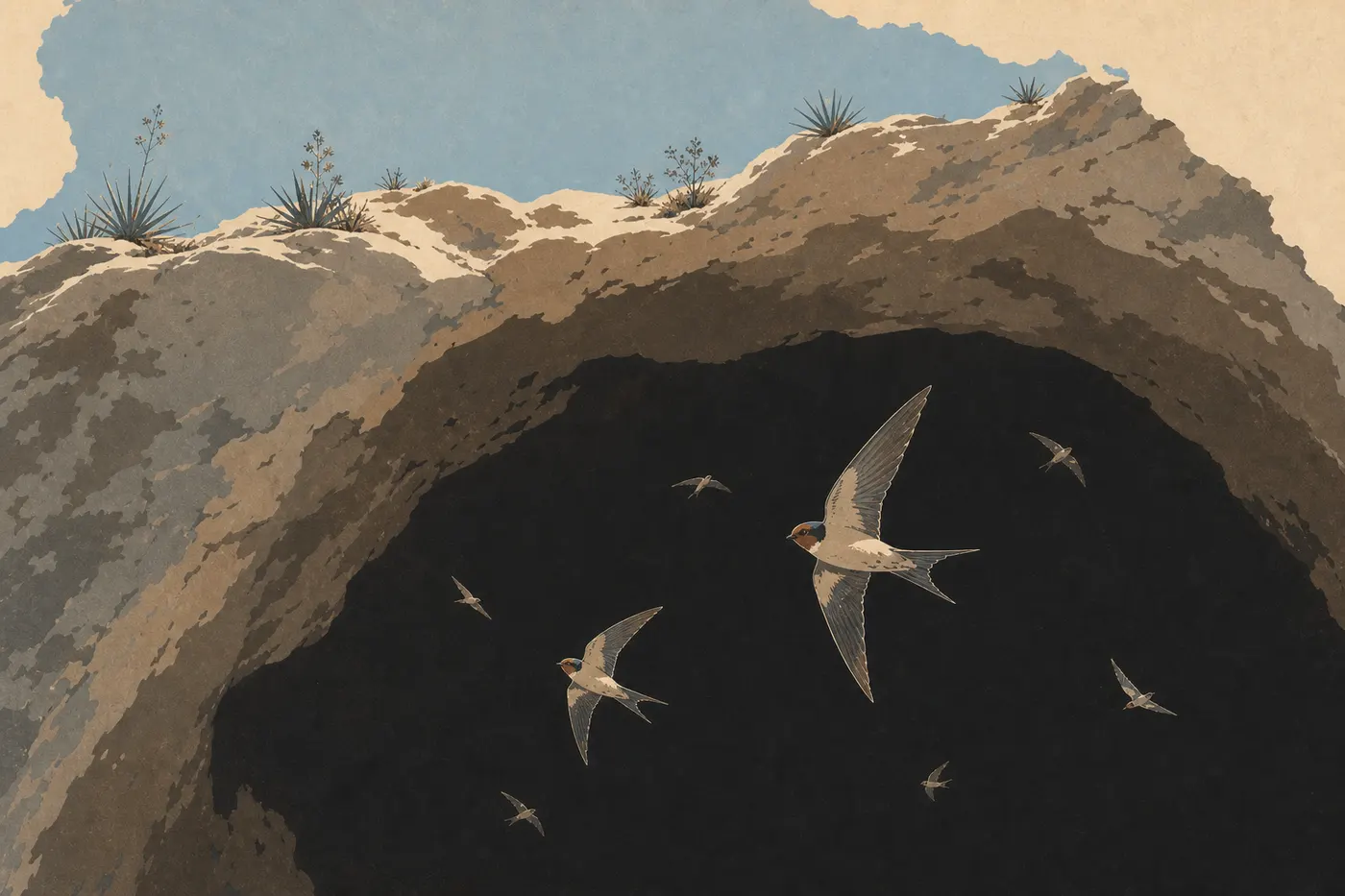
The cave swallow (Petrochelidon fulva) nests on the vertical walls of the cavern's Natural Entrance. Small, with rust-brown coloring on its nape and rump, it shares the entrance with the bats but heads out during the day. Several thousand live in the park. They catch insects in low flight, and watching their crisscrossing paths above the cavern is worth a few minutes before you descend into the cave.
Where to see wildlife at Carlsbad Caverns
The park has two clearly distinct wildlife areas.
The entrance and visitor center offer the most accessible sightings: mule deer on the lawn at dusk, cave swallows all day, and of course bats after dark. You don't need to go far to have a full wildlife itinerary.
Walnut Canyon Desert Drive, an 8.7-mile loop you can drive or bike, lets you see javelinas, black-tailed jackrabbits, coyotes, and reptiles in their natural habitat. It's also the best area for birds. Roadrunners, mockingbirds, and Gila woodpeckers are regulars here. We recommend going early, before the heat drives everything into the shade.
The cave itself is home to almost no visible animals anymore, apart from a few cave-dwelling insects in areas closed to visitors. Its Natural Entrance remains the heart of the park's wildlife show.
For the trails that cross these areas, the Carlsbad Caverns hiking guide details each trail and its terrain profile.
When to see wildlife
May through October: peak wildlife season. The bats are present, reptiles are active, and evenings at the visitor center are lively. Summer heat, reaching 100°F at the surface, pushes most animals toward dawn and dusk, making these two windows essential.
November through March: the bats migrate to Mexico. Mule deer and javelinas remain visible. Reptiles hole up. The park is much quieter, and this is often when you're most likely to cross paths with predators.
Dawn and dusk are the two key viewing windows for almost all land animals. The bats' emergence at sunset is by far the park's most spectacular wildlife event, no matter what time of year you visit.
For month-by-month details and conditions by season, see when to visit Carlsbad Caverns.
Predators and large animals in the park
The mountain lion is the apex predator, as noted above. The coyote (Canis latrans) is much more common and easy to spot early in the morning along the edge of the vegetation. More elusive, the raccoon sometimes appears near the visitor center after dark. The American badger digs through prairie dog burrows in open areas.
Among the reptiles, the western diamondback rattlesnake (Crotalus atrox) is found throughout the park. It won't attack if you leave it alone, but you can still encounter one on the trail. Look before placing your hands on a rock, and stay on marked trails.
There are no bears at Carlsbad Caverns, neither grizzlies nor black bears. The park is too low and too dry for these species.
How to watch wildlife safely
Here are a few rules to know before you head into the field.
Minimum distance: 100 feet from deer and javelinas. If you see a mountain lion, it's already close enough. Back away without running, keep eye contact, and make yourself look big.
Don't feed any animals, including the ground squirrels that seem used to people. Fed animals lose their survival instincts and often end up euthanized by the park. This is a federal regulation, not a suggestion.
During the bat flight: stay seated in the amphitheater, don't point any light, including a flashlight or phone screen, toward the cavern, and speak quietly. The NPS may stop access if visitors don't follow the protocol.
Closed-toe shoes are required outside paved areas. Scorpions and snakes readily shelter beneath flat rocks and in dry vegetation.
In brief: species not to miss and where to find them
| Species | Best spot | Best time |
|---|---|---|
| Mexican free-tailed bat | Amphitheater, Natural Entrance | Sunset (May-Oct.) |
| Desert mule deer | Around the visitor center, access road | Dusk |
| Javelina | Walnut Canyon Desert Drive | Early morning |
| Cave swallow | Natural Entrance to the cavern | Daytime |
| Texas horned lizard | Sun-exposed trails | 9-11 a.m. |
| Coyote | Edge of vegetation, Desert Drive | Dawn |
To plan your visit, find access, lodging, and activities in the Carlsbad Caverns guide.
Frequently asked questions
Are there bats in the Carlsbad Caverns caves?
Yes. Carlsbad Caverns is home to a colony of several hundred thousand Mexican free-tailed bats, which occupy the Natural Entrance cave every summer from May through October. It's the park's signature wildlife attraction.
What time can you see the bats at Carlsbad Caverns?
The bats leave the cave at sunset. The exact time changes every evening with the season, and the NPS posts it at the visitor center in the early afternoon. During peak season, it is generally between 7:30 and 8:30 p.m. The amphitheater opens about 45 minutes before the emergence.
Are there bears in the Carlsbad Caverns caves?
No. There are no bears at Carlsbad Caverns, neither black bears nor grizzlies. The park lies in the Chihuahuan Desert, an environment that is too hot and dry for these species.
Are there spiders in the Carlsbad Caverns caves?
A few species of cave-dwelling spiders live in deep areas inaccessible to the public. In areas open to visitors, encounters are rare, and the species present pose no danger to visitors.