
What to Do at Carlsbad Caverns: Must-See Highlights
Carlsbad Caverns begins with a dramatic change in temperature. You leave the Chihuahuan Desert, where July temperatures can reach 100°F, and enter a cave system kept at about 55°F year-round. Inside, you'll find one of the largest underground chambers open to the public in North America. But the park isn't limited to its caves. Above ground, desert trails, a scenic road, and a birding spot that's often overlooked by classic itineraries round out the experience.
The five highlights at a glance: the self-guided Big Room, the walk down through the Natural Entrance, the Bat Flight Program at dusk, the guided King's Palace tour, and Desert Loop Road for desert views. With a full day, you can reasonably check off the first four. Fit Desert Loop Road in early in the morning or save it for a second day.
Carlsbad Caverns at a Glance: Areas, Access, and Getting Around
The park lies in the Chihuahuan Desert in southeastern New Mexico. One road leads there: New Mexico Highway 7, reached from US Highway 62/180 at White's City, 20 miles southwest of Carlsbad and 145 miles northeast of El Paso, Texas.
The visit centers on two distinct areas.
Underground is where most of the action is. From the Visitor Center, you can reach the caves by elevator or on foot through the Natural Entrance, via about 1.2 miles of paved trail downhill. The Big Room is self-guided. The deeper galleries, including King's Palace, Left Hand Tunnel, Hall of the White Giant, and Spider Cave, are accessible only on ranger-led tours. Slaughter Canyon Cave, 18.6 miles from the Visitor Center via an unpaved road, requires its own reservation and a separate drive.
Above ground you'll find Desert Loop Road, a 9.3-mile one-way road, several lightly traveled desert trails, and Rattlesnake Springs, a natural wetland a few miles south of the Visitor Center.
The park is open 24 hours a day, but Visitor Center hours and cave tour times vary by season. For entrance fees, exact hours, and parking information, see the Carlsbad Caverns access guide.
How Much Time Do You Need to Visit Carlsbad Caverns?
The Natural Entrance combined with the Big Room makes for a 2- to 3-hour visit at an easy pace. Add the 1.5-hour guided King's Palace tour and you've got a full morning. The evening Bat Flight Program extends the day without much effort. You settle into the outdoor amphitheater, wait, and watch.
With a full day, a morning of caves, including the Natural Entrance, Big Room, and King's Palace, followed by Desert Loop Road in the early afternoon and Bat Flight in the evening is realistic and rewarding. With two days, you can add a wild cave and the surface trails without rushing.
The Carlsbad Caverns itinerary guide offers detailed plans for different trip lengths, including a half-day visit.
Highlights by Area
Underground (1): Natural Entrance, a Walk Down into the Rock
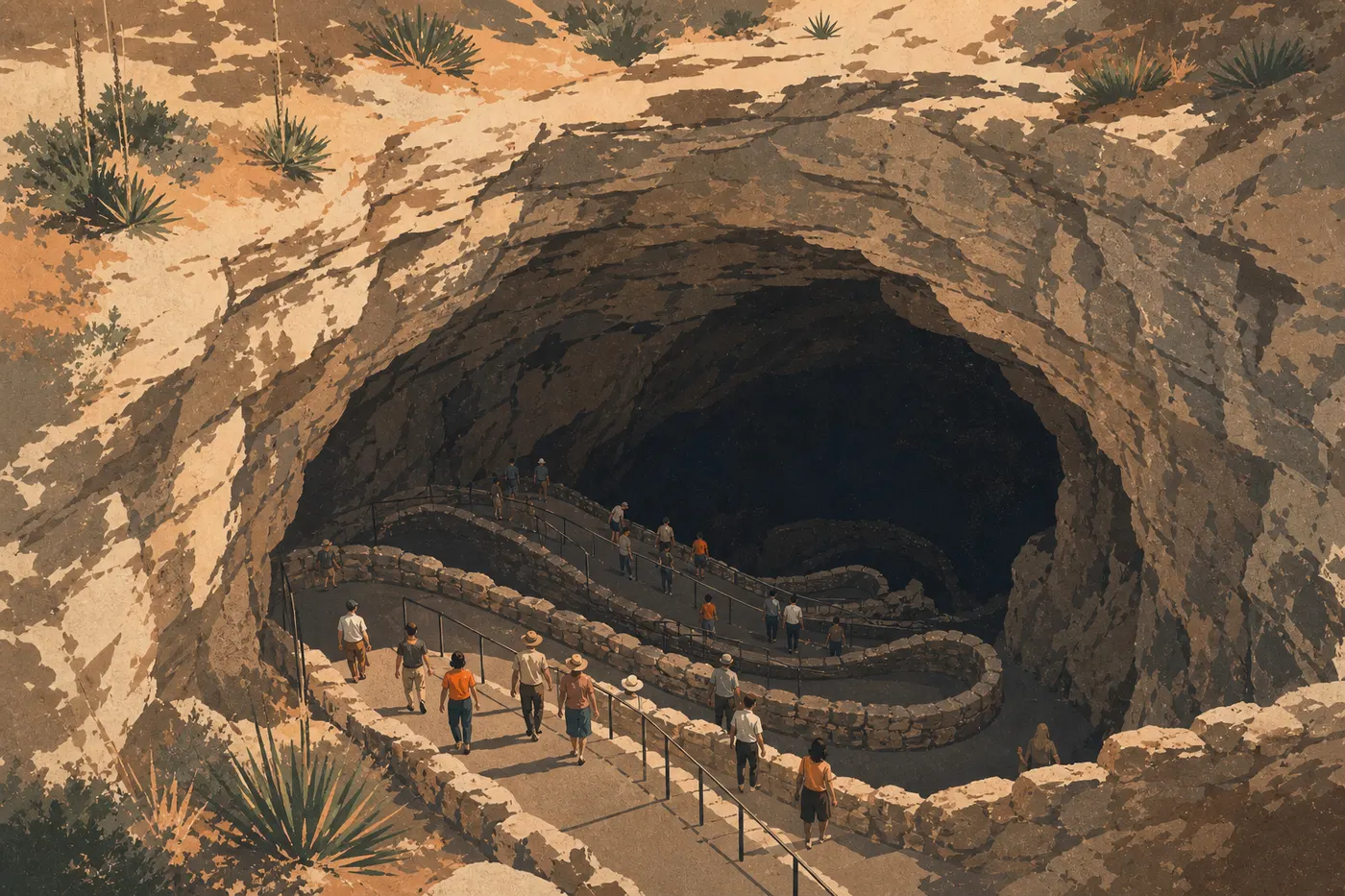
The Natural Entrance is the opening in the cliff face where the first explorers entered in the early 20th century. From the Visitor Center plaza, a paved trail winds downhill for about 1.2 miles, dropping roughly 750 feet before reaching the level of the Big Room.
The walk takes 45 minutes to an hour. The slope is manageable but steady. What you get in return is a gradual transition from desert heat to cool cave air, limestone formations within reach during the first few minutes, and a sense of exploration that the elevator can't provide. When we visited in September, a light mist of condensation hovered at the exact point where warm outdoor air meets the caves' cold, damp air. No photo can quite capture that detail.
The descent works for most fitness levels. The walk back up, with 750 feet of elevation gain, is considerably harder. Taking the elevator both ways is still a perfectly good option, as is walking down and riding the elevator back up.
Underground (2): The Big Room
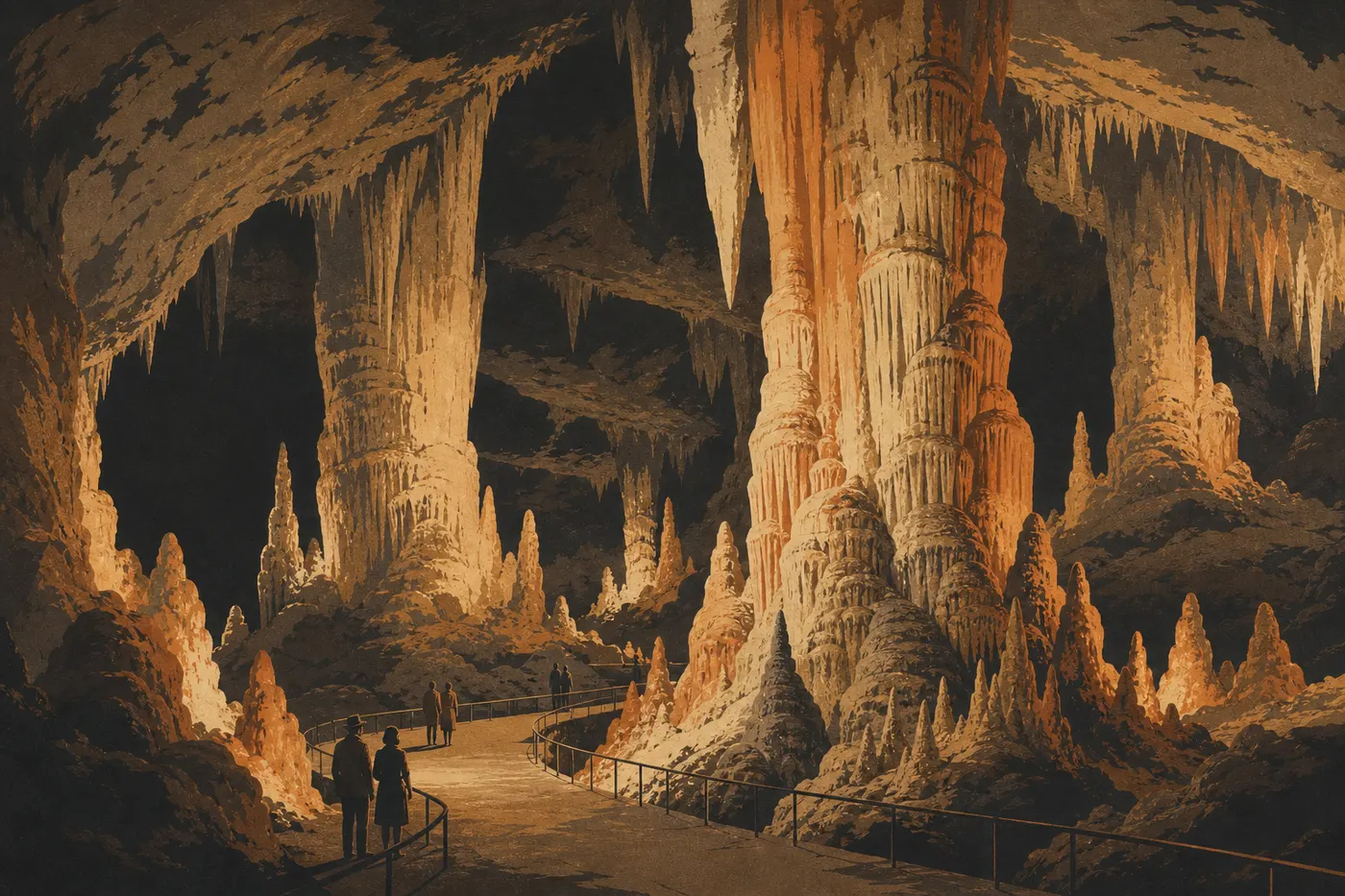
The Big Room is the main chamber in the part of the cave system open to the public. Its scale is hard to grasp. Once inside, the far walls disappear into shadow, while stalactites hanging dozens of feet overhead form an upside-down forest.
A roughly 1.2-mile loop circles the chamber on a self-guided tour. Interpretive signs in English line the route, and the NPS mobile app provides additional commentary. The best-known formations have names of their own: the Rock of Ages, the Bottomless Pit, and the Hall of Giants. Each reflects a distinct geological story.
Keep two things in mind. Flash photography isn't allowed, and closed-toe shoes with nonslip soles are required because parts of the floor are regularly damp. Strollers are allowed but impractical on some sections. Ask at the Visitor Center about conditions based on your child's age.
Underground (3): King's Palace and the Wild Caves
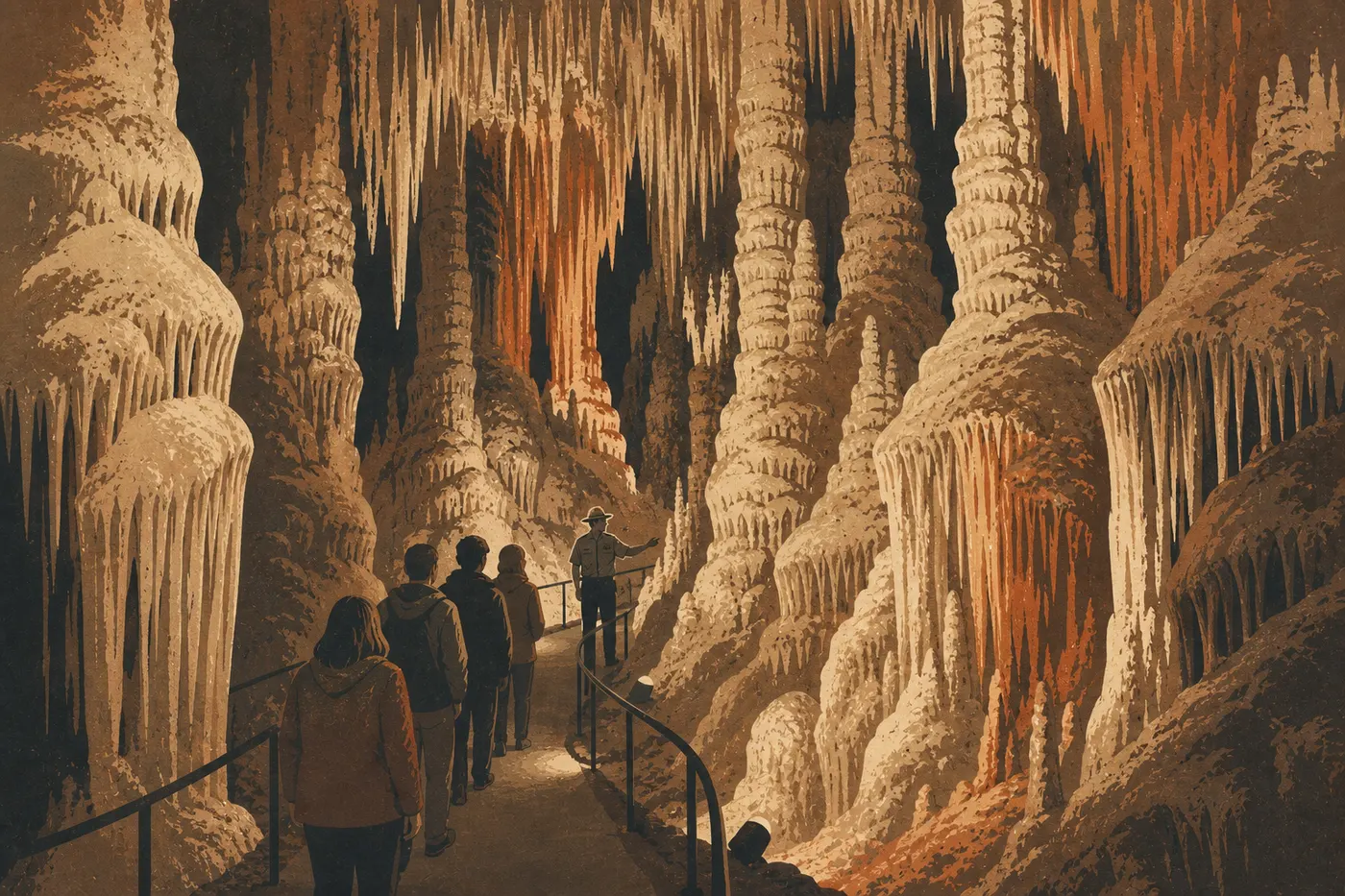
Beyond the Big Room, deeper galleries extend beneath the plateau. This is where you'll find some of the cave system's densest and most delicate formations, including translucent limestone draperies and columns several yards high. The area is known as King's Palace and is accessible only on a guided ranger tour. The tour lasts about 1.5 hours and descends to 820 feet below the surface.
If you want to leave the developed route behind, the wild caves offer a completely different experience. Left Hand Tunnel is the most accessible, with a level floor and a lantern provided by the ranger, making it suitable for beginners. Hall of the White Giant and Spider Cave require crawling, coveralls, and a willingness to get dirty. Slaughter Canyon Cave, the largest of the wild caves, requires a separate drive on an unpaved road and a substantial physical effort.
All of these tours must be reserved through Recreation.gov. Weekend slots during peak season can sell out weeks ahead, so don't leave this step until the day before.
Above Ground: Desert Loop Road and the Views
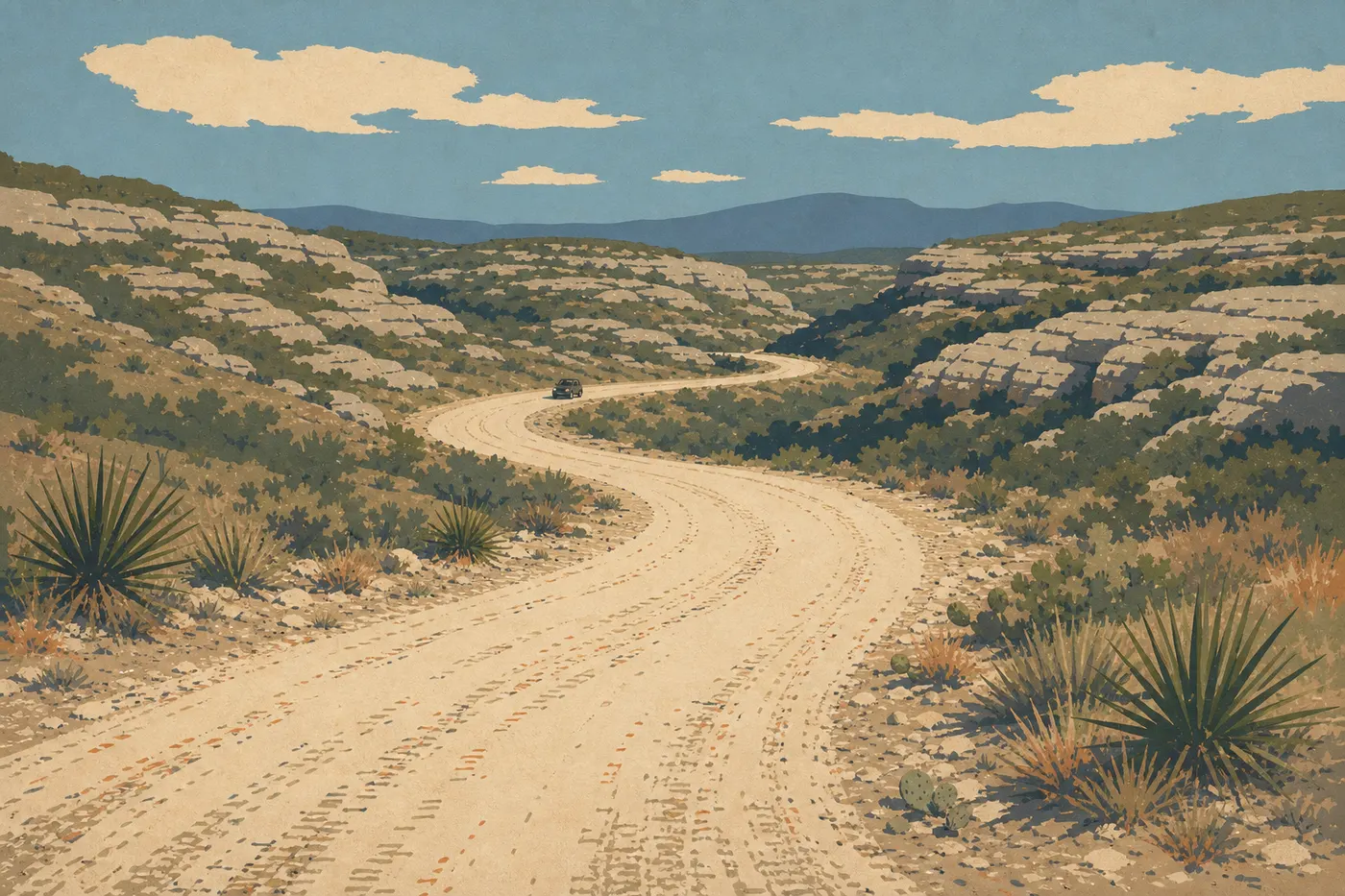
Desert Loop Road is a 9.3-mile one-way road that leaves the Visitor Center, climbs onto the limestone plateau, and returns via the south. Several overlooks let you stop along the way. In the late afternoon, low-angle light brings out the limestone's textures and colors the canyons ocher and rust. That's the best time for photographers.
The road is suitable for ordinary passenger cars. Large RVs and vehicles with trailers should check length restrictions at the park entrance because some turns are tight. If you're planning to combine Desert Loop Road and Bat Flight on the same evening, time it carefully. The amphitheater fills fairly early, and arriving 30 to 40 minutes before the estimated flight time usually gets you a comfortable seat.
Above Ground: Rattlesnake Springs
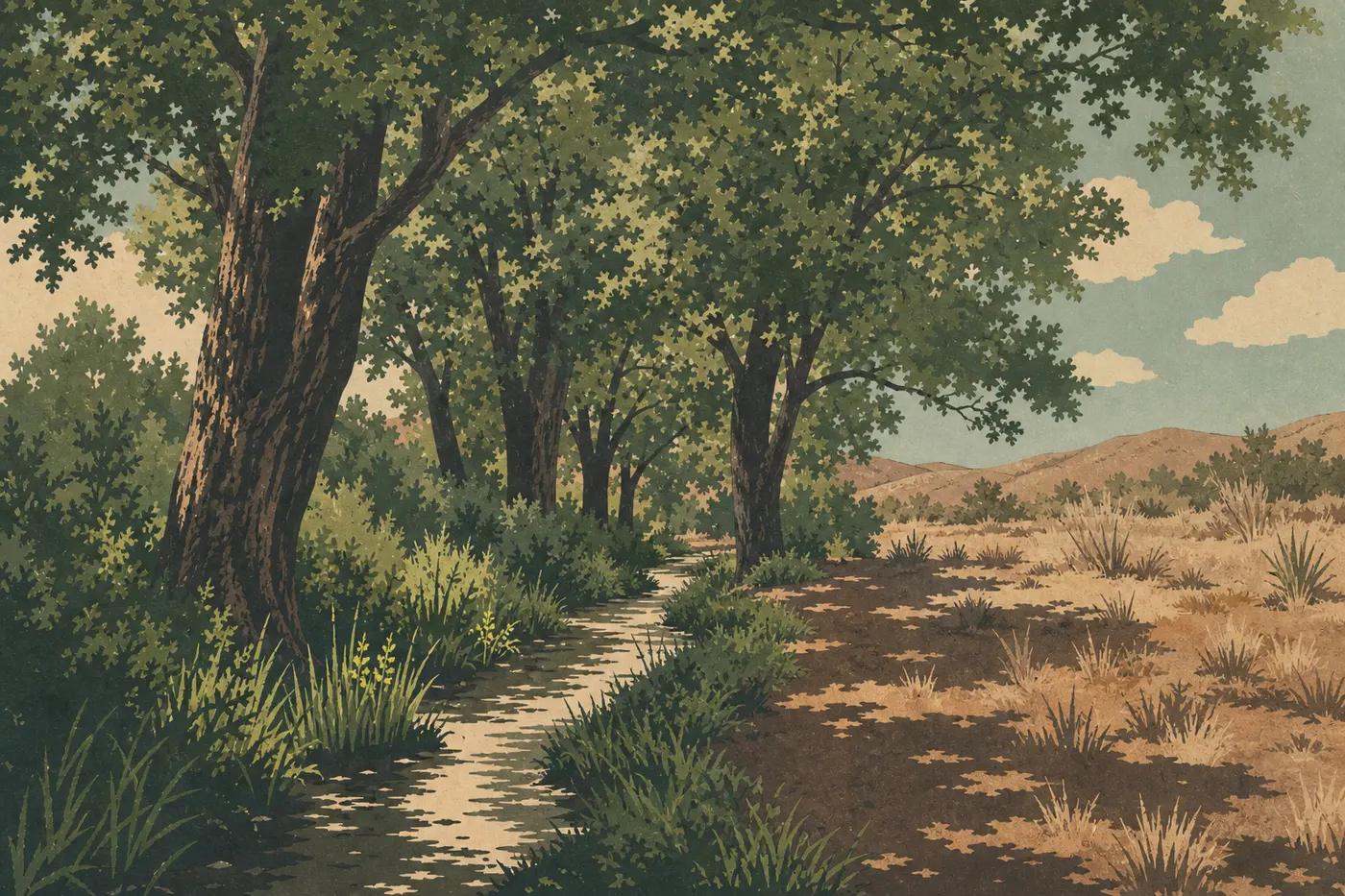
A few miles south of the Visitor Center, accessible only via US Highway 62/180 and not from the park's internal loop, Rattlesnake Springs is a permanent natural spring surrounded by cottonwoods, an unexpected sight in the middle of the desert. It's a self-contained micro-ecosystem: cool, shaded, and completely surprising.
The main draw is birding. More than 300 species have been recorded here, including several water-loving species that seem surprising in this setting. The site is also home to mule deer, coyotes, and, around dusk, javelinas. Picnic tables are available, but there's no food service. It's an easy stop if you're returning from Slaughter Canyon Cave on the same road.
The Bat Flight Program
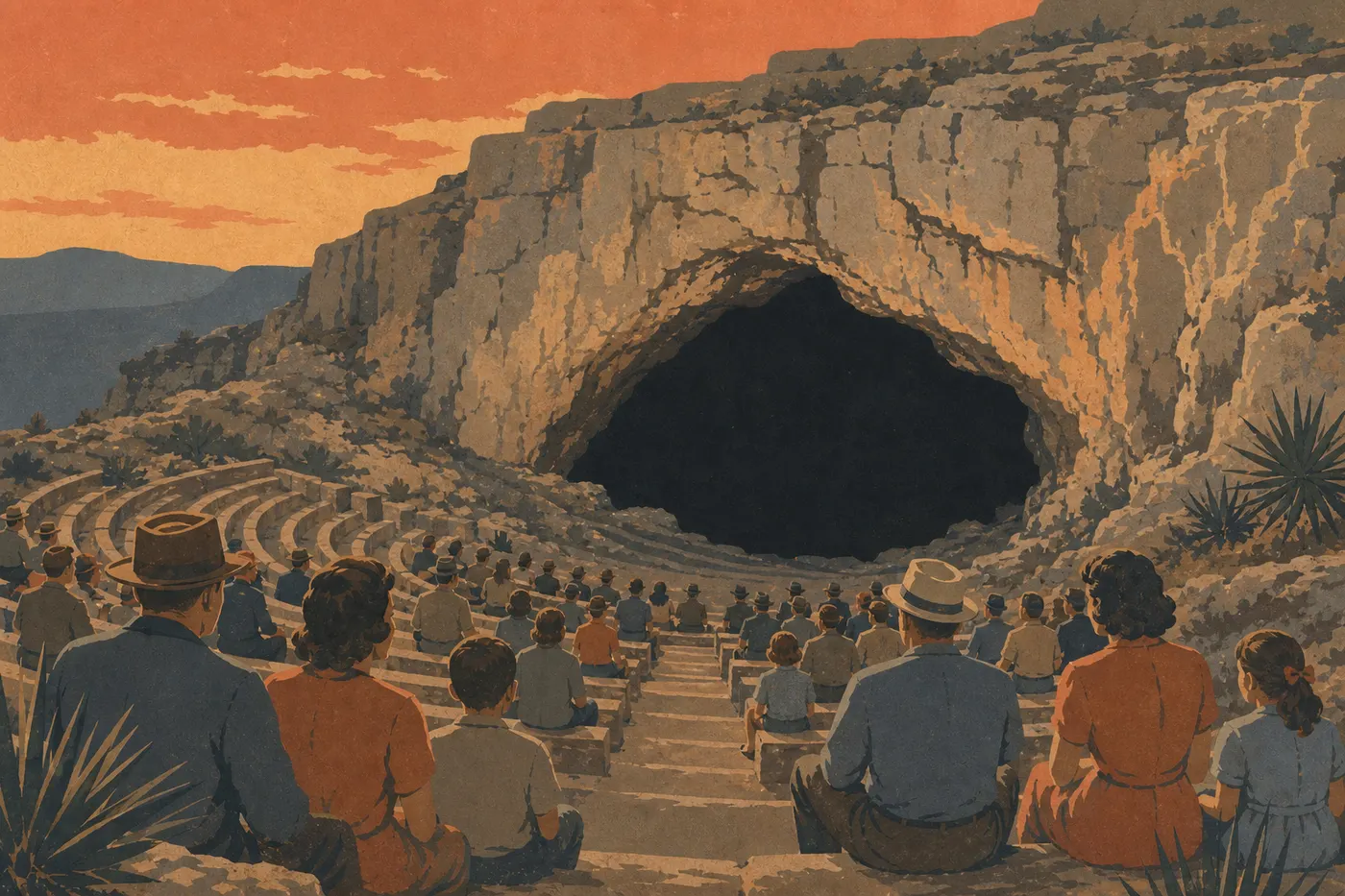
The Bat Flight Program is Carlsbad Caverns' signature natural spectacle. From May through October, a colony of several hundred thousand Brazilian free-tailed bats, or Tadarida brasiliensis, leaves the caves at dusk to hunt insects. The bats spiral out through the Natural Entrance in a steady stream that lasts 20 to 45 minutes, depending on the size of the colony that evening.
You watch from an outdoor amphitheater facing the entrance. The program is free and doesn't require a reservation. A ranger gives a short presentation before the bats emerge. Three absolute rules apply: no artificial light, including phone screens, since bright light could disorient the bats and disrupt the flight; stay quiet while they emerge; and don't fly drones nearby.
The flight time changes every evening with the season, temperature, and weather. The Visitor Center posts an estimate each afternoon. Bring an extra layer even in summer. Evenings cool off quickly, and the wait can last an hour. Check the Carlsbad Caverns weather forecast so you know what to expect later in the day.
The Best Hikes at Carlsbad Caverns
Carlsbad Caverns isn't a classic hiking destination, but the park's surface offers a few routes that let you leave the tourist flow behind and step into the real desert.
The Desert Nature Walk, about 0.3 miles and flat, starts at the Visitor Center and is perfect for a quick introduction to Chihuahuan Desert plants: yuccas, agaves, ocotillos, and Mexican hat cacti. The Rattlesnake Canyon Trail, about 2.2 miles one way and rated moderate, ventures into a narrow canyon far from the crowds. For experienced hikers, the backcountry offers longer routes, but they require a permit, a map, and careful water management. There are no reliable water sources outside Rattlesnake Springs.
In summer, never set out without at least 3 liters of water per person for a half-day. Surface temperatures climb above 100°F in July and August. The Carlsbad Caverns trails guide covers each route, with difficulty ratings, distances, and hazards to watch for.
Other Activities Based on Your Interests
Wildlife Watching
Beyond the bats, the park is home to a wide range of desert wildlife: mule deer, coyotes, horned lizards, several rattlesnake species, and a remarkable variety of birds concentrated at Rattlesnake Springs. Stay on the trails and watch your step, especially at dusk and dawn. The Carlsbad Caverns wildlife guide lists species to look for by season and the best viewing areas.
Photography and Stargazing
The Big Room has its own constraints. A compact tripod is essential for long exposures, flash is prohibited, and artificial light must stay dim and constant. Above ground, the golden hours around sunrise and sunset reveal the limestone textures in beautifully low-angle light. At night, the park's remote desert setting means little light pollution and an impressive sky. The park occasionally hosts astronomy programs with rangers, so ask at the Visitor Center.
Families and Junior Rangers
The Junior Ranger program, available free at the Visitor Center, gives children an activity booklet to complete during their visit. The reward is an official NPS badge. The self-guided Big Room works well for kids as young as 5 or 6 because the route is long but manageable. Wild cave tours have limited capacity, and some require a minimum age. Check the exact requirements when you book. The Carlsbad Caverns family guide brings together practical advice for planning a visit with children of different ages.
Things to Do Around Carlsbad Caverns
Carlsbad Caverns fits naturally into a road trip through southern New Mexico. Guadalupe Mountains National Park, 34 miles southwest, shares the same geological formation and offers a completely above-ground experience. White Sands National Park, 100 miles west, spreads white gypsum dunes across a radically different landscape. The city of Carlsbad, 20 miles northeast, remains the area's natural logistical base.
The Bottom Line: What to See First at Carlsbad Caverns
Carlsbad Caverns is absolutely worth the trip. The Bat Flight Program alone is reason enough to spend a night nearby. It's a natural spectacle unlike anything else in the national park system. The Big Room remains the central experience, accessible to everyone and impossible to replicate elsewhere. The Natural Entrance adds a physical dimension and the feeling that you've truly descended into the earth instead of simply taking an office elevator.
Based on how much time you have, here's what works. With a half-day, take the elevator, walk the Big Room loop, and stay for Bat Flight if it's in season. With a full day, walk down through the Natural Entrance and add the guided King's Palace tour. With two days, explore a wild cave and spend a morning on the surface trails or at Rattlesnake Springs.
Frequently Asked Questions
Are the Carlsbad Caverns worth visiting?
Carlsbad Caverns is absolutely worth visiting. The Big Room is one of the largest underground chambers open to the public in North America, and the Bat Flight Program is a natural spectacle with no equal on the continent. Even travelers who aren't especially interested in caving come away impressed.
Can you explore Carlsbad Caverns on your own?
Yes. You can explore the Big Room entirely on your own, with no guide required. All galleries beyond the Big Room, however, including King's Palace, Left Hand Tunnel, Hall of the White Giant, Spider Cave, and Slaughter Canyon Cave, require a ranger-led tour that must be reserved in advance through Recreation.gov.
What time do the bats leave Carlsbad Caverns?
The bats' departure time changes every evening with the season, temperature, and weather, so there is no fixed time. The Visitor Center posts an estimate each afternoon. As a general rule, the flight begins shortly before or just after sunset from May through October, when the colony is present. The program is suspended outside that seasonal window.
Do you need a reservation to visit Carlsbad Caverns?
The self-guided Big Room doesn't require a specific reservation, but a $1 timed entry reservation may be required during peak season. Check the NPS website before you leave. Guided tours of the deeper galleries and wild caves must be reserved through Recreation.gov. Capacity is limited, and summer weekend slots fill quickly.
What should you wear to visit the caves?
No matter how hot it is outside, bring a warm layer. The caves stay around 55°F year-round. Closed-toe shoes with nonslip soles are essential because parts of the floor are damp and sometimes slippery. For the wild caves, wear clothes you don't mind getting dirty. Rangers provide coveralls and helmets.