
Carlsbad Caverns Weather: Forecast, Climate, and Current Conditions
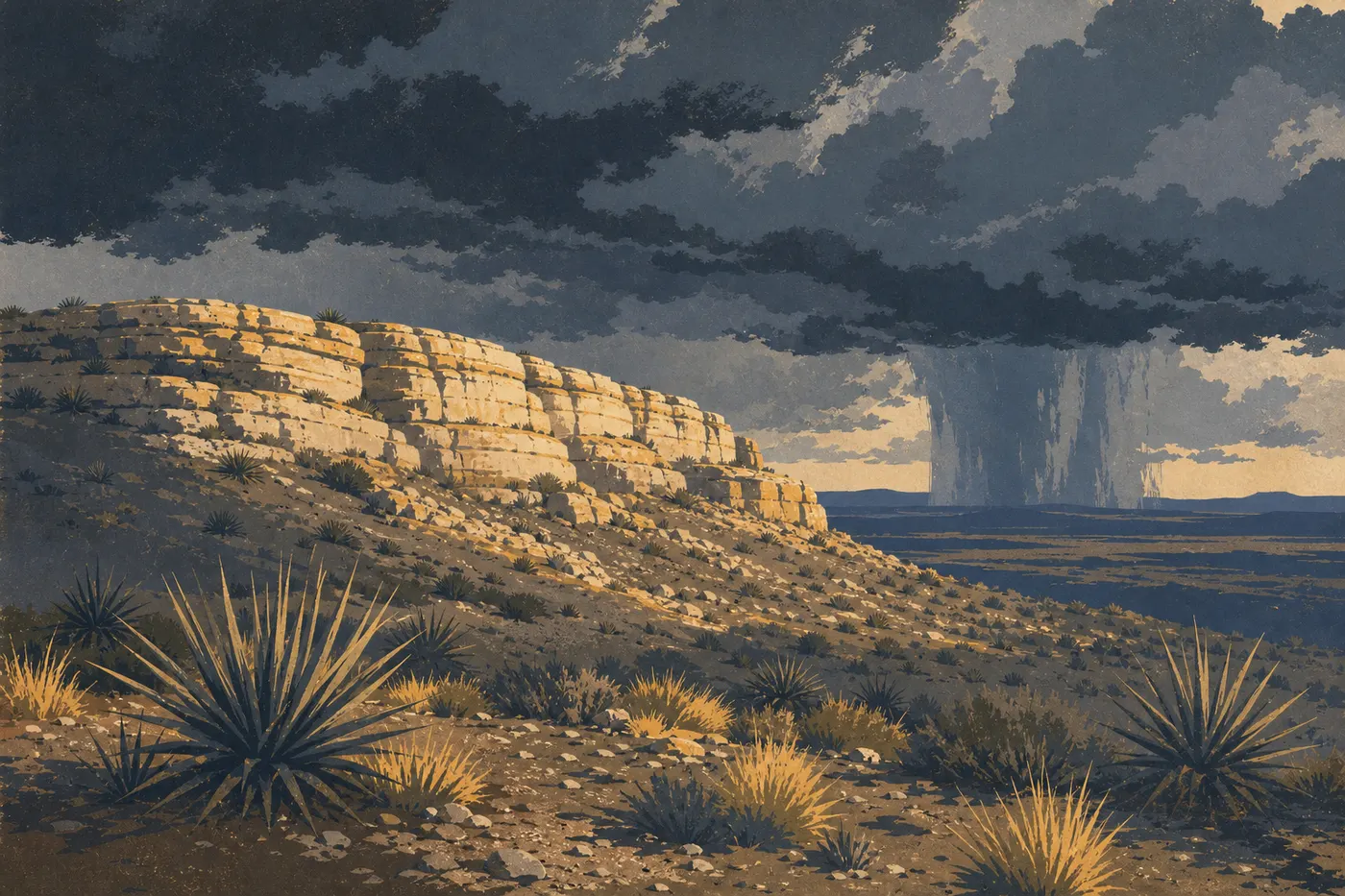
Carlsbad Caverns lies in the Chihuahuan Desert of southeastern New Mexico, a semiarid environment with about 278 sunny days a year. In a nutshell, expect scorching summer temperatures at the surface (90 to 100°F), stormy monsoon weather from mid-July through September, cool but generally sunny winters, and caves kept at 55°F year-round. If you're reading this in July, the monsoon is settling in, so expect afternoon thunderstorms. For complete trip planning, our complete guide to Carlsbad Caverns covers activities, lodging, and must-see sights.
Current readings are unavailable. See the seasonal averages farther down this page.
Open-Meteo readings · updating… · park time zone
Current Conditions at Carlsbad Caverns
In summer, the temperature difference between dawn and the afternoon high at the surface often exceeds 27°F. Choosing the right time for your outing can completely change the experience.
Carlsbad Caverns Forecast (7 to 14 Days)
Forecasts for the next 48 hours are reliable in this region. Beyond that, the monsoon makes weather models less precise, so check again the evening before an outdoor hike.
Carlsbad Caverns Climate by Month
The table below shows the park's climate normals, recorded at an elevation of about 4,300 feet. July and August alone account for nearly half of the year's precipitation.
| Month | Low (°F) | High (°F) | Precipitation |
|---|---|---|---|
| January | 32 | 57 | Low |
| February | 36 | 63 | Low |
| March | 41 | 70 | Moderate |
| April | 48 | 79 | Low |
| May | 57 | 88 | Low |
| June | 66 | 99 | Very low |
| July | 72 | 99 | High |
| August | 70 | 95 | High |
| September | 63 | 88 | Moderate |
| October | 50 | 77 | Low |
| November | 39 | 64 | Low |
| December | 32 | 55 | Low |
June is the hottest and driest month. The monsoon typically arrives in the second half of July, bringing showers that are often brief but very intense. The rest of the year stays remarkably arid.
Here's something many visitors don't expect: the caves stay at 55°F year-round, with a noticeable flow of cold air right from the Natural Entrance. It's 99°F outside? Twenty meters below ground, you'll want a sweater.
Is It Cold or Hot at Carlsbad Caverns? Records and Extremes
Heat is the main threat at the surface. Temperatures regularly top 100°F in June, and most outdoor trails offer no natural shade. At 4,300 feet, UV radiation is more intense than along the coast, so you can get a sunburn in less than an hour without protection.
In winter, nighttime temperatures hover near 32°F from December through February. Freezing conditions are possible, but significant snowfall is rare. Daytime temperatures generally stay above freezing, with often-clear skies.
The park's defining temperature feature is the caves themselves: 55°F year-round, with a noticeable breath of cold air at the Natural Entrance. Descending into the galleries after two hours of hiking at the surface in the middle of August makes for a striking contrast.
What to Wear and Bring by Season
Summer (June-August): Long-sleeved shirt for UV protection, wide-brimmed hat, sunglasses, and SPF 50+ sunscreen. Bring at least 2 liters of water per person for any surface outing longer than an hour. Also essential is a light fleece jacket for the underground galleries.
Spring (March-May): Dress in layers. A cool morning (50°F), warm afternoon (77 to 86°F), and steady wind call for a light waterproof jacket that handles all three conditions.
Fall (September-November): Conditions are similar to spring, without the wind. Bring a warm jacket for evenings starting in October.
Winter (December-February): Bring a coat, gloves, and hat for morning outings. Check road conditions if below-freezing temperatures are in the forecast. And bring the fleece jacket for the caves, as you would in any season.
For gear specific to each route, the Carlsbad Caverns hiking guide explains the difficulty levels and trail-by-trail conditions.
Alerts and Conditions to Watch
Flash floods: From July through September, a thunderstorm upstream can trigger a flash flood on a sunbaked trail within minutes. If storm clouds build over the high ground, get to higher ground immediately. Rangers issue alerts at the Visitor Center.
Extreme heat: From June through August, surface exposure between 11 a.m. and 4 p.m. is dangerous. Plan outdoor outings before 10 a.m. or after 5 p.m. The underground galleries offer a naturally air-conditioned refuge during the hottest hours.
Winter ice: New Mexico Highway 7, the access road from White's City, 20 miles southwest of Carlsbad, can be slippery after a freezing night from December through February. Check conditions before setting out.
Trail closures: After heavy rain, some outdoor trails close temporarily for safety reasons. For current closures and updated Visitor Center hours, check the official NPS website.
Frequently Asked Questions
What's the weather like at Carlsbad Caverns right now?
The current weather at Carlsbad Caverns appears in the "Current Conditions" section at the top of the page. In summer, expect daytime surface temperatures of 90 to 100°F. The caves stay at 55°F regardless of the weather outside.
What's the current temperature at Carlsbad Caverns?
The current temperature at Carlsbad Caverns appears in the real-time data above. Seasonal normals range from highs of 55°F in December to 99°F in June and July.
Is it cold at Carlsbad Caverns?
Carlsbad Caverns is mainly cold at night in winter, when lows drop to around 32°F from December through February. Days are often sunny and above freezing. The caves stay at 55°F year-round.
What should I wear to visit Carlsbad Caverns?
The standing rule for visiting Carlsbad Caverns is to bring a fleece jacket for the underground galleries, which stay at 55°F year-round. In summer, add SPF 50+ sunscreen, a hat, and at least 2 liters of water for the outdoor trails. In winter, bring a coat and gloves for the mornings.
What is the climate like at Carlsbad Caverns?
Carlsbad Caverns has a semiarid desert climate in the Chihuahuan Desert, with hot, dry summers through June, monsoon weather from mid-July through September, and cool, sunny winters. The park gets about 278 sunny days a year.