
Arches Wildlife: Which Animals to See and Where to Find Them
Arches can surprise you. You come for the sandstone arches and leave remembering the bighorn sheep standing two yards from the edge of the road, or the raven eyeing your sandwich as soon as it came out of your pack. This high desert in Utah isn't empty. It's home to wildlife adapted to extremes, able to handle temperatures of 104°F in summer and freezing conditions in January. Five animals account for most wildlife sightings in the park: desert bighorn sheep, mule deer, coyotes, common ravens, and eastern collared lizards. The first is the park's emblem, while the last two are almost impossible to miss.
Arches' Iconic Animals
Desert Bighorn Sheep
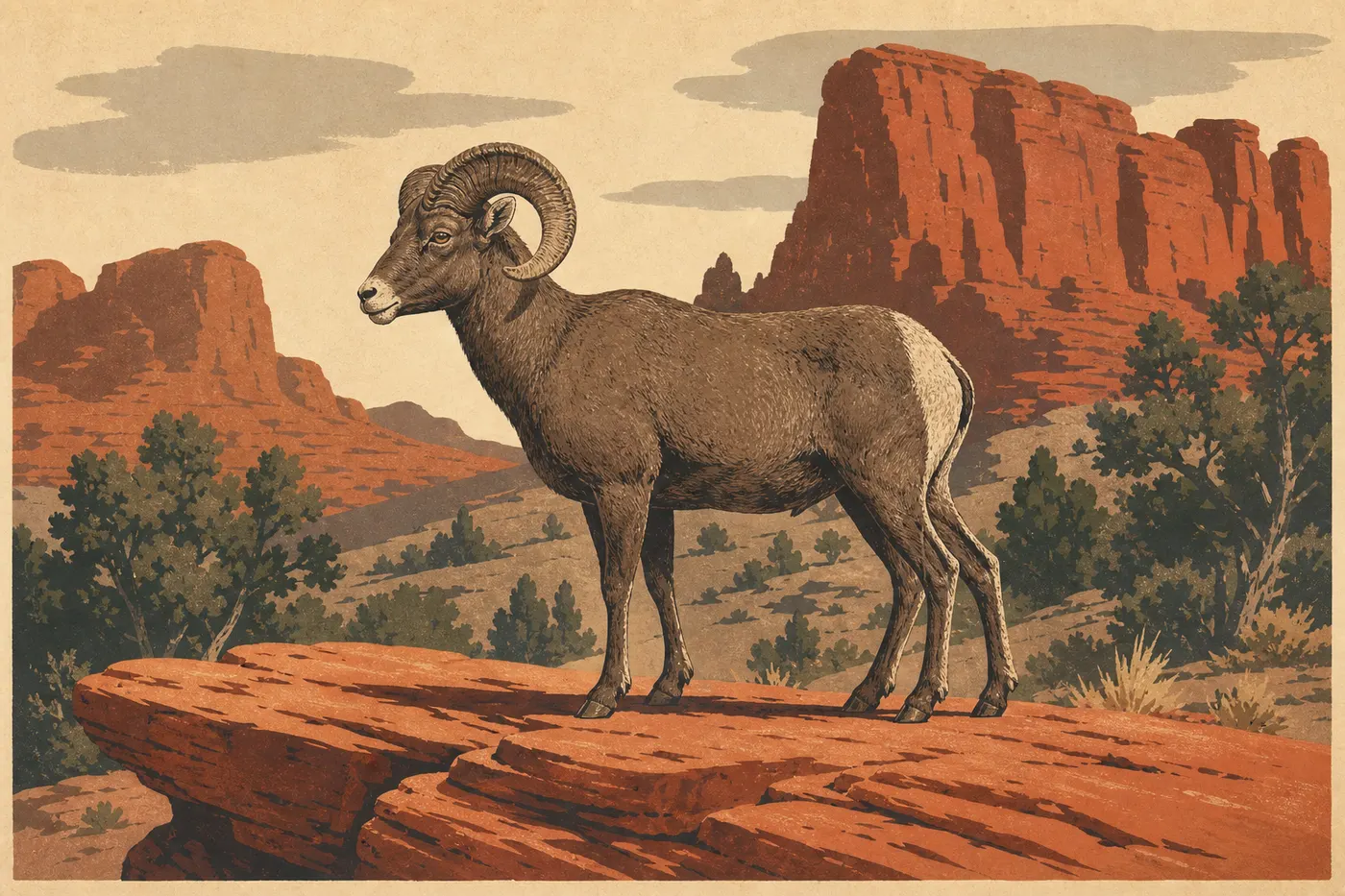
This is Arches' signature animal. The desert subspecies (Ovis canadensis nelsoni) nearly disappeared from the region in the 20th century before a successful reintroduction. Today, several dozen animals share the park's cliffs and canyons. Adult males have curved horns that can span more than 3 feet. Females have short, straight horns, so you can tell them apart at a glance. Bighorn sheep move across slopes that look impossible to climb. Their split hooves, lined with gripping pads, naturally hold to the sandstone. Look for them at dawn or in the late afternoon along the main road near Courthouse Towers, or on the walls visible from The Windows Section.
Mule Deer
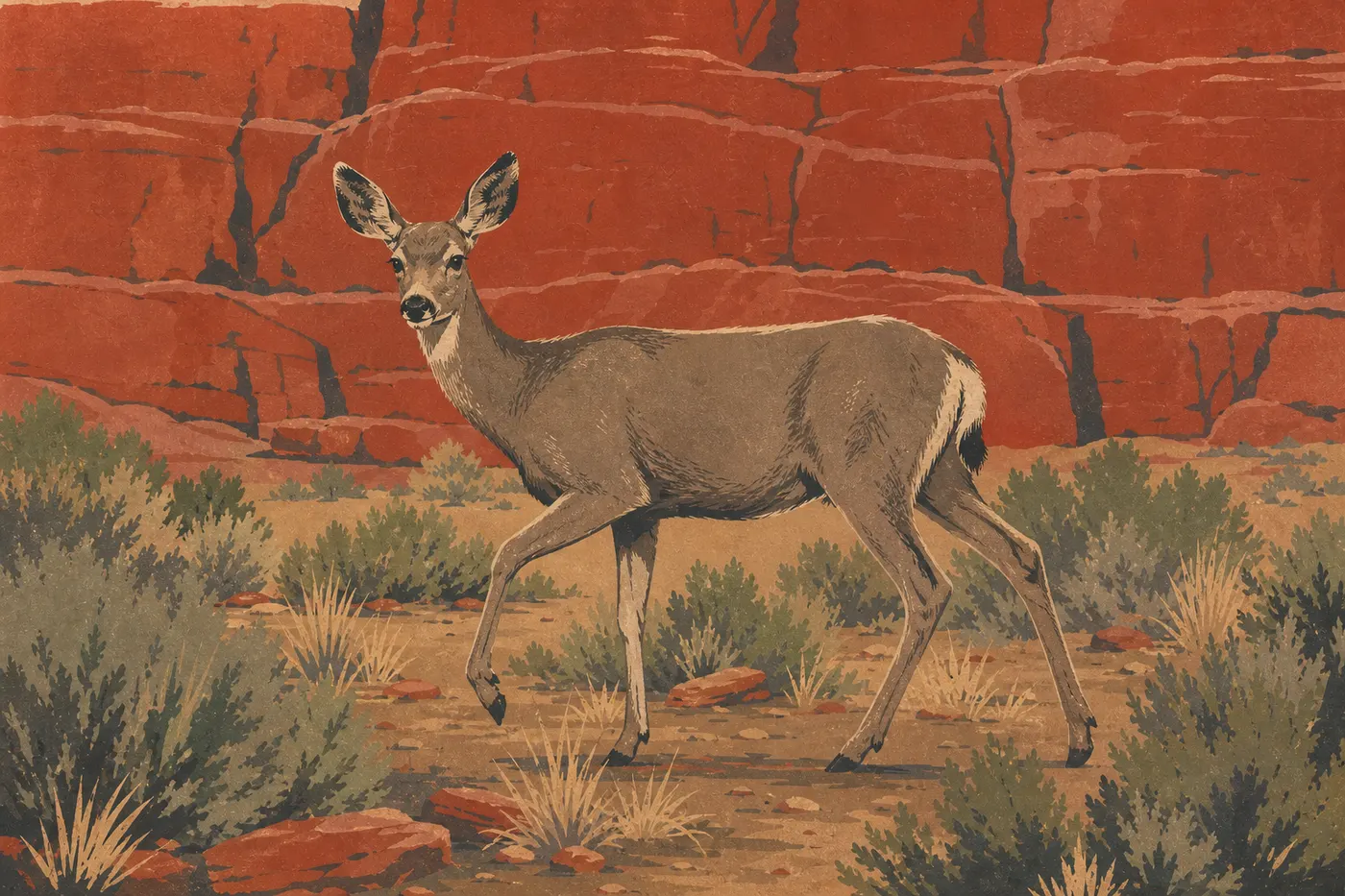
Mule deer (Odocoileus hemionus) get their nickname from their large, upright ears, which resemble a mule's. They're common throughout the American West, and Arches is no exception. You'll usually see them alone or in small groups, browsing the sparse vegetation in low-lying areas in the morning or evening. Outside the November-December rut, males and females live separately. Their tawny coats turn gray in winter, making them harder to spot against the red sandstone. Binoculars make all the difference.
Coyotes
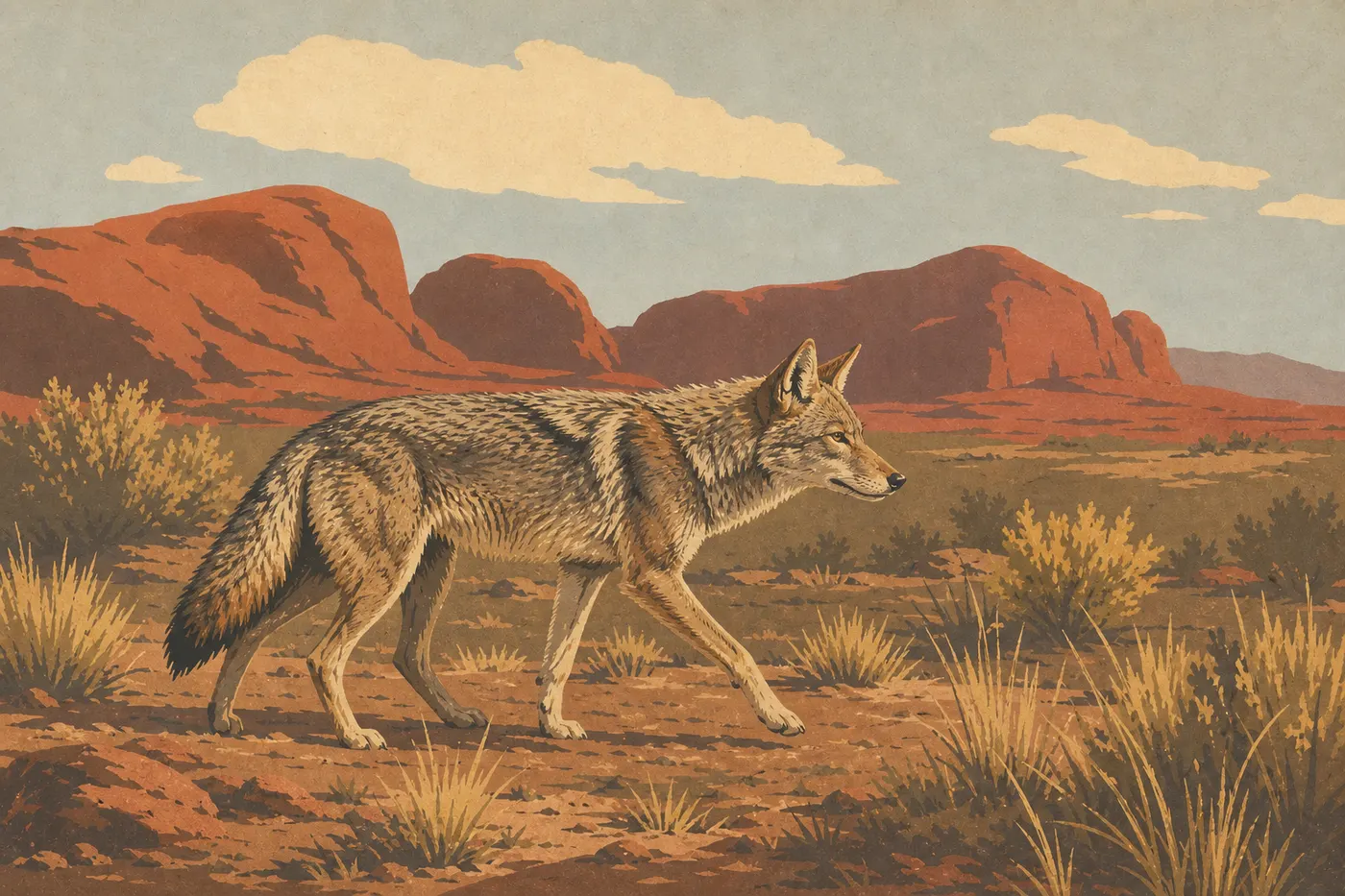
Coyotes (Canis latrans) adapt to just about anything, and Arches is no exception. They can be mistaken for a slender German shepherd, but their bushy, low-carried tails, narrow muzzles, and slender legs give them away. They eat rodents, lizards, carrion, and, unfortunately, human trash when they get the chance. Coyotes are most active at dusk and at night, but you may see one in broad daylight outside the busy season. Their collective “song,” audible from the campground at night, is a sound that doesn't fit easily into the category of “ordinary.”
Common Ravens
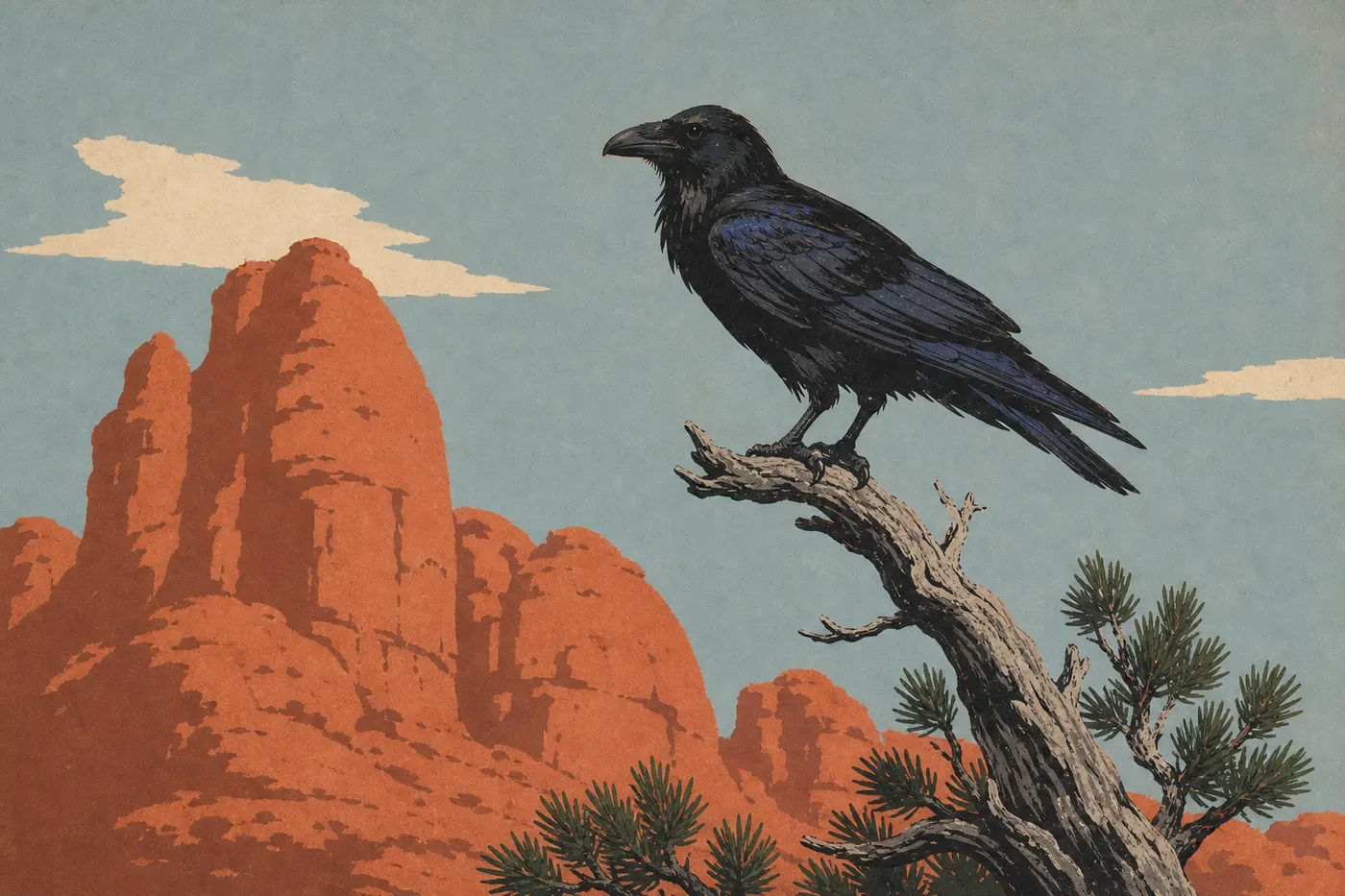
Common ravens (Corvus corax) are everywhere in the park: in parking lots, along the trails, and perched on a rock watching hikers with a distracted, calculating look. You can distinguish them from crows by their much larger size, about 24 inches long compared with 18 inches, their shaggy throats, and their diamond-shaped tails in flight. They eat whatever they can find, making them experts at scavenging forgotten picnic food. Don't feed them. It's prohibited, and it trains them to approach people until they become aggressive.
Eastern Collared Lizard
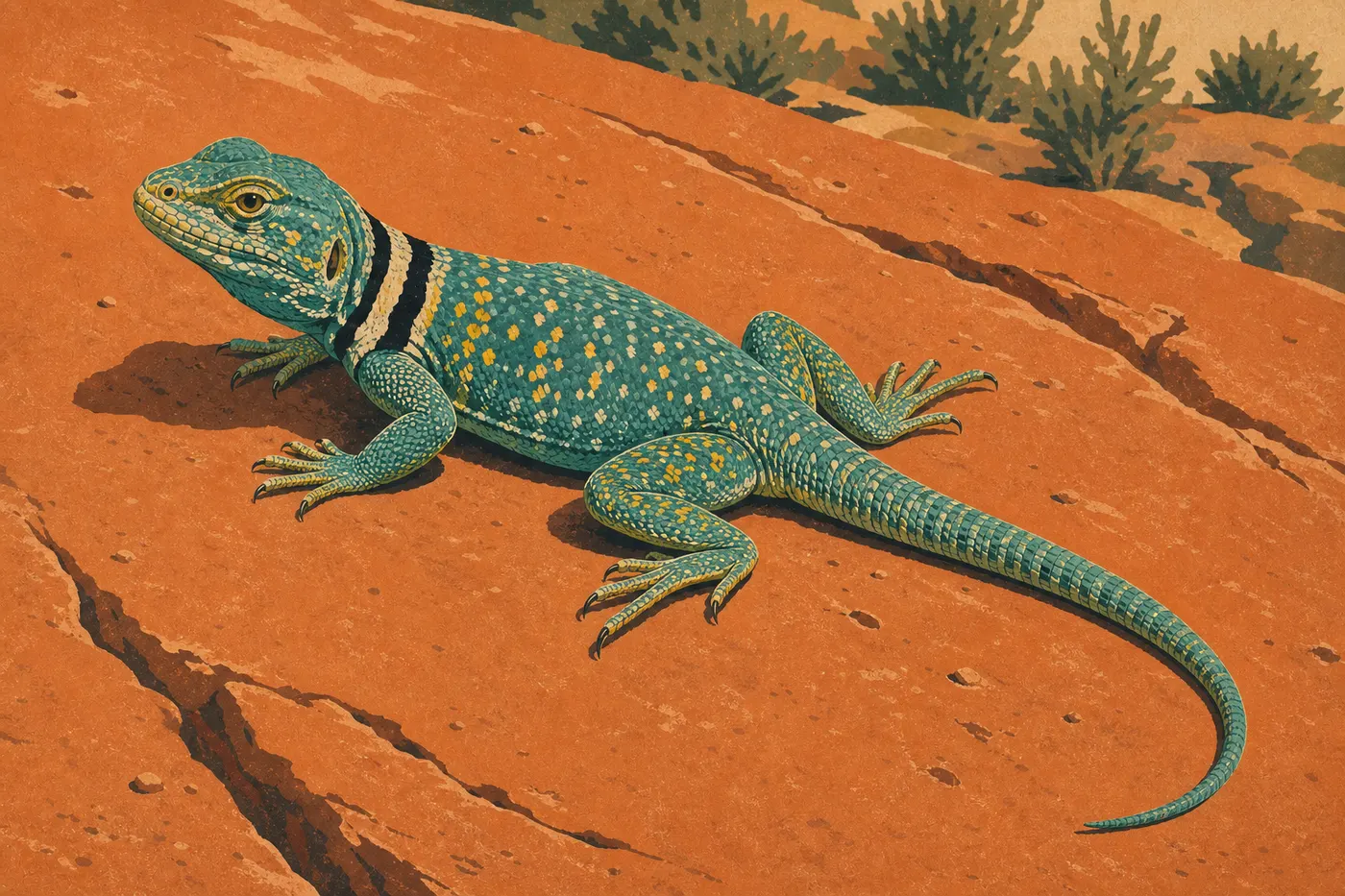
The eastern collared lizard (Crotaphytus collaris) is Arches' most colorful star. An adult male has a bright green or turquoise back, an orange belly, and two pronounced black collars around its neck. It can grow to about 14 inches long and runs on its hind legs when it wants to speed up, giving it a distinctly prehistoric look. You'll find it perched on sunlit rocks, defending its territory with characteristic series of push-ups. Females and juveniles are more subdued, with gray-brown coloring and a few orange spots during breeding season.
Where to See Wildlife in Arches
The park is compact, covering 120 square miles, but wildlife isn't spread evenly. A few areas offer the best chances for sightings:
Courthouse Towers (at the entrance, just past the visitor center): this is prime bighorn sheep territory. From the main road, scan the sandstone walls with binoculars. The animals blend in well, but they move regularly in the morning.
The main road to Delicate Arch: mule deer frequent the edges of this stretch at dawn. Sagebrush provides them with food and cover.
The Balanced Rock parking lot: ravens are everywhere. Park rangers regularly report coyotes passing through this area.
Rock outcrops throughout the trails: any sunny rock could be home to an eastern collared lizard or a side-blotched lizard (Uta stansburiana), which is much smaller and even more common.
For nocturnal species such as kangaroo rats, ringtails, and ringtail cats, heading out at dusk with a red-light headlamp along rocky areas improves your chances. The Arches hiking guide lists trails that work for evening outings and terrain conditions by area.
When to Watch for Wildlife
The high-desert rule applies year-round: animal activity follows the heat, not the calendar. In summer (June through August), temperatures regularly climb above 100°F at noon. Bighorn sheep, deer, and coyotes are then mostly active at dawn and dusk. Head out before 8 a.m. or after 6 p.m. for the best sightings. Lizards like the heat and stay active longer, but they also disappear during the hottest hours.
Spring (April and May) is the ideal window. Daytime temperatures range from 59°F to 81°F, animals stay active for much of the day, and vegetation provides more resources, drawing wildlife into areas accessible from marked trails. Fall (mid-September through October) is another excellent option, with the bighorn sheep rut starting in late November.
For migratory birds, spring is the best season. More than 300 species have been recorded in the park over the course of a year. Peregrine falcons (Falco peregrinus), great horned owls (Bubo virginianus), American kestrels, and turkey vultures are among the regular species. The Arches seasons guide covers park conditions season by season, along with expected temperatures and planning advice.
Predators and Large Animals in Arches
Arches isn't Yellowstone. You won't find grizzlies or wolves here. The park's top predator is the mountain lion (Puma concolor), also called a cougar. It ranges across the Colorado Plateau, including Arches' backcountry, but encounters are extremely rare. Mountain lions are secretive, mostly nocturnal, and naturally wary of people. Rangers record incidents under “exceptions.”
The coyote, introduced above, is the predator you're most likely to see. It hunts small rodents, lizards, and ground birds. The turkey vulture serves as an aerial scavenger. Its wingspan exceeds 6 feet, and its V-shaped soaring flight makes it easy to recognize from a distance, even before you see its characteristic red head.
There are no black bears or grizzlies in the park. If your road trip takes you to parks where bears are present, such as Grand Teton or Glacier, check the local guidance when you arrive.
Safely Watching Wildlife
The NPS sets clear rules, and for good reason. Incidents almost always happen when visitors get too close or feed animals.
Required minimum distance: 100 feet from deer, coyotes, and birds, and 165 feet from bighorn sheep and any large animal. If an animal changes its behavior, such as stopping its grazing, raising its head toward you, or changing direction, you're already too close. Back away calmly.
Never feed wildlife: it's strictly prohibited under park regulations and can result in a fine. Feeding a raven or a ground squirrel trains it to approach people, putting it at risk through road accidents and aggressive behavior while disrupting its natural diet.
Snakes: the prairie rattlesnake (Crotalus viridis) lives in the park. It wants to avoid contact just as much as you do. On the trails, watch where you step, especially beneath rock blocks and near shaded cracks. If you're bitten, don't suck the wound or apply a tourniquet. Get to the visitor center immediately or call for emergency help.
Scorpions: they're not very dangerous to a healthy adult, but their sting hurts. At night, shake out shoes and clothing left on the ground before putting them on. The same goes for the inside of your tent if you leave it open.
Headlamp: essential for any outing at dusk. Aim it at the ground so you don't step on a lizard. Scorpions also glow faintly under UV light if you have one.
In Short: Wildlife You Shouldn't Miss and Where to Find It
| Species | Best area | Best time |
|---|---|---|
| Desert bighorn sheep | Courthouse Towers, The Windows Section | Dawn, dusk |
| Mule deer | Main road, trail edges | Dawn, dusk |
| Coyote | Throughout the park | Dusk, night |
| Common raven | Parking lots, picnic areas | All day |
| Eastern collared lizard | Sunlit rocks, all areas | 10 a.m.-2 p.m. in spring and fall |
| Mountain lion | Backcountry | Night (exceptional sighting) |
| Peregrine falcon | Courthouse cliffs | Spring |
Our complete Arches guide brings together all the resources you need to plan your visit from start to finish.
Frequently Asked Questions
What are the iconic animals of Arches?
The iconic animals of Arches National Park are desert bighorn sheep, mule deer, coyotes, common ravens, and eastern collared lizards. Reintroduced after nearly disappearing locally, bighorn sheep are the park's signature species.
What is the most common animal in Arches?
The most common animal in Arches is the common raven, which is present in every area of the park year-round. Among reptiles, the side-blotched lizard is the most widespread. Among mammals, coyotes are the ones you're most likely to encounter.
What is the largest animal in Arches?
The largest animal in Arches is the mountain lion, which can weigh up to 200 pounds. Among commonly seen species, adult male bighorn sheep are the largest mammals, with some individuals weighing more than 220 pounds.
What predators live in Arches?
Arches' main predators are the rarely seen mountain lion and the much more visible coyote. Raptors, including peregrine falcons, American kestrels, and great horned owls, round out the picture. Turkey vultures are present but feed exclusively on carrion.
What animals are out at night in Arches?
At night in Arches, coyotes, kangaroo rats, ringtails, scorpions, and rattlesnakes are active. On a full-moon night, keeping watch from the campground lets you hear at least the coyotes, and sometimes spot one at the edge of the lit areas.
Are there bears in Arches?
There are no bears in Arches National Park, black or grizzly. The local top predator is the mountain lion, which remains secretive and is rarely seen by visitors. You don't need to take bear precautions specifically in this park.