
What to Do in Arches: Must-See Sights and Activities
In a nutshell. Three visits cover the heart of Arches National Park: hiking to Delicate Arch, Utah's signature arch; exploring the natural maze of Fiery Furnace; and walking through Devils Garden to Landscape Arch. Add a stop at The Windows Section to see several arches with little walking, and you've got the foundation for a successful visit, even in a single day.
Arches at a Glance: Areas, Access, and Getting Around
Arches National Park lies in southeastern Utah, 5 miles north of Moab on US 191. From town, the entrance is signposted from the main road. Turn right at the traffic light. The park stretches across a red sandstone plateau more than 3,900 feet above sea level, with wide day-to-day temperature swings. The difference between morning and afternoon can sometimes exceed 36°F. Our guide to the seasons in Arches breaks down the best months for different types of travelers.
The park is organized around a single main road, Scenic Drive, which runs about 19 miles from the visitor center to its terminus at Devils Garden. There is no official shuttle. You'll drive between the designated parking areas for each zone. From south to north, the areas follow one another like this: Courthouse Towers at the entrance, Balanced Rock in the middle, then The Windows Section and Delicate Arch Area, two turnoffs to the east, followed by Fiery Furnace and finally Devils Garden at the end of the road. The park map gives you an overview of the park's geography before you set out.
Timed entry reservations are required during the busy season. Since 2022, a timed entry system has been in effect roughly from April through October. You'll need to reserve your entry on Recreation.gov before arriving at the entrance station. Reservations can disappear within minutes during peak periods. Check Arches access requirements for current details. Current fees are $30 per vehicle and $15 for pedestrians or cyclists.
How Much Time Do You Need to Visit Arches?
One day covers the essentials if you arrive before 8 a.m. This is the NPS's explicit recommendation for avoiding entrance traffic and full parking lots by midmorning. Arriving after 3 p.m. is a good alternative outside the busiest days. With a well-paced day, you can do Delicate Arch in the morning, The Windows Section around midday, and Devils Garden in the late afternoon.
Two days give you more breathing room: a ranger-led Fiery Furnace tour booked in advance, Courthouse Towers at sunset, and a foray into Klondike Bluffs to get away from crowded parking lots. This is the format we recommend if you have the choice.
Three days or more turn Arches from a road-trip stop into a destination in its own right. To plan your stay day by day, our Arches itinerary guide offers detailed plans based on the number of nights you have.
Must-See Sights, Area by Area
Courthouse Towers: Your Introduction to the Landscape
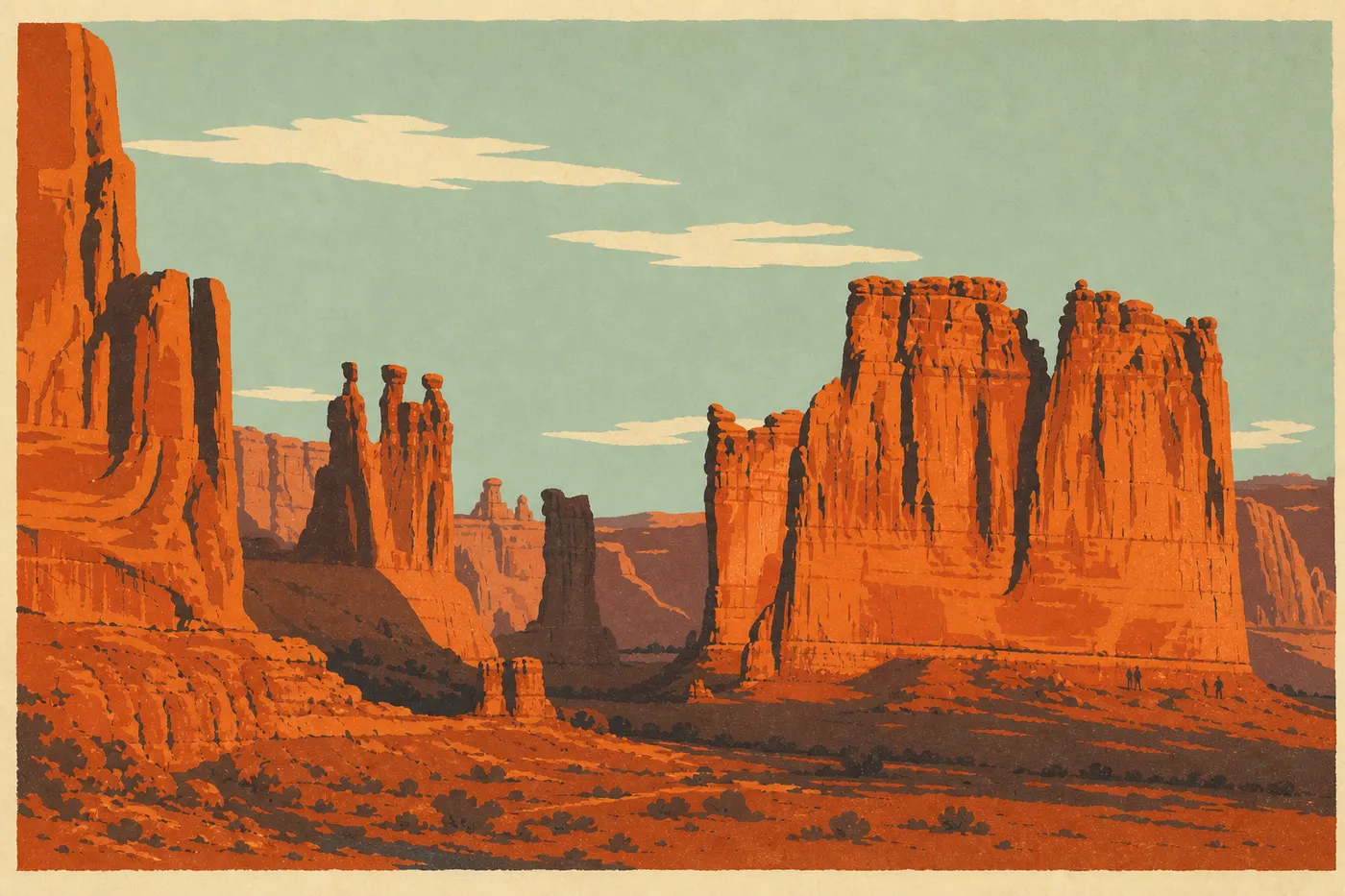
Just past the visitor center, the road climbs through a series of switchbacks onto the plateau and opens onto a panorama of red towers and pinnacles that geologists group under the name Courthouse Towers. The formations have evocative names: Tower of Babel, Sheep Rock, and The Organ. You can take them in from the car, but if you want to stretch your legs, Park Avenue is the ideal first hike.
Park Avenue is a natural sandstone trench about 1 mile round-trip and nearly flat. Early geologists compared it to a New York City avenue lined with rock skyscrapers, and the image fits perfectly. Allow 30 to 40 minutes. It's easy. This is often the first hike of the trip, and it's already a pleasant way to get moving.
Right next door, don't miss the Courthouse Wash Rock Art Panel, accessible from US 191 before you even reach the park's fee station. It features petroglyphs and pictographs left by Indigenous peoples. View it from below and don't touch the rock walls.
Balanced Rock: The Essential Stop

Halfway along Scenic Drive, Balanced Rock is exactly what its name promises. A sandstone block weighing several thousand tons balances on a slender pedestal, like a giant mushroom about to topple. From the parking area, a 0.9-mile loop circles the monolith. Allow 20 to 25 minutes. The elevation gain is negligible.
The angle of the light changes everything here. Late in the day, the block turns coppery in the low light. If you're there at sunset, stop.
The Windows Section: Several Arches with Little Walking

The Windows Section probably offers the park's best arches-to-effort ratio. From the parking area, three major formations are reachable in less than 30 minutes of walking:
North Window and South Window form what is known as the Spectacles: two large oval openings cut into the same rock wall. Stepping into the frame of North Window to photograph the desert below gives you one of the park's iconic views.
Turret Arch, a few hundred yards away, has sharper angles, with a small secondary arch cutting through the wall above the main opening. Walk closer to find the right angle.
Double Arch, east of the parking area, is 1,600 feet from the main trail. It's a rare geological curiosity: two arches sharing a common pillar, with one of the park's largest spans. Step into the natural bowl beneath the arches and look up. The overhang is striking.
The full loop is about 1 mile with virtually no elevation gain. This is the recommended area for families with young children and for anyone who wants to see lots of arches without a strenuous hike.
Delicate Arch: Utah's Signature Arch
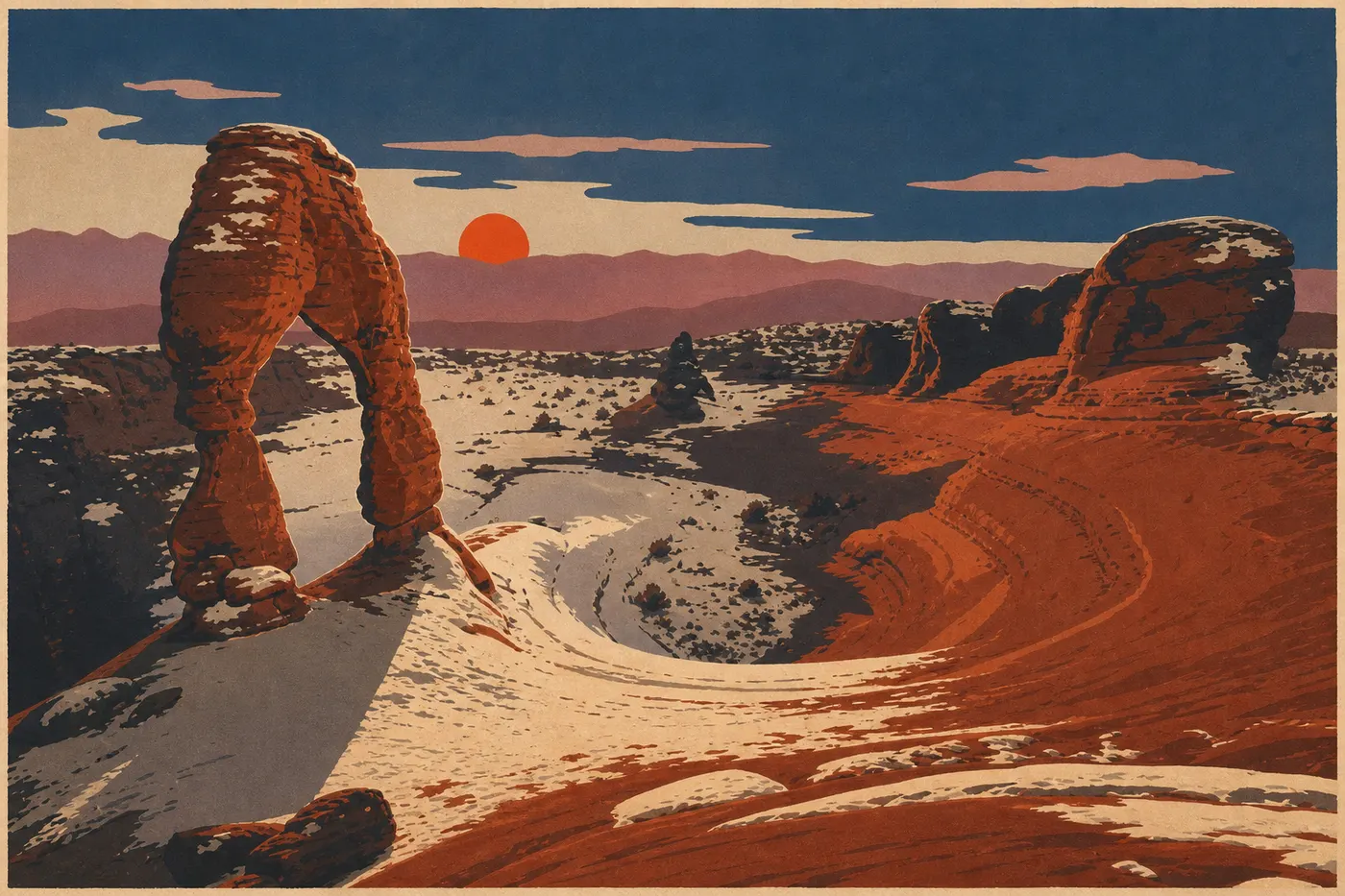
No one leaves Arches without seeing Delicate Arch. This slender arch, about 52 feet high, appears on Utah license plates and is one of the most photographed silhouettes in America's national parks. You reach it at the end of a 3-mile round-trip trail from the Wolfe Ranch parking area, with 480 feet of elevation gain over bare rock fully exposed to the sun.
The hike isn't technically difficult, but the exposure is total. In summer, temperatures regularly rise above 100°F, and the trail offers no shade. Start at dawn or in the late afternoon. The low light on the orange sandstone at sunset is Delicate Arch's defining light, the one you've seen in every photo. It's also the best reward after the climb.
If the hike isn't an option, there are two alternatives from below. The Lower Delicate Arch Viewpoint is accessible from the parking area without walking, while the Upper Delicate Arch Viewpoint is about 1,000 feet away and involves a few steps. These viewpoints are worth a stop, but they don't replace reaching the edge of the natural amphitheater below the arch. The sudden reveal of the formation as you emerge from a rocky corridor remains one of the park's highlights.
At the Wolfe Ranch parking area, take two minutes to read the signs about this 19th-century homestead. The Ute petroglyph panel is a few yards from the trailhead, adding another layer of history before you start the climb.
Fiery Furnace: A Maze That Calls for a Guide
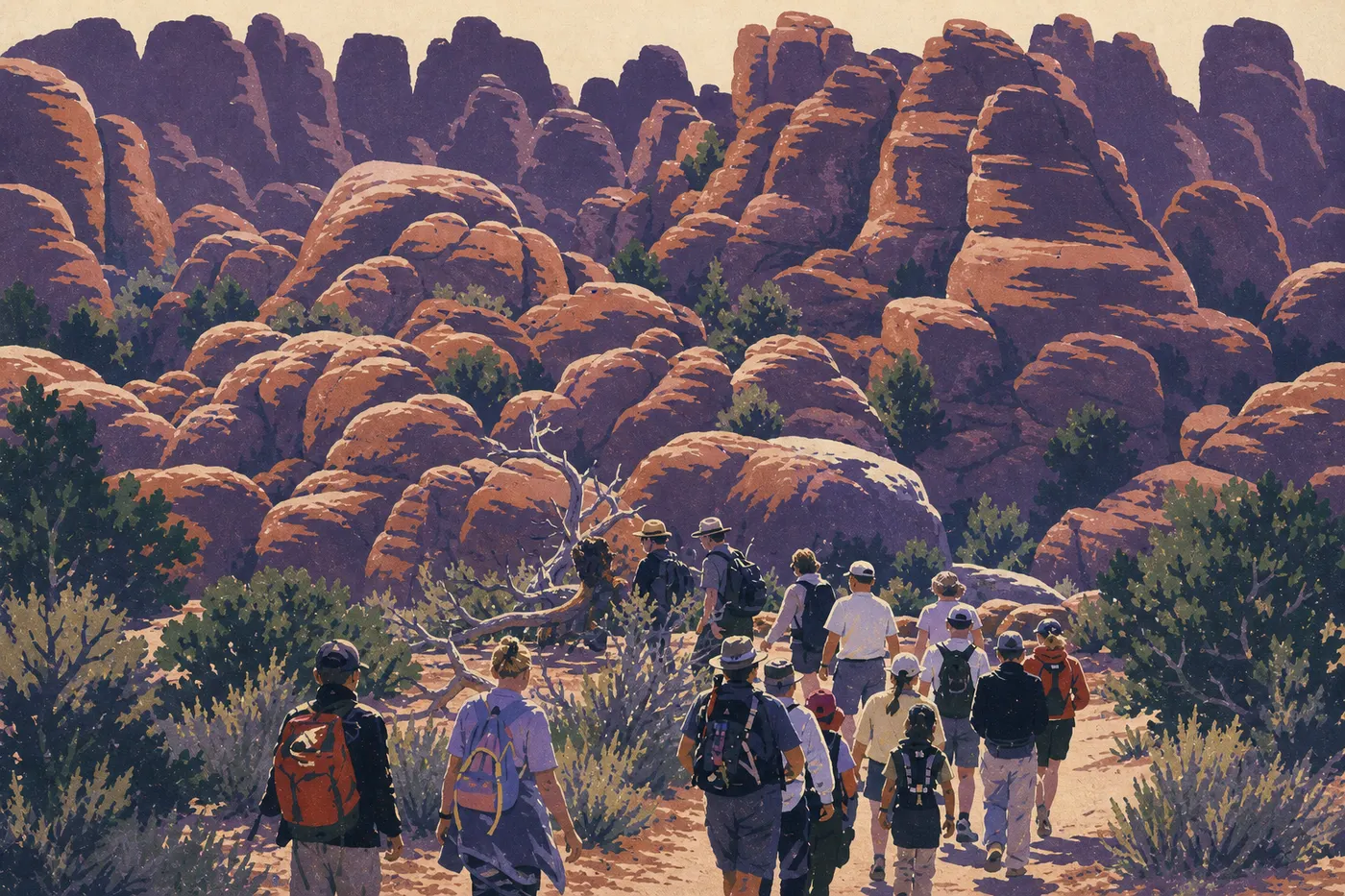
Fiery Furnace isn't a marked trail. It's a maze of cracks, rock corridors, and narrow passages with no official path marked on the ground. You can enter without an escort with a specific permit reserved on Recreation.gov, but the rangers are clear: it's easy to get lost, and the terrain requires off-trail navigation skills that many visitors don't have.
The option we recommend is an NPS ranger-led tour, lasting about 3 hours, with limited-size groups. Spots book weeks in advance during the high season. If you've got only one day, the guided tour isn't essential. If you've got two days, it's the experience that tends to leave the strongest memories, away from the crowded parking lots along Scenic Drive. The area's name comes from the orange reflections on the walls at sunset, which look like flames.
Just beside the main access point, two less-visited arches are worth a quick detour. Sand Dune Arch sits in a sandy hollow in the shade, making it ideal for a cool break in midsummer. Broken Arch can be reached from the same parking area in about 1.5 miles round-trip. These two formations let you add unusual arches to your list without tackling the crowds at the main sites.
Devils Garden: The Road's Worthwhile End
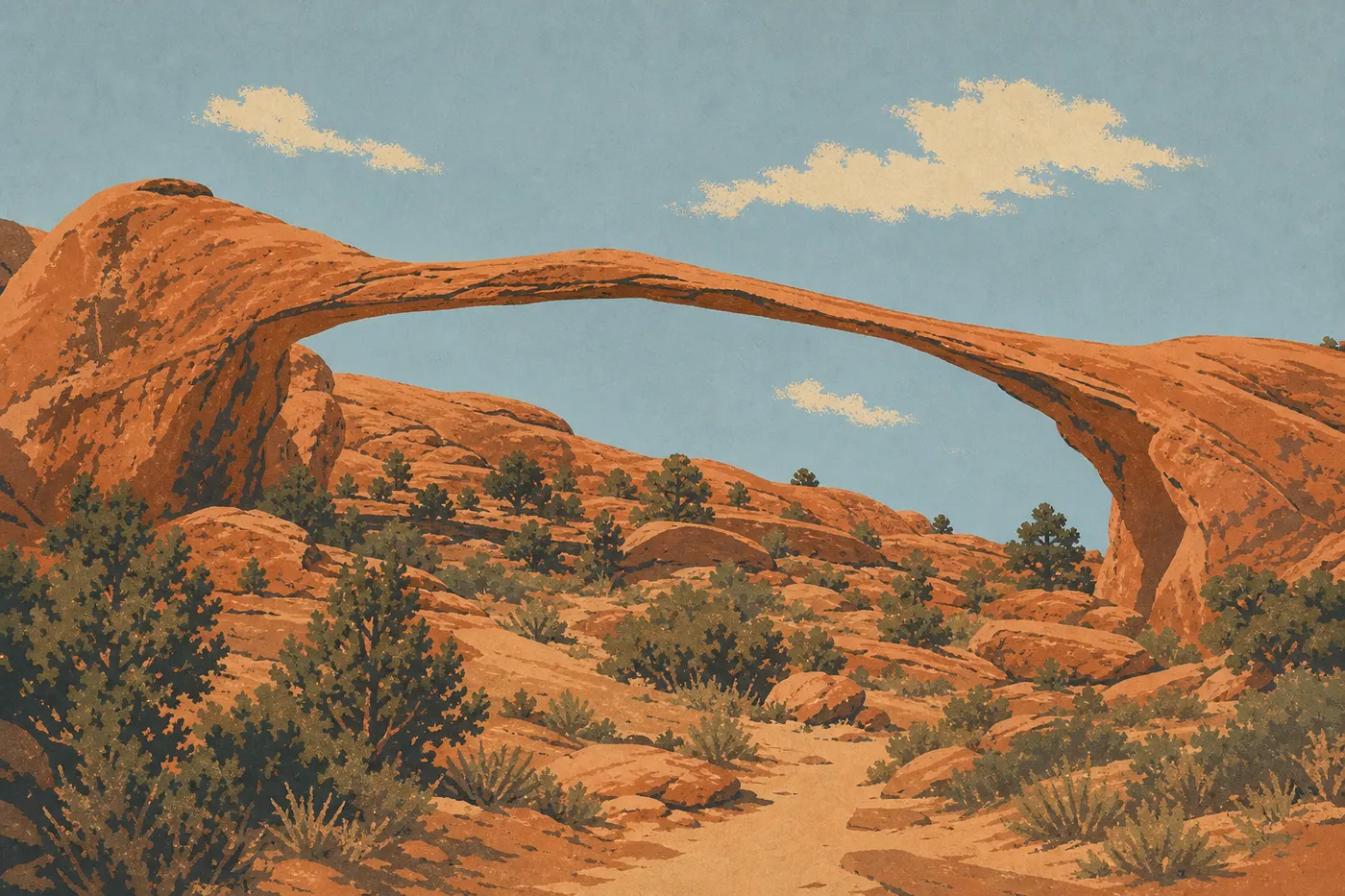
At the end of Scenic Drive, Devils Garden is the park's richest area in terms of documented arches. It includes Landscape Arch, whose span of about 289 feet makes it one of the world's longest natural arches. A single trail starts at the parking area and branches according to each hiker's ability.
For hikers who want the essentials, take Landscape Arch via Devils Garden Trail. It's 2 miles round-trip on easy terrain and accessible to most visitors.
For hikers who want to go farther, the Primitive Loop, about 5 miles long, passes Double O Arch, Dark Angel, Partition Arch, and Navajo Arch. Some sections aren't marked. You'll need to follow cairns and be comfortable with navigation. We don't recommend it if you're not used to off-trail terrain.
The turnoffs for Tunnel Arch and Pine Tree Arch, 1,600 feet from the main trail and easy to reach, can fit at the beginning or end of your outing without adding much time.
Arrive at the Devils Garden parking area before 9 a.m. during the busy season. The park's only campground, Devils Garden Campground, books months in advance. Our Arches camping guide covers all the details.
Klondike Bluffs: The Park's Quiet Side
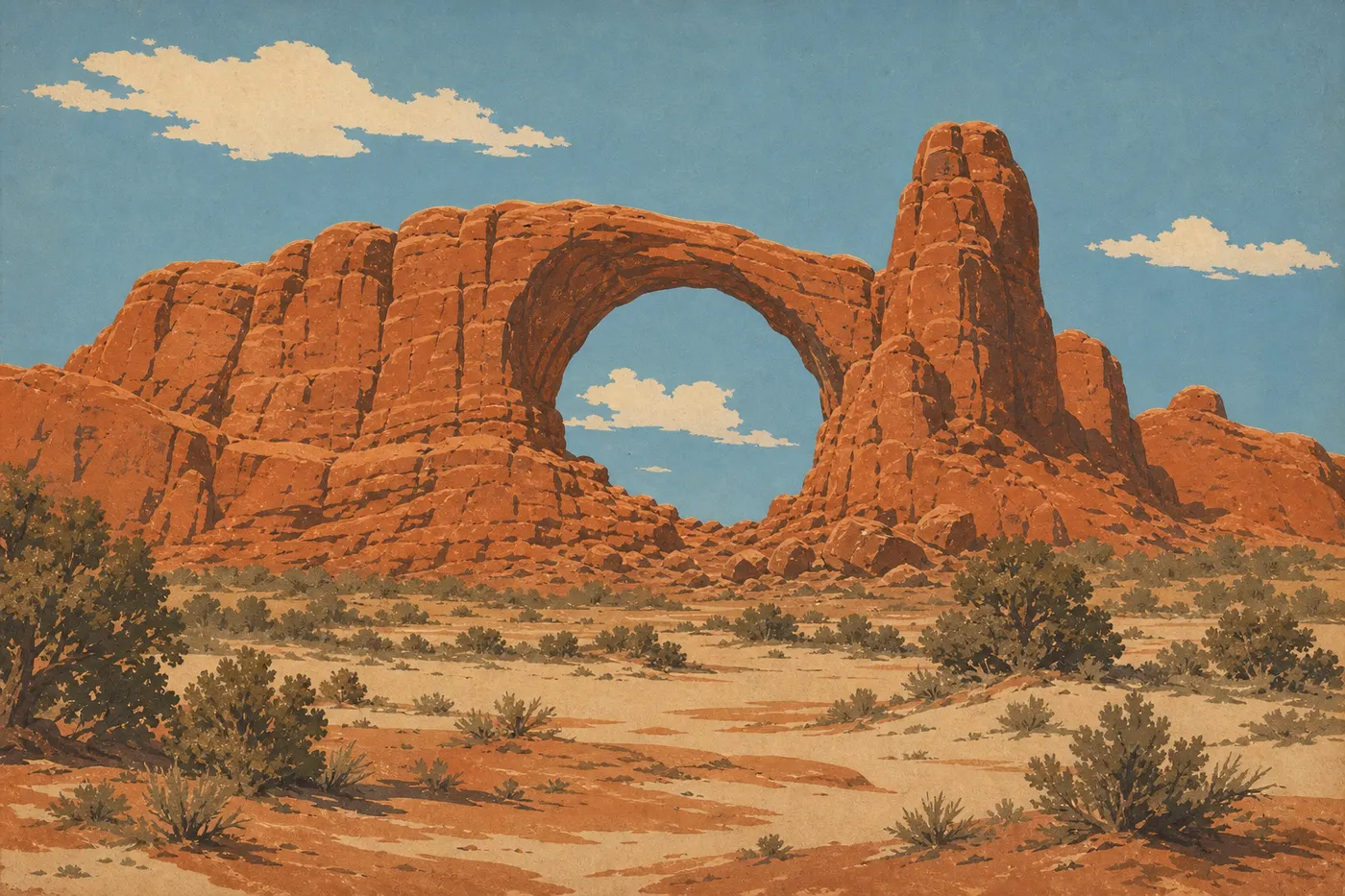
Reached by an unpaved road from the north end of Scenic Drive, Klondike Bluffs is the park's least-visited area. You'll find Tower Ruin and the Marching Men, sandstone pillars lined up in a landscape that sees very few visitors.
The road is passable in dry weather with a regular car, but it becomes slippery and dangerous after rain. More importantly, never leave the marked trails in this area. The biological soil crust, made up of algae, fungi, and cyanobacteria, takes decades to recover and cannot withstand being trampled.
Arches' Best Hikes
Arches isn't a park for multi-day treks. Most trails are between 1 and 5 miles long. The distances stay short, but summer heat, the lack of shade on many sections, and bare exposed rock make hiking here a serious physical challenge from May through September. Always carry more water than you think you'll need. Rangers recommend at least 1 liter per hour of hiking in summer.
Here are our three top recommendations:
- Delicate Arch (3 miles, 480 feet of elevation gain, fully exposed): the must-do hike, and one to avoid absolutely between 10 a.m. and 4 p.m. from May through September.
- Landscape Arch via Devils Garden Trail (2 miles round-trip, easy): accessible to everyone and impressive.
- Primitive Loop in Devils Garden (about 5 miles, moderate elevation gain, unmarked sections): for hikers who want a real trek away from crowded parking lots.
Our Arches hiking guide describes every trail, along with specific advice on gear, timing, and difficulty.
Other Activities by Interest
Astrophotography and Stargazing

Arches National Park is designated an International Dark-Sky Association Dark Sky Park. The low level of development around Moab preserves an unusually high-quality night sky for such a busy park. Photographing the Milky Way framed by a sandstone arch has become a genre of its own.
The most sought-after astrophotography spots are Delicate Arch and the Devils Garden area. The park is open 24 hours a day year-round, so these nighttime outings are entirely possible. Bring a tripod, a fast wide-angle lens, and a red-light headlamp to preserve your night vision and everyone else's. Also pack warm clothing. Nights on the Colorado Plateau often drop below 32°F, even in spring.
Wildlife Watching

The park is home to species typical of the high desert. Bighorn sheep sometimes appear on the ridges around the entrance. Coyotes, jackrabbits, and a wide variety of lizards are easier to spot, especially at dawn and dusk. Never feed wildlife. This is a practical safety rule because fed animals lose their natural wariness, not just a matter of common sense. Our wildlife page lists the species found in each area.
Visiting with Kids
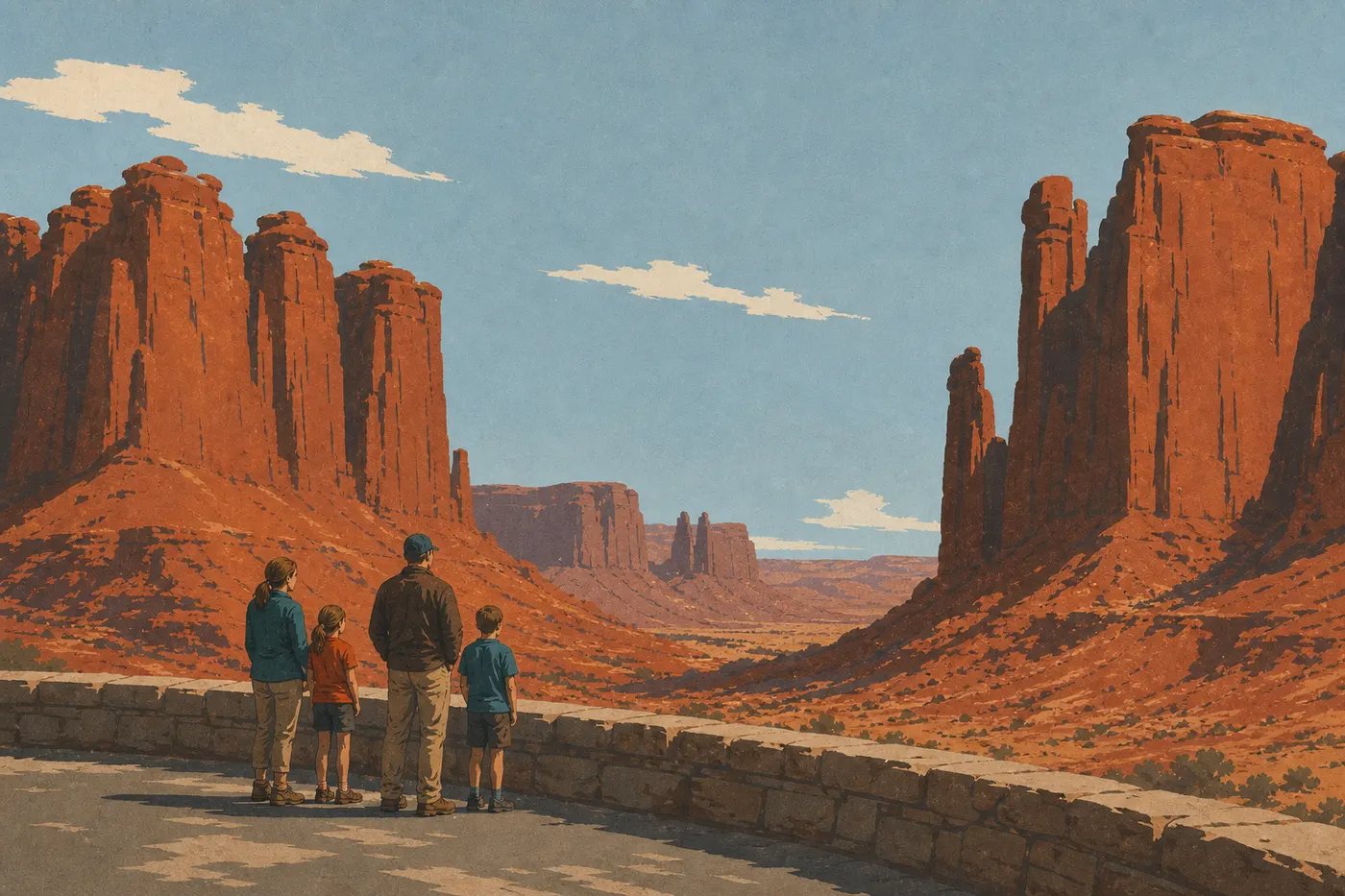
Arches is one of the most family-friendly parks for school-age children. Many sites are visible from the car, and trails such as The Windows Section and Balanced Rock work for kids as young as 5 or 6. The NPS Junior Ranger program is available at the visitor center. Kids complete an activity booklet and leave with an official badge. Our Family page lists trails by age level and flags the main concerns, including hydration, heat, and long stretches without shade.
Biking Scenic Drive
Bikes are allowed on the paved road, but not on hiking trails. Scenic Drive is about 19 miles round-trip with significant elevation gain from the visitor center, making it a popular challenge for cyclists. Motor vehicle traffic is heavy during the day from March through October. Set out before 7 a.m. for better riding conditions. Our Getting Around page explains the traffic rules inside the park.
What to Do Around Arches
Moab, 5 miles south, is the natural base for a road trip through southeastern Utah. Restaurants, canyoning outfitters, 4x4 rental agencies, and outdoor gear shops are concentrated there. Our Where to Eat page lists good places in town, while our Where to Stay guide covers lodging options in and around Moab.
Canyonlands National Park, in the Island in the Sky district, is about a 30-minute drive south of Moab. Combining Arches and Canyonlands over 3 to 4 days is a Utah road-trip standard among experienced travelers. The parks share red sandstone landscapes and wide-open horizons, but Canyonlands unfolds on a dizzying scale from the canyon rims. You'll find this pairing in the Road Trip and Region guides for the Colorado Plateau.
Dead Horse Point State Park also deserves half a day. This overlook rises more than 2,000 feet above the Colorado's bends. The view is striking, and the crowds are much lighter than at Arches.
Farther on, Capitol Reef National Park, about 2 hours west, and Bryce Canyon National Park, about 3 hours away, complete the Colorado Plateau's grand loop for travelers with a week or more.
The Essentials: What Should You See First in Arches?
If you've only got one day here, this is the order we use ourselves:
- Delicate Arch at dawn. Leave the Wolfe Ranch parking area at 6:30 or 7 a.m. to reach the top before the heat and the crowds.
- The Windows Section around midday. The trails are short, and the formations offer a little shade beneath the arches.
- Devils Garden in the late afternoon through sunset. See Landscape Arch first, then add another turnoff if you've still got the energy.
With a second day, take a ranger-led tour in Fiery Furnace in the morning, then visit Balanced Rock and Courthouse Towers at sunset.
Is Arches worth the trip? Absolutely. It's one of the few parks where nearly all the remarkable sites are accessible without specialized skills, and the density of unique geological formations per square mile has few equals in the American West. To plan your entire visit, see all our resources in the Complete Guide to Arches National Park.
Frequently Asked Questions
What is there to see and do in Arches National Park?
In Arches, activities center on rock formations and arches such as Delicate Arch, The Windows Section, Balanced Rock, and Landscape Arch; hiking, from the 1-mile loop to the 5-mile loop; and activities such as astrophotography, wildlife watching, and a ranger-led tour of the Fiery Furnace maze. Everything is connected by one main road serving six distinct areas.
How long do you need to visit Arches National Park?
How much time do you need for Arches? One day covers the essential sites if you set out before 8 a.m. Two days let you see Fiery Furnace, hike without rushing, and explore less-visited areas such as Klondike Bluffs. Our Itinerary & Length guide lays out the options based on the number of nights you have.
Is Arches National Park worth visiting?
Arches National Park is well worth the trip. It's rare to find such a concentration of remarkable arches and sandstone formations in an accessible area, and most of the must-see sites don't require any special technical ability.
What are the must-do activities in Arches?
The must-dos in Arches are hiking to Delicate Arch, taking the arch circuit in The Windows Section with North Window, South Window, and Double Arch, walking to Landscape Arch in Devils Garden, and, if possible, joining a ranger-led tour through the Fiery Furnace maze.
Which hike should you do in Arches National Park?
Which hike should you do in Arches? For a first visit, Delicate Arch, 3 miles and 480 feet of elevation gain, is the absolute must-do. For something shorter and accessible to everyone, The Windows Loop, 1 mile, brings together several major arches. For hikers seeking solitude, the Primitive Loop in Devils Garden, about 5 miles, is our recommendation. Our Hiking page gives details on every trail, including gear and safety instructions.
Do you need a reservation to enter Arches National Park?
Do you need a reservation to enter Arches? Yes, roughly from April through October. A timed entry system requires you to reserve entry on Recreation.gov before arriving at the entrance station. Outside this period, no reservation is required. Our Access & Transportation page gives the exact dates and explains how the system works for the current year.
What time should you arrive at Arches National Park?
Arriving at Arches before 8 a.m. is strongly recommended from March through October. The Delicate Arch and Devils Garden parking areas are often full by 9 or 10 a.m. during the high season. The NPS also recommends entering after 3 p.m. as a good alternative for avoiding entrance traffic.