
When to Visit Arches: Best Seasons, Weather, and Timing
The best times to visit Arches are April, May, and October, when daytime temperatures range from 59 to 81°F, trails are in good shape, and the light brings out the full range of red sandstone colors. The park stays open 24 hours a day, year-round, with no seasonal closure. But the Colorado Plateau desert can swing by more than 40°F in a single day. There is no truly bad season, just seasons that work better for your plans and your legs.
Arches Climate Month by Month
Arches sits in Utah's high desert on the Colorado Plateau, at elevations ranging from about 3,900 to 5,600 feet depending on the area. The elevation takes the edge off summer temperatures compared with lowland cities, but red rock absorbs and radiates intense heat. In the middle of July, the ground surface can be 27 to 36°F hotter than the temperature measured in the shade.
The table below gives indicative average conditions for the Moab area. For short-term forecasts before your trip, check the Arches weather forecast.
| Month | High | Low | Conditions |
|---|---|---|---|
| January | 39°F | 16°F | Bitterly cold, occasional snow, quiet park |
| February | 46°F | 21°F | Cold, sunny days, nearly empty |
| March | 55°F | 30°F | Mild days, cool nights, crowds picking up |
| April | 68°F | 39°F | Ideal: great light, temperatures, and trail conditions |
| May | 81°F | 50°F | Warm and beautiful, heavy crowds late in the month |
| June | 95°F | 63°F | Scorching during the day, hike early in the morning only |
| July | 100°F | 72°F | Peak heat, possible afternoon monsoon storms |
| August | 97°F | 70°F | Still very hot, late-afternoon storms |
| September | 84°F | 55°F | Much more comfortable, fall light |
| October | 70°F | 41°F | Excellent: color, low-angle light, crowds easing |
| November | 52°F | 28°F | Cool, lightly visited, occasional snow possible |
| December | 39°F | 14°F | Winter conditions, unique atmosphere, icy trails in the morning |
Arches in January
January is the quietest month of the year. Parking lots are nearly empty, and you can photograph Delicate Arch or Landscape Arch without anyone in front of your lens. Highs top out around 45°F, while nighttime temperatures regularly fall to about 18°F, with frequent ice on sandstone slabs early in the morning. Snow falls a few days a year. When it does, the arches turn white against salmon-colored walls, a rare scene that photographers who get up before dawn never regret. Bring waterproof shoes and warm layers.
Arches in February
February feels much like January, with a few extra degrees during the day and highs approaching 52°F. The park remains very lightly visited, and Moab lodging rates are at their lowest of the year. Winter light stays low-angle even at noon, which photographers especially appreciate. Trails are generally in good shape, but check conditions before heading onto a trail exposed to the north.
Arches in March
March marks the transition to spring. Daytime temperatures climb toward 61°F, while nights stay close to 32°F. Crowds start to build, especially late in the month and during spring break weekends. It is a good choice if you visit on a weekday and arrive early in the morning. A few cactus flowers may already appear in sheltered areas late in the month.
Arches in April
April is one of the two best months to visit Arches. Highs reach 72°F, nights are cool without being a problem at around 41°F, and late-afternoon light on the sandstone is exceptional. Timed entry is usually in effect by this month, so reserve your time slot on Recreation.gov before you leave. Entering before 8 a.m. remains the most effective way to enjoy the park without the crowds.
Arches in May
May shows the park at its best, with daytime temperatures around 82°F and nights near 50°F. A few cacti are still blooming early in the month. Be aware that May weekends, especially Memorial Day weekend, are among the busiest of the entire year. Timed entry is required, and slots go quickly. Plan several weeks ahead.
Arches in June
June brings the full summer heat. Highs reach 95°F, and nighttime temperatures no longer fall below about 61°F. Hiking after the early morning becomes difficult for less experienced visitors. The strategy that works is to finish your trail before 8 a.m., spend the day in the shade in Moab, and return to the park after 6 p.m. for evening light. The Milky Way starts to show on moonless nights, making June an interesting month for astrophotography.
Arches in July
July is the hottest month, with temperatures reaching 100°F in the middle of the day and ground-surface temperatures much higher. Monsoon storms regularly arrive between 2 and 5 p.m., creating dramatic light but also a risk of flash floods in narrow canyons. Carry at least 3 liters of water per person for any hike, even a short one. The Milky Way is at its best in July on clear nights.
Arches in August
August extends July's conditions: highs around 97°F, near-daily late-afternoon storms, and heavy crowds. Rainfall is among the highest of the year, which can lead to temporary trail closures after intense storms. If you visit the park on a morning after an overnight storm, wet walls take on deep colors, and the light before 9 a.m. can be remarkable.
Arches in September
September is the hinge between summer and fall. The first ten days remain hot, around 86°F, then temperatures drop noticeably. Monsoon storms taper off. Crowds thin considerably compared with summer, although timed entry usually remains in effect. By mid-September, conditions start to resemble October: low-angle light, comfortable temperatures, and clear trails.
Arches in October
October is our favorite month for visiting Arches. Highs hover around 72°F, nights drop to about 41°F, Utah skies turn deep blue, and morning and evening light on the red sandstone is at its best. Crowds have eased noticeably, so you can hike without jostling for space, even on popular trails such as Delicate Arch. Timed entry may still be in effect early in the month. Check Recreation.gov before you leave.
Arches in November
November is underrated. Daytime temperatures are cool, ranging from 46 to 54°F, and nights stay near 30°F. The park is remarkably quiet, and Moab lodging rates become affordable again. You can photograph Landscape Arch or The Windows Section without waiting for a group to clear the frame. A few snowy or icy days are possible late in the month. Check trail conditions before setting out.
Arches in December
December brings a unique winter atmosphere to the park. Highs top out around 43 to 45°F, nights regularly fall to about 18°F, and sandstone slabs freeze early in the morning. The park is nearly deserted, and very low-angle light, even in the middle of the day, gives the arches unusual perspectives. Trails remain accessible, but be careful on sloping sections and in shaded areas, which often stay icy until midmorning.
Arches Season by Season
Winter (December to March)
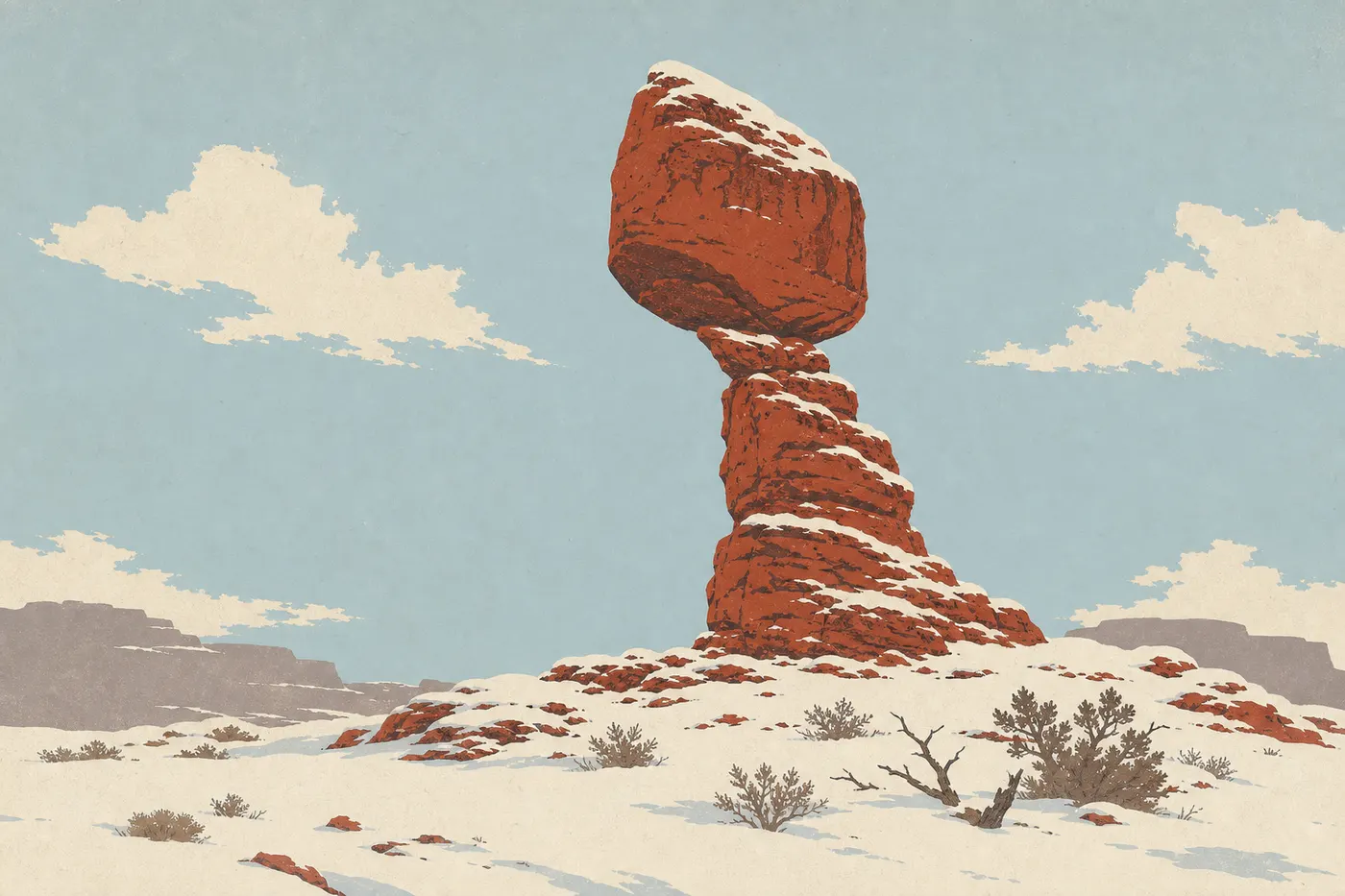
Winter at Arches means having the park largely to yourself. Highs range from about 30 to 50°F depending on the month, and nights frequently drop below 19°F. Snow is rare but possible in January and February. When it arrives, it lays a white veil over the arches and salmon-colored walls. The image is striking, and photographers who get up before dawn that day come home with unique frames.
The park remains open without seasonal restrictions. No internal road closes for winter, unlike at some other parks in the region. Still, check trail conditions during very cold weather. Ice is common early in the morning, especially on sloping sandstone slabs.
As for wildlife, lizards disappear until spring, but bighorn sheep move down toward lower elevations. It is not unusual to spot them from Scenic Drive in January.
Spring (April to May)
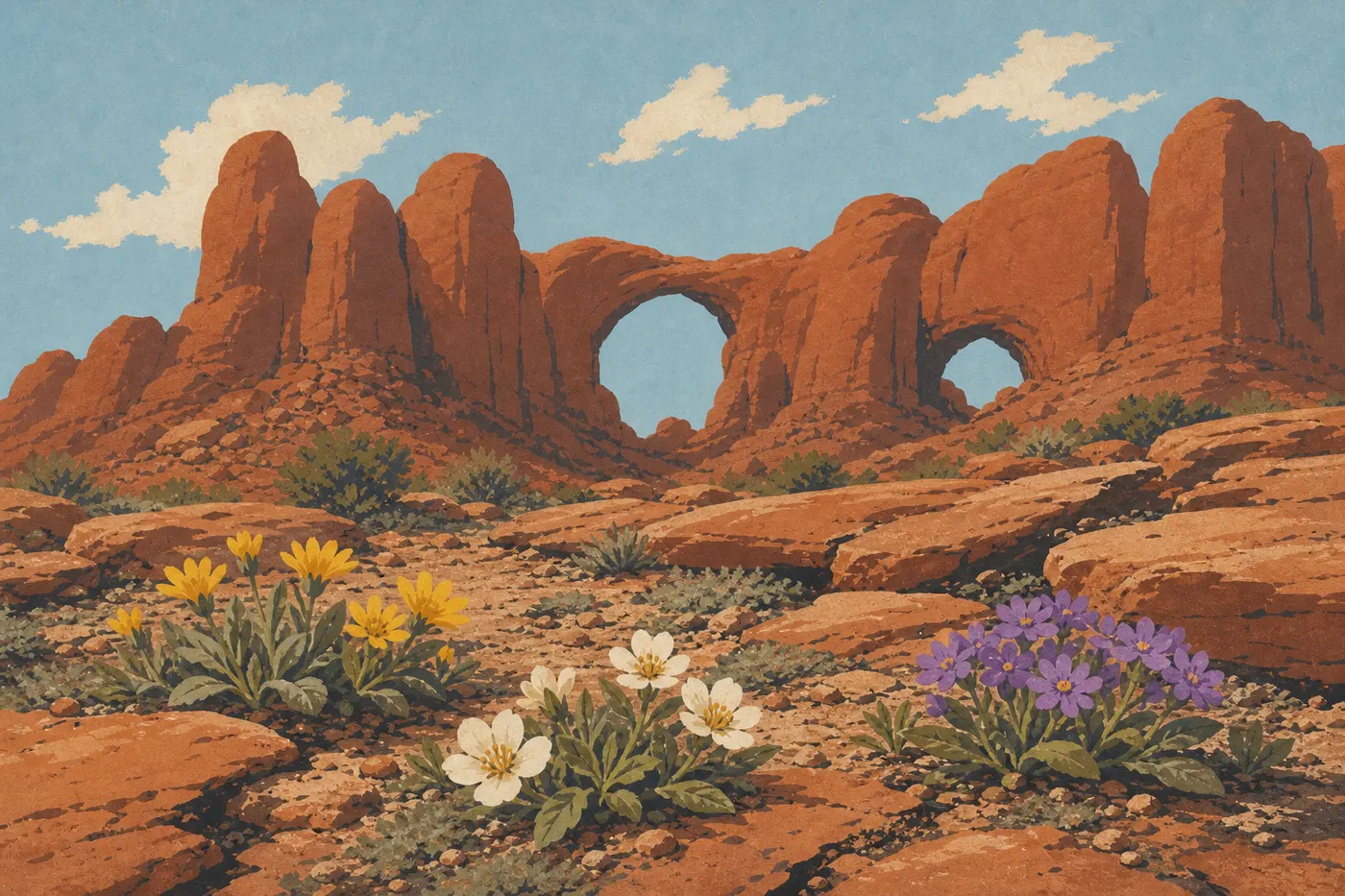
Spring is our top recommendation for most travelers. Daytime temperatures range from 59 to 81°F, nights remain cool without being a serious drawback, and trails are in their best condition. A few desert wildflowers appear as early as late March along the edges of trails, including blooming cacti, small phlox, and ephedra. The display is subtle, but the touches of color against orange sandstone have an elegance of their own.
There is one drawback: spring is also the busiest season. May weekends, especially around Memorial Day, are among the most crowded of the year. If you visit in May, enter before 8 a.m. or after 3 p.m. to avoid entrance traffic, as the NPS officially recommends. The timed entry system described below is usually in effect by spring.
Summer (June to August)
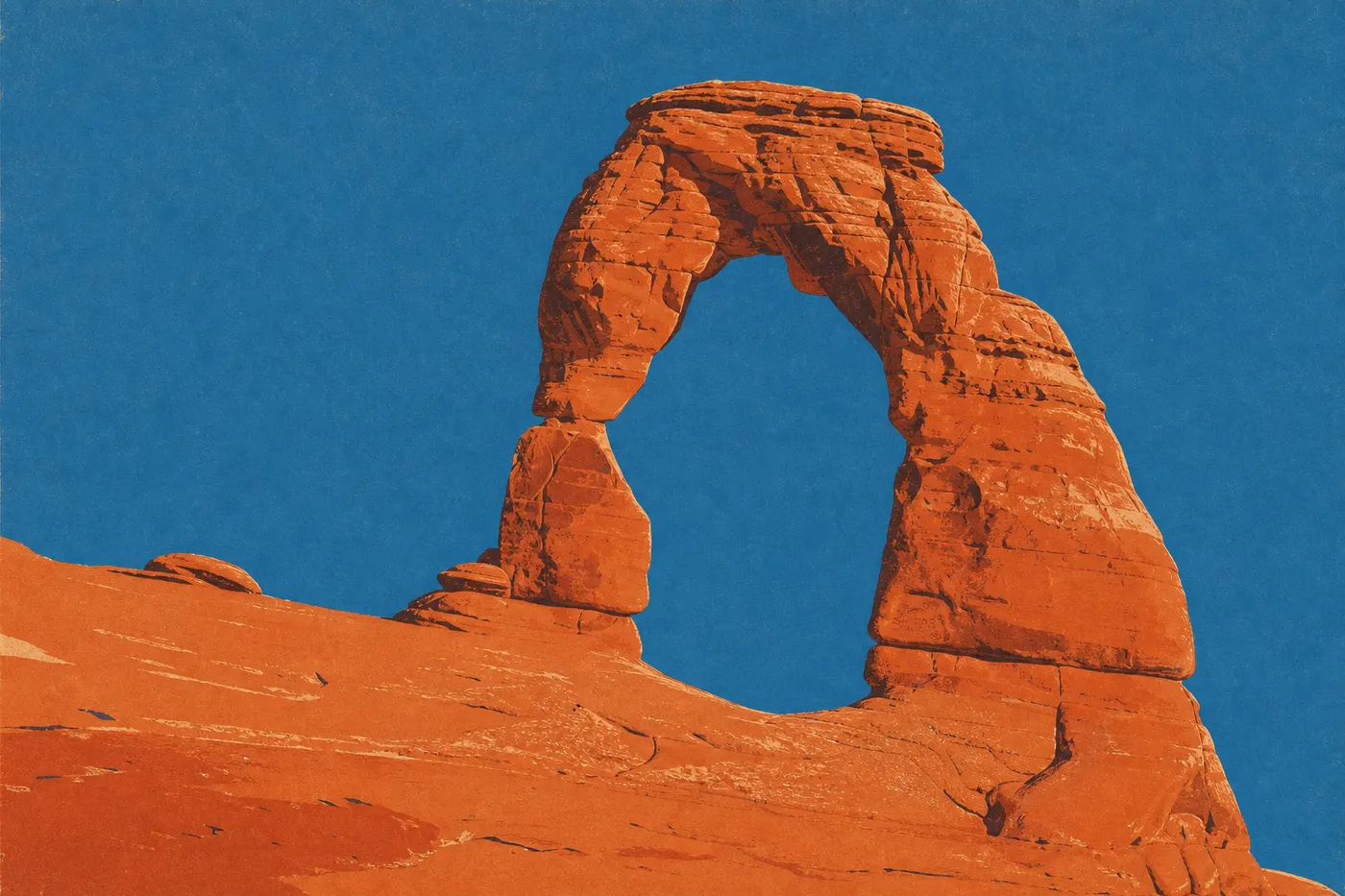
Summer is the season of extremes. Temperatures regularly climb above 100°F, and the rock radiates additional heat. Hiking to Delicate Arch at 2 p.m. in July means a 3-mile round-trip with no shade and 480 feet of elevation gain under a vertical sun. A seasoned adult can do it with at least 3 liters of water, but it is a poor choice for young children or anyone who is not prepared.
The strategy that works is to get up before dawn, finish your trail before 9 a.m., spend the day in the shade or air conditioning in Moab, and return to the park in the late afternoon. Monsoon storms arrive in July and August, usually between 2 and 5 p.m. They cool the air and create dramatic light for photography, but they can also produce flash floods in narrow canyons. If you hear thunder, leave low-lying areas and confined passages immediately.
Fall (Mid-September to October)
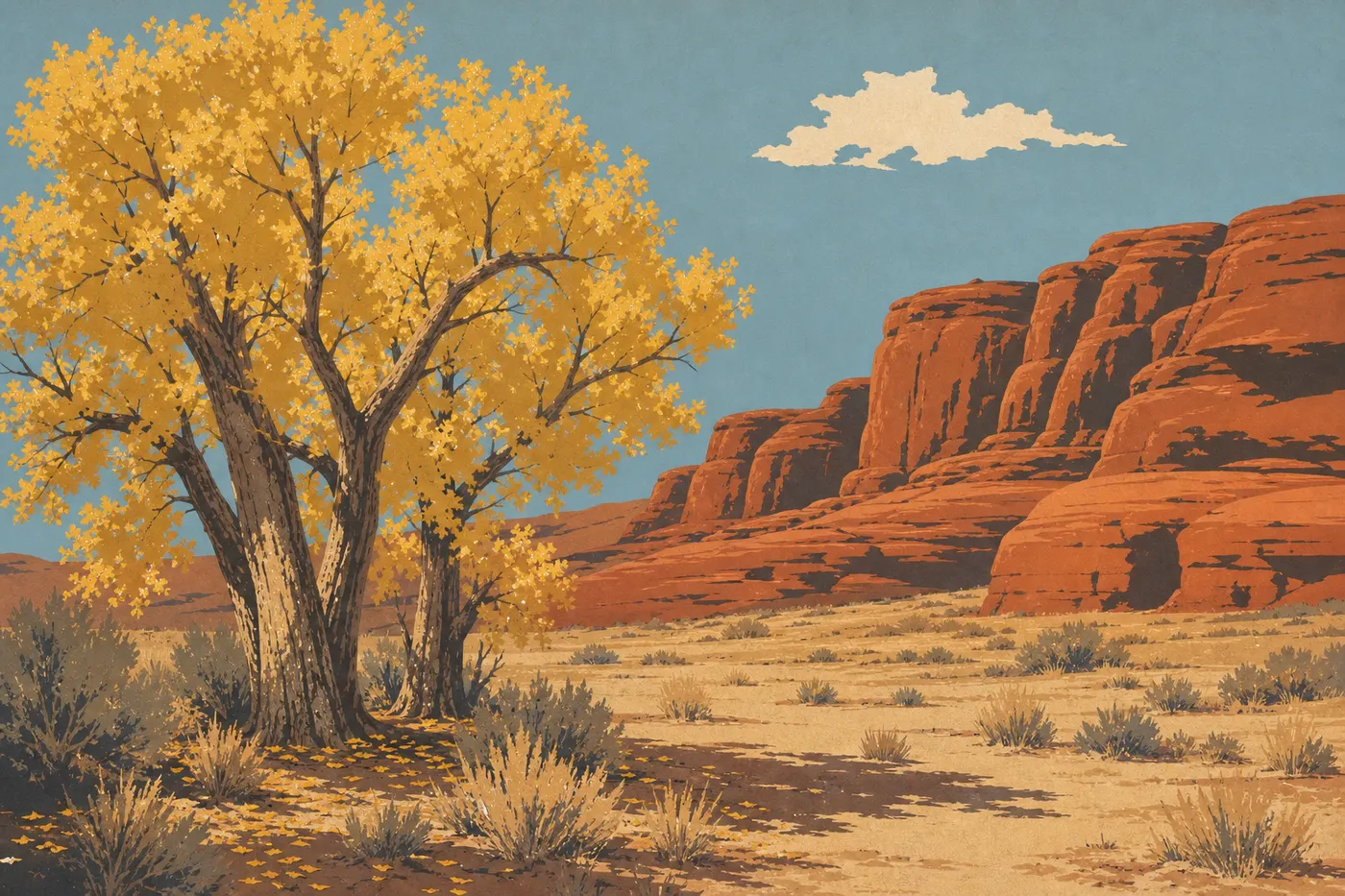
Fall catches up with spring and sometimes surpasses it. From mid-September onward, temperatures drop 13 to 18°F compared with July, and crowds thin considerably. October is our favorite month: daytime temperatures range from 50 to 70°F, morning and evening light falls low across the sandstone, and trails are clear. November is underrated too, with even fewer visitors and mild days around 41 to 52°F that let you settle into the park without jostling for space.
The vegetation does not turn red and gold as it does in the eastern United States, but the contrast between Utah's deep blue sky and rust-colored walls remains striking.
Crowds: When to Avoid the Rush at Arches
Arches is one of the most heavily visited national parks in the United States, and that popularity is concentrated in just a few months. The NPS explicitly describes the park as “very busy” from March through October.
Busiest months: May, June, July, and August. Spring weekends, including Easter and Memorial Day, are especially crowded, as is Labor Day weekend.
Shoulder months: March, April, September, and October. Visitation is high but manageable if you enter early in the morning.
Quiet months: November, December, January, and February. Parking lots are empty, the light is beautiful, and you can photograph Landscape Arch without waiting for a group of 15 people to clear the frame.
One tip works in every season: enter before 8 a.m. or after 3 p.m. Entrance traffic is a familiar problem on spring and summer days.
Seasonal Reservations and Access
Arches is one of the parks that has introduced a timed entry system. This timed entry permit is required during busy periods, generally from late March through early November, and must be reserved in advance on Recreation.gov.
In practice, without a reservation during peak season, you may be turned away at the entrance even if you have an annual pass. The permit is tied to a specific time slot, such as 6 to 9 a.m. or 9 a.m. to noon. More slots are released the evening before and the morning of a visit when last-minute cancellations occur. Check Recreation.gov if you did not plan ahead.
During peak season, from May through August, available slots can sell out within hours of being released. Plan several weeks ahead. Very early visits before 6 a.m. and stays at Devils Garden Campground are generally exempt from timed entry.
For the complete procedure, exact dates when slots open, and special cases such as groups and commercial vehicles, see the Arches access guide.
The Best Time for Your Budget
Entrance fees do not change with the season: $30 per vehicle, $25 per motorcycle, and $15 per person entering on foot or by bicycle. Everything around the park, however, varies considerably.
Low season (November to February): Moab hotels and lodges, the only full-service town nearby, offer their lowest rates. Booking 10 to 15 days ahead is usually enough.
Peak season (May to August): Moab properties can double or triple their winter rates. For May weekends, booking three to six months ahead is wise.
Shoulder seasons (April and October): the best value for your money. Rates are still reasonable and weather conditions are ideal. This is often the window we recommend to travelers who do not have a fixed travel date.
If you visit several national parks on the same trip, the America the Beautiful pass covers admission to Arches and all federal recreation sites for 12 months. Our National Park Fees & Passes page explains entrance fees and pass options. To compare Moab lodging by season, see our guide to places to stay around Arches.
The Best Time for Your Travel Style
Hiking (a range of trails without overheating). Spring, from April to May, or fall, from September to October. Temperatures stay comfortable, trails are dry, and late-day light is perfect. The Arches hiking guide covers the priority trails for different trip lengths.
Photography. Winter brings very low-angle light and the chance to capture snow-covered arches. Spring and fall offer the deepest blue skies. Summer is ideal for night photography. The Milky Way is visible from May through September and is at its best in July and August, far from city lights.
Families with young children. Late September through October or April, before the heat sets in. Avoid July and August with children under 10 unless you limit physical exertion to the early morning and carry plenty of water. The guide to visiting Arches with kids lists accessible trails and specific precautions.
Wildlife watching. Bighorn sheep can be spotted year-round, but they more often move toward the road in winter. Lizards and reptiles become active in spring and disappear in fall. The Arches wildlife guide covers the species to look for in each season.
Tight budget. November or March means lower hotel rates and fewer visitors. March weather can be unpredictable, so bring extra layers.
In Summary: The Best Time for Your Travel Style
| Travel style | Recommended time |
|---|---|
| Hiking and nature | April-May or September-October |
| Daytime photography | April or October (low-angle light) |
| Night photography | July-August (Milky Way) |
| Families | April or late September |
| Wildlife watching | Winter (bighorn sheep) or spring (reptiles) |
| Budget | November through February |
| Avoiding crowds | November through February, or enter before 8 a.m. year-round |
For an overview of the park and its highlights, our Arches guide covers the essentials to know before planning your itinerary.
The Worst Time to Visit Arches
The worst time to visit Arches is from late June through late August. Temperatures regularly exceed 100°F in the middle of the day, the rock stores and radiates heat into the evening, and the park's mostly unshaded trails become genuinely hostile for anyone who is not prepared. Monsoon storms hit almost every afternoon in July and August. They can cause flash floods in confined canyons and make some sections slippery. This is also the busiest stretch of the year, with parking lots full by 8 a.m. and timed entry slots hard to get.
July is the month we most strongly discourage for families with young children and travelers unaccustomed to extreme heat. If July or August is your only travel window, you can adapt by getting up before dawn, finishing your trail before 9 a.m., spending the day in the shade in Moab, and returning to the park after 6 p.m. But the margin for error is small, and the park does not forgive poor preparation.
Frequently Asked Questions
When should you visit Arches National Park?
The best time to visit Arches National Park is spring, from April through May, and early fall, from mid-September through October. Daytime temperatures range from 59 to 81°F, and trails are generally manageable without dangerous heat.
What is peak season at Arches?
Peak season runs from May through August, with the highest crowds in June and July. This is when timed entry is most restrictive, Moab lodging is most expensive, and park parking lots fill by 8 a.m. April and October are still busy, but more manageable, with better weather.
Can you visit Arches in winter?
Yes. Arches is open year-round, including winter. No road or area of the park closes for the cold season. Daytime temperatures range from 39 to 54°F depending on the month, and nights are often below freezing. Snow is rare, but when it falls, the park is exceptional and nearly empty. Bring waterproof shoes and check trail conditions if temperatures drop below freezing.
Is the park open year-round, including December?
Arches National Park is open 24 hours a day, 365 days a year, with no seasonal closure. In December, interior roads remain accessible, but visitor center services may be limited and trails may be icy in the morning. Check conditions on the NPS website before you leave.
What is the least crowded month at Arches?
January and February are the least crowded months. Parking lots are empty, timed entry is usually not required, and you can reach the best-known sites without waiting. Hiking conditions are often fine on trails with good sun exposure, provided you are equipped for the cold.
What is the best season for visiting the American West?
Spring and fall are also the best seasons for visiting the American West. These windows let you visit the parks of Utah, Arizona, and Nevada without July's heat or winter's snowy roads. Our American West region guide offers guidance on choosing destinations in the West by season.
How long do you need to visit Arches National Park?
Two days are enough to cover the main areas, including The Windows Section, Delicate Arch, and Devils Garden. Three days give you more breathing room and access to less-visited trails. Our Itinerary & Trip Length page offers sample plans for different amounts of time.
How much does a trip to Arches cost?
Entrance costs $30 per vehicle and is valid for 7 days. Moab hotels range from $80 to more than $250 per night depending on the season. For entrance fees and annual passes, see the National Park Fees & Passes page.