

Canada's National Parks: Our Picks for American Park Lovers
48 national parks, from the Rockies to Newfoundland: an annotated selection pairing each park with its American counterpart and explaining the required Moraine and Louise shuttles.
By Victoria Boissonade · · 10 min read
Canada's national park system includes 48 national parks and national park reserves managed by Parks Canada (parks.canada.ca), stretching from the Rockies to the Arctic and from the Pacific coast to Newfoundland. For travelers already familiar with America's national parks, Canada's system offers landscapes on a comparable scale, often with lighter crowds outside the iconic sites. For each park, we identify its National Park Service counterpart, explain the logistics that affect trip planning, and calculate when the Discovery Pass pays for itself.
The Canadian Rockies: Banff, Jasper, Yoho, and the Columbia Icefield
The Canadian Rockies are home to four UNESCO World Heritage parks: Banff, Jasper, Yoho, and Kootenay. The logistical backbone of the region is the Icefields Parkway, a 144-mile road connecting Lake Louise and Jasper along the Columbia Icefield.
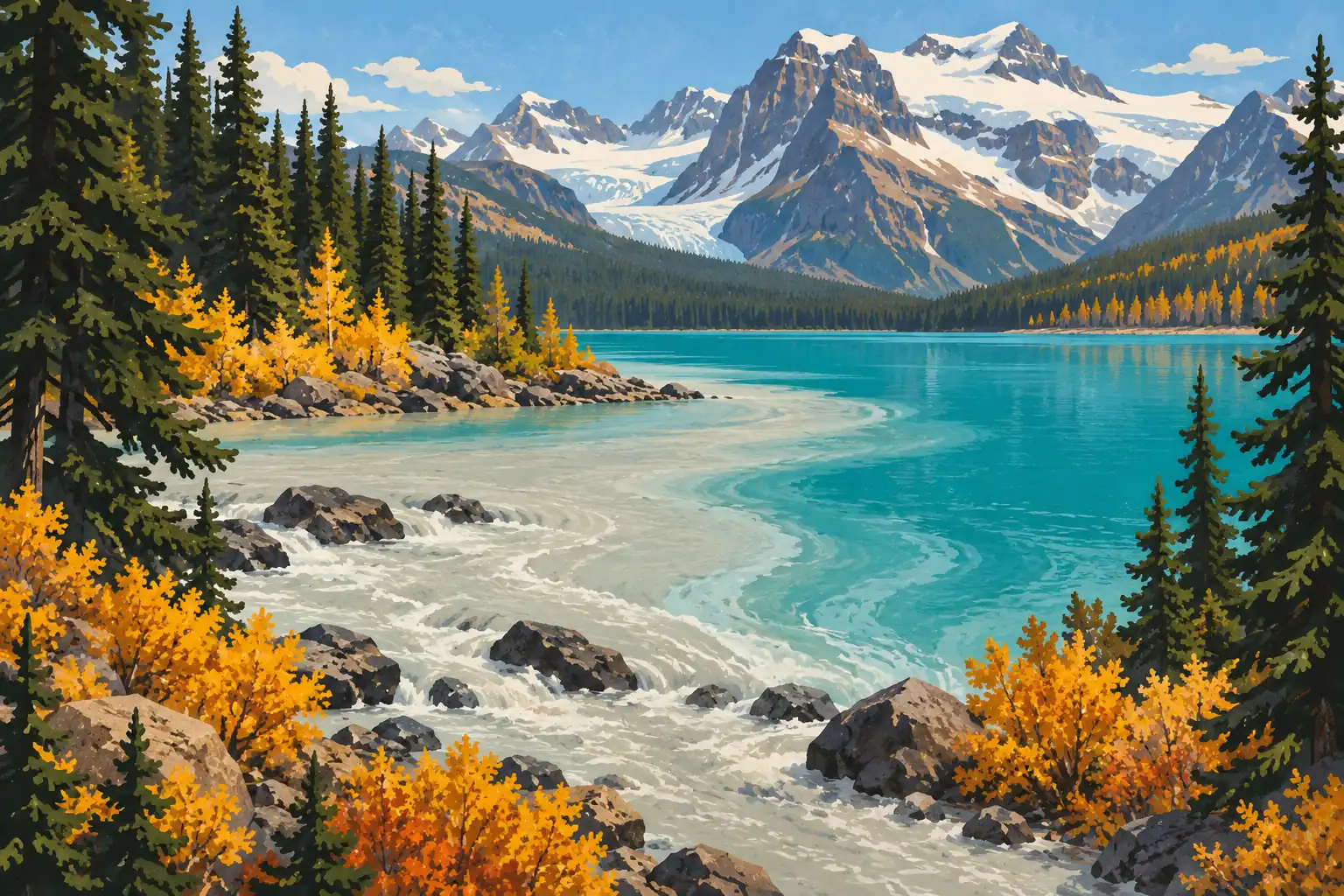
Banff is Canada's oldest national park, established in 1885. Johnston Canyon, more than 260 recorded bird species, and bison reintroduced to the Bow River valley in 2017 make up the core of an itinerary beyond the two iconic lakes, covered in the next section because they require shuttles.
Jasper is the largest of the Canadian Rockies parks, covering 4,200 square miles. Maligne Lake, Spirit Island, Mount Edith Cavell (11,033 feet), and the Jasper SkyTram on Whistlers Mountain (7,425 feet at the upper station, with an 8-minute ride) are among its signature sights. Jasper has also been designated a Dark Sky Preserve by the Royal Astronomical Society of Canada since 2011. Allow at least 2 to 3 days so you do not limit your stay to the busiest attractions.
Yoho (British Columbia) is home to the Burgess Shale fossils, dating back about 505 million years, which helped transform our understanding of animal evolution. Takakkaw Falls drops 991 feet. Emerald Lake gets its turquoise color from the same glacial process as Lake Louise. The park has 249 miles of marked trails.
Kootenay, the least visited of the four, offers canyons, mineral springs, and a quieter gateway to the Rockies.
The American counterpart to this group is Glacier National Park (Montana): the same kind of glacial mountain scenery, alpine roads, and mountain wildlife. The Canadian Rockies, however, operate on a noticeably larger scale. For detailed itinerary planning, our Rockies road trip guide covers each day.
Moraine Lake and Lake Louise: Shuttles Required Since 2022
Lake Louise and Moraine Lake are among Canada's most reproduced images. Both sites are in Banff National Park, about 9 miles apart.
Lake Louise: Victoria Glacier forms the backdrop. The Fairmont Chateau Lake Louise lines the north shore, and access to the lakeshore is free. Trails toward the Plain of Six Glaciers start here, and canoeing is possible from mid-June.
Moraine Lake: the Valley of the Ten Peaks is photographed from the rock pile at the end of the lake. Its intense turquoise color comes from glacial flour, rock particles finely ground by glaciers and held in suspension in the water.
Since 2022, private vehicles have been banned during the busy season, roughly May through October, to protect grizzly bear habitat and reduce congestion. The Parks Canada Shuttle departs from the overflow parking lot at Lake Louise Ski Resort. Reservations are made at reservation.pc.gc.ca; spots for each season go on sale a few weeks before opening. In 2026, reservations opened on April 15.
This detail is missing from most guides to Canada's parks, but it radically changes trip planning: arriving without a reserved shuttle risks leaving you unable to reach Moraine Lake for your entire stay. Morning time slots before 8 a.m. sell out within days of reservations opening. Check the 2026 conditions at parks.canada.ca before finalizing your dates.
Pacific Rim and Gros Morne: Two Coastal Parks and Their American Counterparts
Leaving the Rockies reveals the full diversity of the Parks Canada system.
Pacific Rim (Vancouver Island, British Columbia) is divided into three units. Long Beach offers surfing, temperate rainforest, and wild beaches. The Broken Group Islands are explored by sea kayak. The West Coast Trail is for experienced hikers: 47 miles, 5 to 7 days of hiking, and reservations required. More than 300 bird species have been recorded throughout the park. Reaching it requires a ferry from Nanaimo or Victoria, so plan for half a day of logistics from the start of your trip preparations.
The American counterpart is Olympic National Park (Washington), with the same temperate rainforest of the northern Pacific coast, wild beaches, and snowcapped peaks. The key difference is that Olympic can be reached by car from Seattle without a sea crossing.
Gros Morne (Newfoundland and Labrador) is listed by UNESCO for two reasons. Its fjords and Long Range Mountains illustrate continental drift. The Tablelands, an ochre-red landscape radically different from the rest of the park, expose Earth's mantle at the surface, a geological phenomenon visible in very few places accessible to the general public.
The American counterpart is Acadia National Park (Maine), with a wild Atlantic coast, granite, and mixed forests. Both parks share the profile of a wild East Coast landscape, but the geology of the Tablelands has no equivalent on the American East Coast.
Forillon, La Mauricie, and the Parks of Quebec and the Maritimes
Two Quebec parks deserve separate mention, along with a clarification that travel guides often get wrong.
Forillon (Gaspé Peninsula) is a federal Parks Canada park. Cap Bon-Ami offers limestone cliffs overlooking the St. Lawrence. In summer, whale watching is possible from shore or on a boat tour: fin whales and harbor porpoises are regularly spotted. Forillon naturally combines with the Gaspé road trip for a multi-day circuit.
La Mauricie is less than 3 hours from Montreal. Its 150 lakes, rivers, and mixed forests can be explored by canoe or kayak, or on trails suitable for every ability level. For a family looking for an introduction to Canada's parks without the logistics of the Rockies, it is the most straightforward option.
Quebec national park does not mean a Parks Canada park. This is the most common confusion in travel guides. Quebec's provincial parks, including Jacques-Cartier (a steep-sided glacial valley at 1,804 feet) and La Gaspésie (caribou in the Chic-Chocs), are managed by SEPAQ, a provincial organization. Rates and reservations are handled at sepaq.com, independently of the federal system. The Parks Canada Discovery Pass is not valid there.
In the Maritimes, Cape Breton Highlands offers the Cabot Trail, a scenic road where whales can sometimes be seen from shore. Fundy National Park is known for some of the world's highest tides.
Waterton Lakes and Glacier: Crossing the Border for One Road Trip
Waterton-Glacier International Peace Park was created in 1932. It was the world's first international peace park, a designation recognized by UNESCO.
On the Canadian side, Waterton Lakes (Alberta) offers the village of Waterton, Red Rock Canyon, and Cameron Lake. It sees significantly fewer visitors than Banff or Jasper, and the village atmosphere is much quieter.
The American side is Glacier National Park (Montana), crossed by the Going-to-the-Sun Road, an approximately 50-mile alpine road open in summer, and more than 684 miles of trails.
How to combine the two: Chief Mountain International Highway connects the parks via the Chief Mountain Border Crossing, which is open seasonally, generally from mid-May to mid-September. Check the 2026 customs hours at cbp.dhs.gov before planning. In practice, enter Waterton Lakes from Calgary or Banff, cross the border, and leave through Glacier to continue toward the rest of Montana.
The passes are not interchangeable: America the Beautiful covers entry on the U.S. side, while the Discovery Pass covers entry on the Canadian side. For a trip including both parks, plan on carrying both documents.
Parks Canada Discovery Pass: How Many Parks Make It Worthwhile?
The Discovery Pass is an annual pass valid at all Parks Canada national parks, national historic sites, and national marine conservation areas. It covers two adults and children up to age 17 at no additional charge.
Its American equivalent is America the Beautiful, whose terms are detailed in our article on national park fees and passes.
For 2026 pricing, check parks.canada.ca before deciding. Prices are reviewed every year, and figures published by third-party sources are not always current. The only reliable reference is the official Parks Canada page.
The break-even logic remains stable from year to year. A daily adult admission fee is roughly one-third to one-quarter of the annual pass price. A family of two adults, with children under 18 included, breaks even on the Discovery Pass after visiting a third paid Parks Canada park.
Two important limits: the Discovery Pass is not valid in provincial parks, either in Quebec (SEPAQ) or elsewhere. It does not cover U.S. national parks. For a trip combining both countries, both passes are required.
Our Take: Start with the Rockies, Add Waterton If You Already Know Glacier
First trip to Canada. Start with Banff and Jasper, allowing at least 2 to 3 days per park. The Icefields Parkway (144 miles) is the natural logistical link between them. The ratio of scenery to time invested is highest in the system for a first trip.
If you already know Glacier (Montana). Waterton Lakes is the obvious Canadian choice. Chief Mountain Border Crossing lets you cross in a matter of minutes. The two parks have formed a cohesive whole since 1932, and the difference in visitor numbers on the two sides of the border is striking.
For a family based in Montreal or Quebec City. La Mauricie, less than 3 hours away, offers 150 lakes, trails for every ability level, and simple logistics. It is the most direct introduction to Canada's parks without the demands of a trip to the West.
What we do not recommend. Trying to combine the Rockies and Pacific Rim in two weeks. Pacific Rim requires a detour to Vancouver Island, with a ferry from Victoria or Nanaimo, adding half a day of logistics and putting the rest of the itinerary under pressure. Each of these circuits deserves a trip of its own.
About the Discovery Pass. It pays for itself starting with three Parks Canada parks visited. Check the current price at parks.canada.ca before buying.
Frequently Asked Questions
How many national parks are there in Canada?
Canada has 48 national parks and national park reserves administered by Parks Canada, following the creation of Pituamkek National Park Reserve in July 2024 (parks.canada.ca). This figure does not include provincial parks, such as those managed by SEPAQ in Quebec.
Do you need a Parks Canada Discovery Pass to enter a park?
The Discovery Pass is not required to visit a Parks Canada park: you can pay a daily admission fee at the entrance to each park. It becomes worthwhile once you visit three or more paid parks during the same year. Exact rates are available at parks.canada.ca.
Can you combine a Canadian park and a U.S. park in the same trip?
Yes, you can combine a Canadian park and a U.S. park in the same trip, notably through Waterton-Glacier International Peace Park, created in 1932. Waterton Lakes on the Canadian side and Glacier on the U.S. side can be visited with a single border crossing through Chief Mountain Border Crossing, which is open seasonally.
What is the difference between a Parks Canada national park and a Quebec national park?
A Parks Canada national park (Banff, Jasper, Forillon, La Mauricie) is federal, and the Discovery Pass is valid there. A Quebec national park (Jacques-Cartier, La Gaspésie) is managed by SEPAQ, a provincial organization; rates and reservations are separate at sepaq.com, and the Discovery Pass is not accepted.