
Five Spiritual Journeys to Take Once in Your Life
From Compostela and Kumano Kodo to Varanasi, Mount Kailash, and a monastic retreat, five journeys where effort or silence have room to work.
By David Sanchez · · 6 min read
You do not return from these journeys unchanged. Not because of a sudden revelation, but because distance, effort, or silence has had time to do its work. Here are five routes we consider in a category of their own, each accessible with serious preparation.
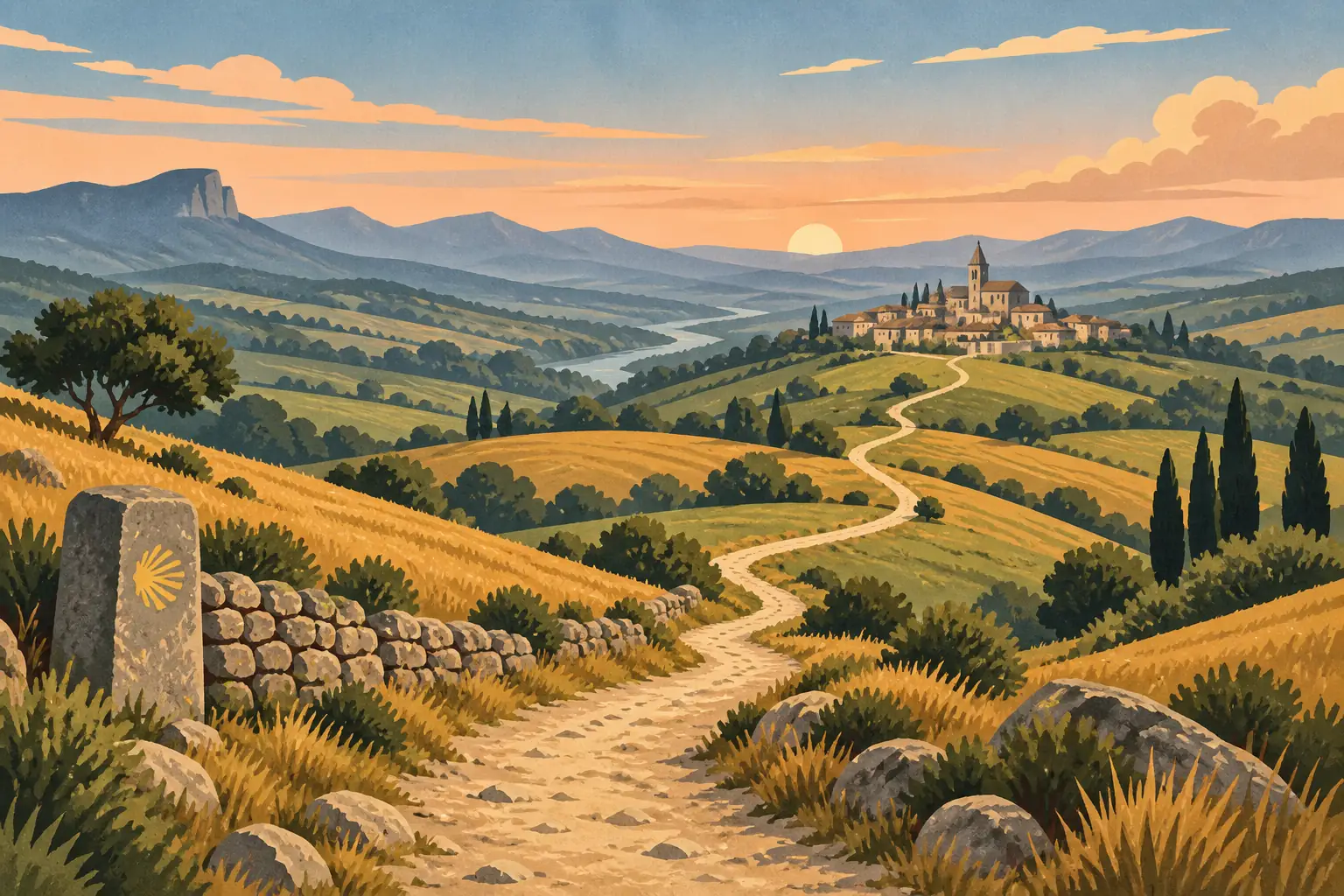
The Camino de Santiago: 500 miles to learn the art of slowing down
The French Way runs from Saint-Jean-Pied-de-Port to Santiago de Compostela for roughly 500 miles. On foot, plan on 30 to 35 days at a pace of 12 to 16 miles a day. You can also break the route into several trips over several years.
What it feels like: a gradual detox. The first three days are physically demanding. Around day ten, something begins to loosen. The pilgrim community, the "peregrina familia," is real and fleeting.
Logistics: beds in albergues cost $12 to $23 a night. Total budget for 35 days, including a flight from Paris: about $1,400 to $2,100.
Best time to go: April to June or September to October. In July and August, some stages see as many as 2,000 pilgrims a day.
Fitness level: moderate to good. Give yourself two months of training and carry a 15 to 18 pound pack.
Honestly: the final 62 miles are almost entirely tourist territory. If you want solitude, start on the Northern Way or go in April.
Kumano Kodo, the pilgrimage route of Japanese emperors
Listed as a UNESCO World Heritage site since 2004, this network of routes on Japan's Kii Peninsula connects three major shrines. The Nakahechi route takes 4 to 6 days to walk. Japanese emperors traveled it a thousand years ago.
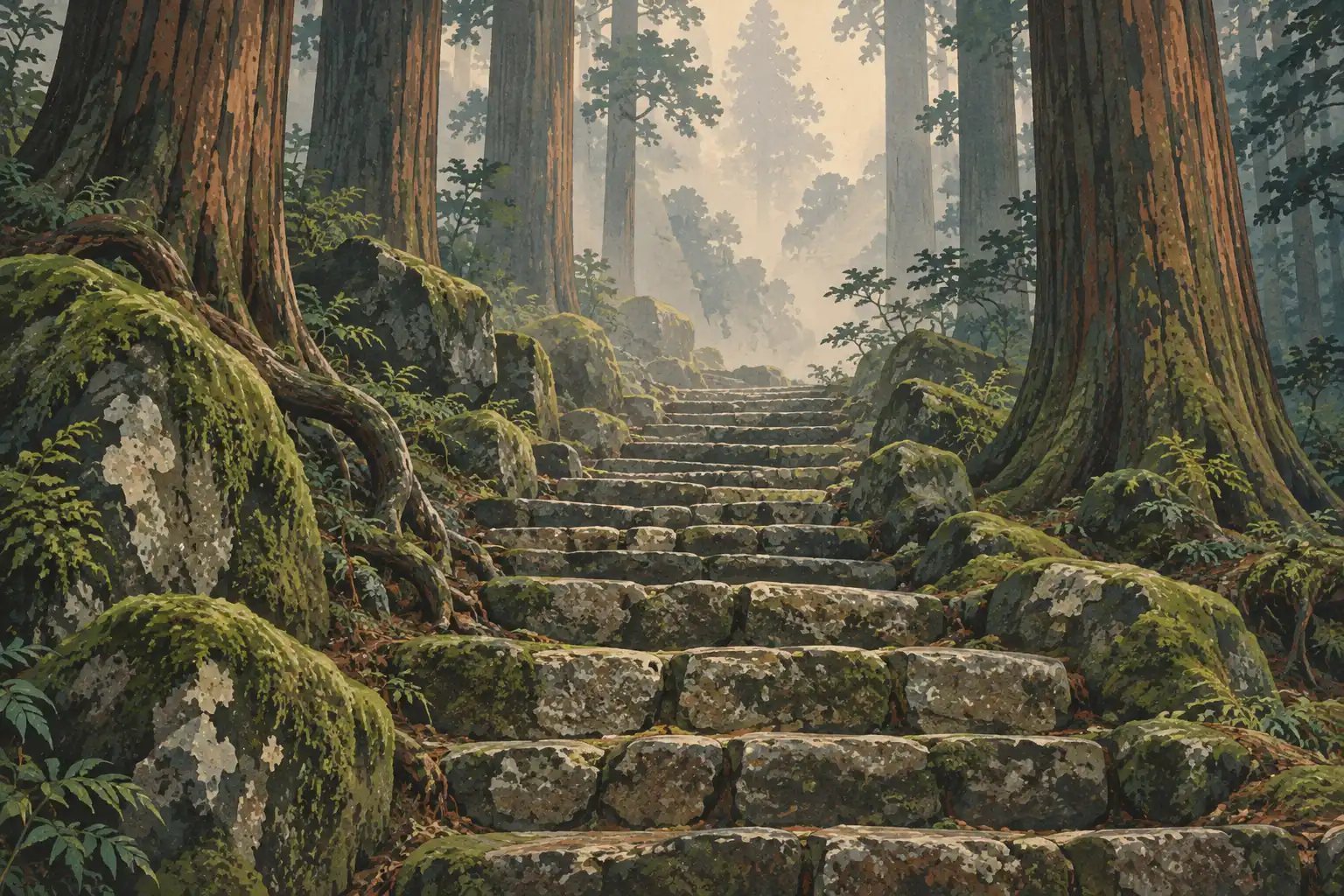
What it feels like: ancient cedars, torii gates in the mist, and ryokans where the care put into the meal and the room is part of the experience. In sacred places, Japanese visitors practice discretion as a courtesy to the place itself.
Logistics: a roughly 12-hour flight from Paris to Tokyo, followed by the Shinkansen and regional trains to the Kii Peninsula. Ryokans along the route cost $90 to $175 a night with half board. Book well ahead.
Best time to go: March to April for the cherry blossoms, October to November for fall foliage. Avoid Golden Week, from late April to early May, and the rainy season in June.
Fitness level: moderate. Some sections are more technical than the Camino, but the total distance is shorter.
Honestly: Kumano Kodo remains little-known by global standards. The UNESCO designation is changing that. Plan ahead.
Varanasi and the Ganges: facing life and death head-on
Varanasi, also known as Benares, has been continuously inhabited for around 3,000 years. Cremations on the ghats, the stone steps along the Ganges, are public and ongoing, watched in silence by thousands of people every day.
What it feels like: the evening aarti, a ceremony of lights repeated for centuries. Smoke, flowers, and songs that are not meant for you, yet somehow pass through you anyway. Death is an ordinary presence in the city, not a performance staged for visitors.
Logistics: a flight from Paris to Varanasi with a connection in Delhi or Mumbai, 10 to 14 hours total. Decent hotels near the ghats start at $30 to $45 a night. Do not drink the river water.
Best time to go: October to March. During the rainy season, from July to September, the ghats are partly flooded.
Fitness level: none required.
Honestly: beware of guides who offer "private" cremations. They do not exist. The public ceremony is the real one.
Mount Kailash: the world's most demanding circumambulation
Kailash rises to 21,778 feet in Tibet. Sacred in four religions, Hinduism, Tibetan Buddhism, Jainism, and Bön, it is not climbed. The kora means walking around it: 32 miles in 3 days, including a pass at 18,491 feet.
What it feels like: a barren plateau, Lake Manasarovar in an otherworldly blue, and winds that cut even in summer. Some pilgrims complete the circuit by prostrating themselves at every step, a practice that takes several weeks on its own. At some point, the question of what you are doing there becomes unavoidable.
Logistics: access is via Lhasa, with a permit required on the Tibetan side, or via Kathmandu. Total trip budget: about $3,500 to $5,800, depending on the route. Traveling alone is not officially permitted on the Tibetan side.
Best time to go: May to September.
Fitness level: high. Several days of acclimatization in Lhasa or Nepal are essential. Acute mountain sickness is a real risk.
Honestly: access depends on the political situation between China and the countries issuing passports. Some years, permits are not granted to European citizens. Check the conditions when you plan, not six months beforehand.
Retreating to a monastery: Bhutan or Mount Athos
Two options for the same intention: truly disconnecting.
In Bhutan, the country charges a Sustainable Development Fee of about $100 per night, excluding required lodging and a guide, which effectively limits visitor numbers. Some monasteries offer supervised stays of 3 to 7 days with teaching and meditation practice. Access is via Delhi or Bangkok.
On Mount Athos in Greece, the autonomous monastic peninsula is open only to men and requires a limited-entry permit, the diamonitirion: about 120 places a day, to be reserved several months in advance. You live by Byzantine time, sleep in cells, and eat whatever the monks serve. Phones and internet are useless. From Paris, fly to Thessaloniki, then take the ferry from Ouranoupolis.
What you experience in both cases: a break from ordinary life that a simple unplugged weekend cannot approach. A monastery is not a spa. There are schedules, services, and enforced silence. Some people leave after two days. Others stay longer.
Honestly: in Bhutan, the cost regulates access. On Mount Athos, the permit does. Both mechanisms work, which may be why these places are still what they are.
These five journeys require time, not equipment. Time can be organized, and it has to be chosen. If, between departures, you are looking for landscapes that demand this kind of presence on another scale, some national parks in the American West offer it in their own way: Grand Canyon, in particular, has been sacred to many Native American nations for thousands of years.