

Grand Canyon: Check Conditions Before You Hike Below the Rim
Inner canyon weather, trail closures, heat risk, and water availability change fast, so here's how to stay informed before you drop below the rim.
By Jocelyn Pion,
Hiking below the rim at the Grand Canyon isn't like taking a stroll along the edge. The park has its backcountry conditions flagged as a critical alert right now, and for good reason. The lower you drop toward the Colorado River, the hotter it gets. A cool morning up on the rim can hide a furnace at the bottom of the canyon.
Before you hit the trail, four things deserve your attention. First, the weather forecast for the inner canyon, which has nothing to do with the conditions up top where you park. Second, the list of temporarily closed trails, since a route you planned yesterday can be cut off overnight. Third, the day's heat risk rating, which tells you whether it's reasonable to head out at all. And finally, drinking water availability along the trails. Some water sources are seasonal or out of service, and setting out counting on a fountain that turns out to be dry is a classic trap.
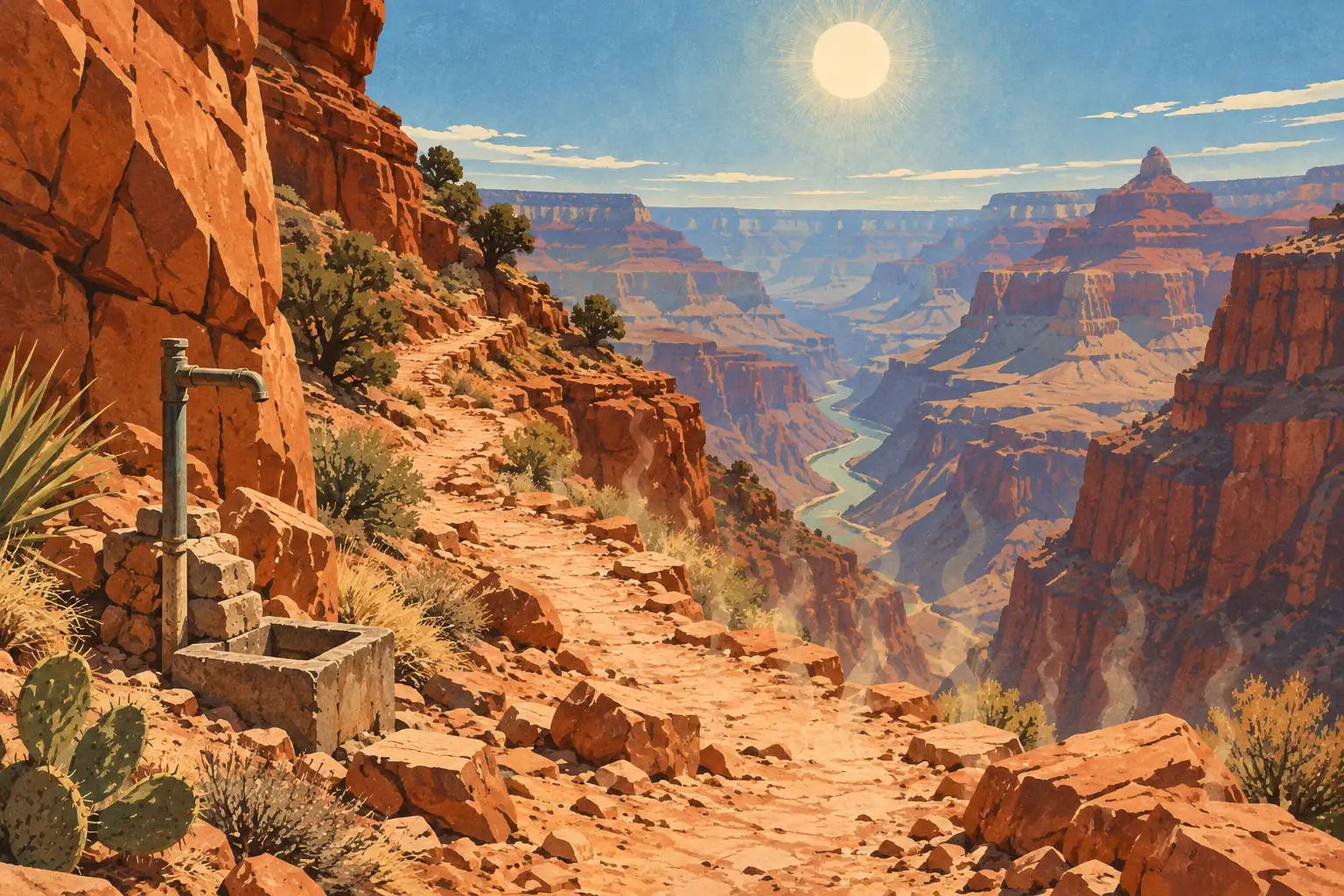
Our advice comes down to one habit. Check this information the morning of, never the night before. Closures and heat risk shift over the course of the day. Carry more water than you think you'll need, pack salty food, and time your effort around the hottest hours of the afternoon. Remember, too, that the climb back out takes about twice the time and energy as the way down.
To see where these trails fit in the wider park, plan your stages, and understand the real distances between the rim and the river, lean on our Grand Canyon park guide. And if you're rolling into the canyon in an RV, take a look at our road trip route that runs through this park to slot this stop into a bigger trip.
The bottom line is simple. The Grand Canyon is still open and stunning, as long as you check conditions on the ground right before you set out.