
Hawaii Road Trip: Big Island, Volcanoes, and a Maui Extension
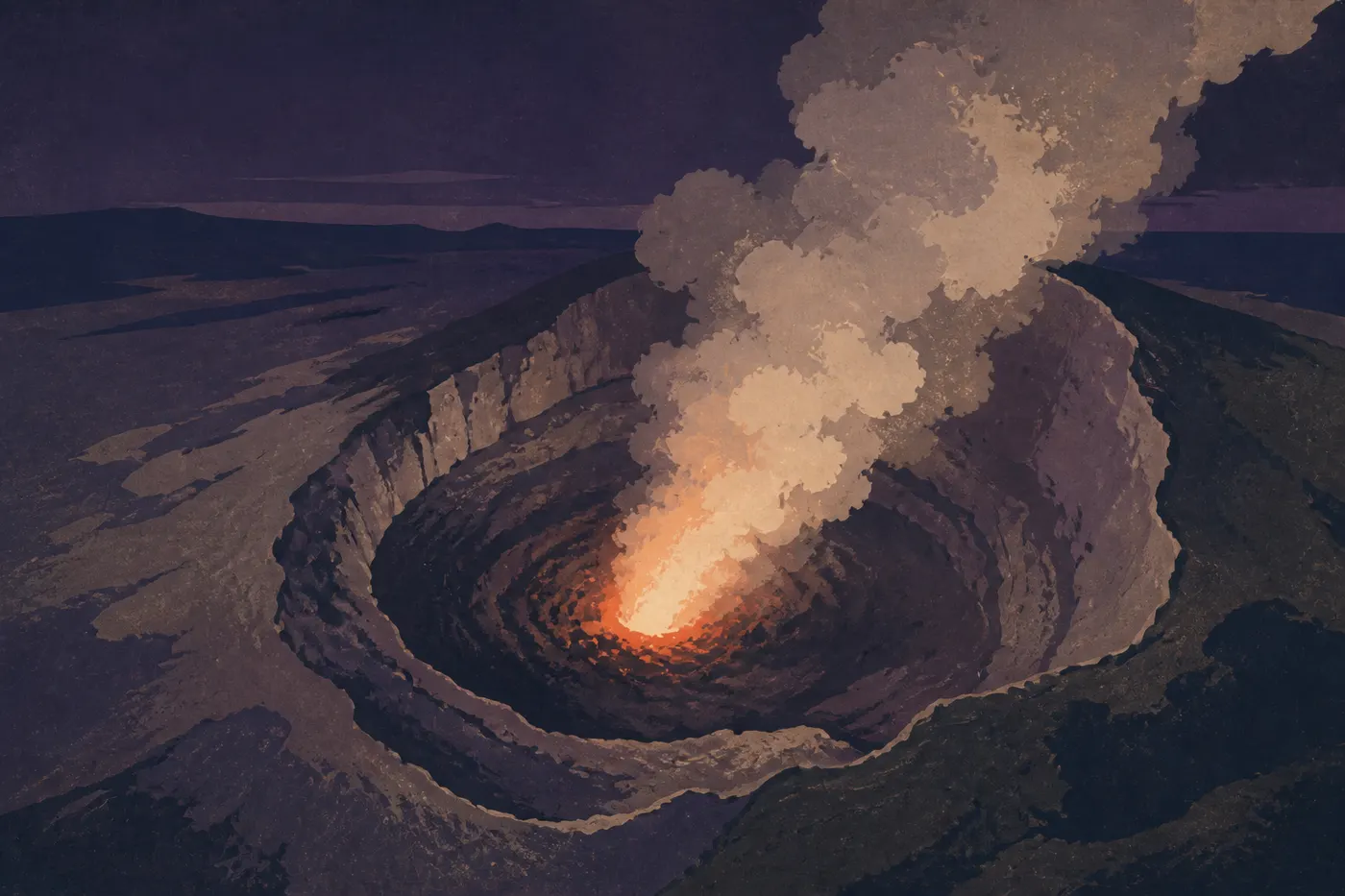
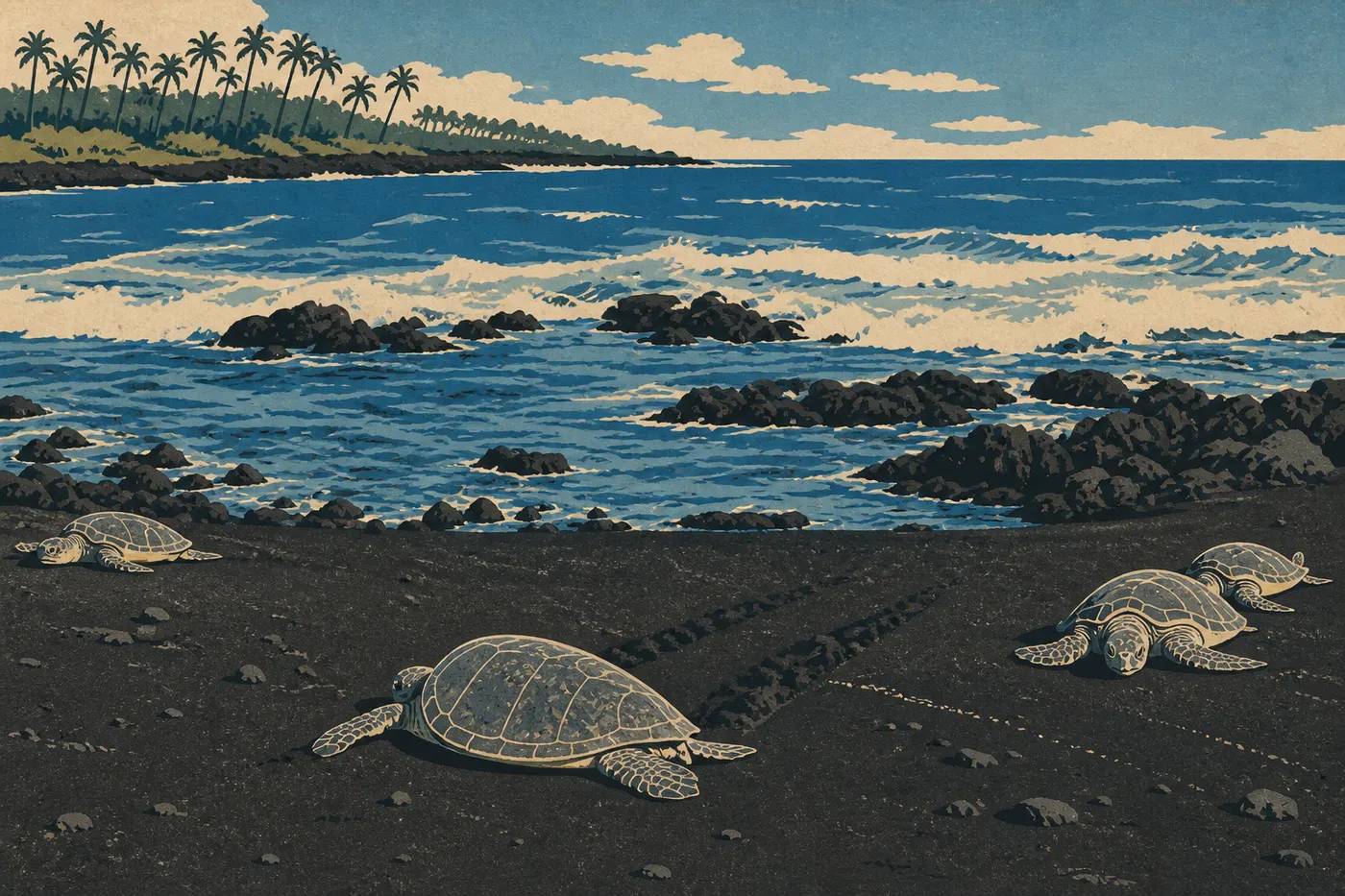
It's eight o'clock in the evening on the rim of Halemaʻumaʻu, and the ground is breathing. Beneath the overlook, Kilauea's caldera glows in the darkness, an orange light pulsing at the bottom of the abyss and lighting the steam plume from below. Two days earlier, 50 miles away, green sea turtles were sleeping on soot-black sand at Punaluʻu, the warm surf brushing their shells. In a few days, on another island, we'll shiver 9,800 feet above the clouds, waiting for the sun to rise over a lunar crater large enough to swallow Manhattan. Three images, one archipelago, and not a touch-up in sight.
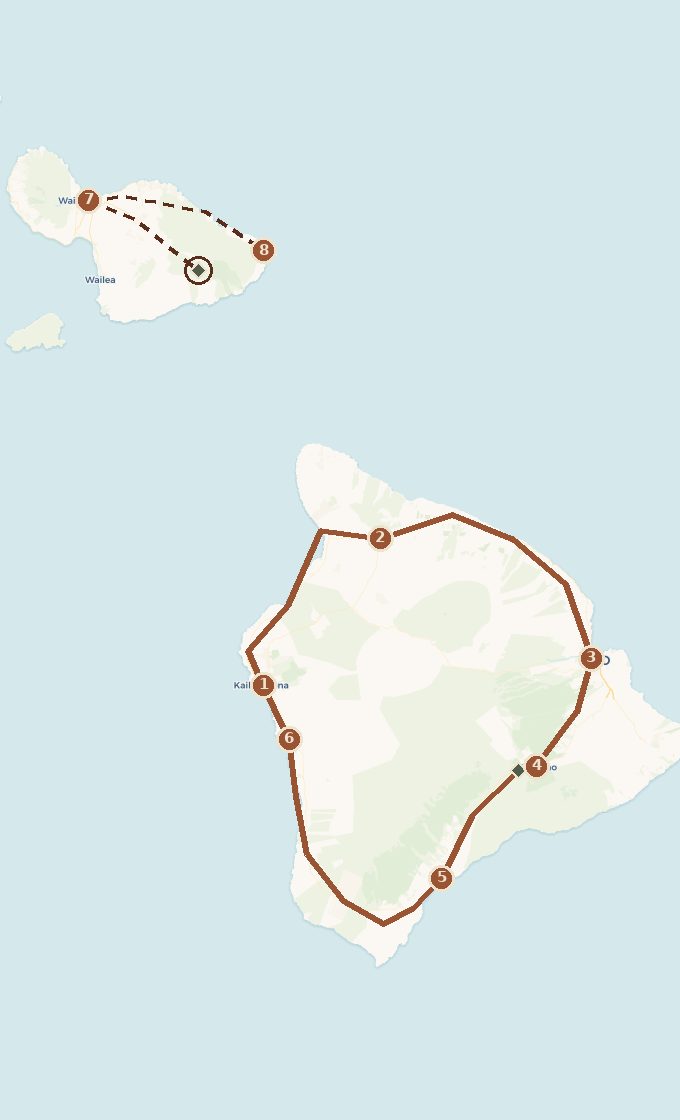
This road trip connects those three moments. It starts on the dry side in Kailua-Kona, circles Big Island clockwise, crosses the wet coast and Hawaiʻi Volcanoes National Park, then closes the loop along the Kona coast. There, we return the car, take a 40-minute flight, and the trip begins a second movement on Maui, a shorter one that climbs toward its final summit: sunrise at Haleakala. Two islands, one flight, one loop, and a coda. You don't do Hawaii in a straight line. You do it in two breaths.
 Base map © OpenStreetMap · © CARTO
 - 1. Kailua-Kona
- 2. Waimea et la côte de Kohala
- 3. Hilo et la côte de Hamakua
- 4. Volcano et le Kilauea
- 5. Punalu'u, la plage de sable noir
- 6. Captain Cook et la baie de Kealakekua
- 7. Maui : Kahului
- 8. La route de Hana
- ↳ detour to Haleakala
1 stop national park on the route detour
Which way to drive, and how long to stay
Big Island is a round island ringed by one major road, the Hawaii Belt Road. You can circle it in either direction, and the question isn't just an aesthetic one. We start in Kailua-Kona on the west coast and head north. That's where most flights land, it's the dry side, and it's the right place to reset your body clock before getting started.
This direction gives the trip a narrative arc. We start out dry and quiet, climb toward the ranches in the north, cross to the wet coast and its waterfalls, then reach the national park halfway through the trip. That's the first high point. We head back down through the wild south and close the loop on the Kona coast, relaxed and ready to change islands. Driving the other way would work too, but it would put the volcanoes too early and end Big Island in ranch country instead of by the sea. We prefer to keep the intensity in the middle and save the true climax for Maui.
Plan on 10 to 12 days. Allow seven to eight days for a relaxed loop around Big Island, then three to four days for Maui. The beginner's mistake here is thinking the island is small because it fits on a map. Big Island is larger than all the other Hawaiian islands combined, and crossing from west to east takes a good two hours on mountain roads.
One island, two worlds
Here's the key to the whole trip, and it comes down to one sentence: Big Island is split in two. In the west, the Kona coast lives in the lee of the trade winds, sheltered by the two giants Mauna Loa and Mauna Kea. The skies are blue, the beaches golden, coffee grows on the slopes, and sunsets are a local religion. In the east, the Hilo coast takes the full force of moisture-laden trade winds. Hilo is one of the wettest cities in the United States, the forest runs wild, waterfalls drop everywhere, and afternoons are often rainy. One island diameter, two climates that have nothing in common.
That divide determines where you'll spend the night. The beginner's temptation is to change hotels at every stop. On Big Island, that's six pointless moves. Set up two bases instead. Use Kona for the beginning and end of the loop, on the dry side with your feet near the water. Use Hilo or Volcano for the middle of the trip, the wet coast, and the national park. Unpack twice, then make day trips from there. You'll drive lighter and actually enjoy the place.
Kailua-Kona, arriving on the dry side
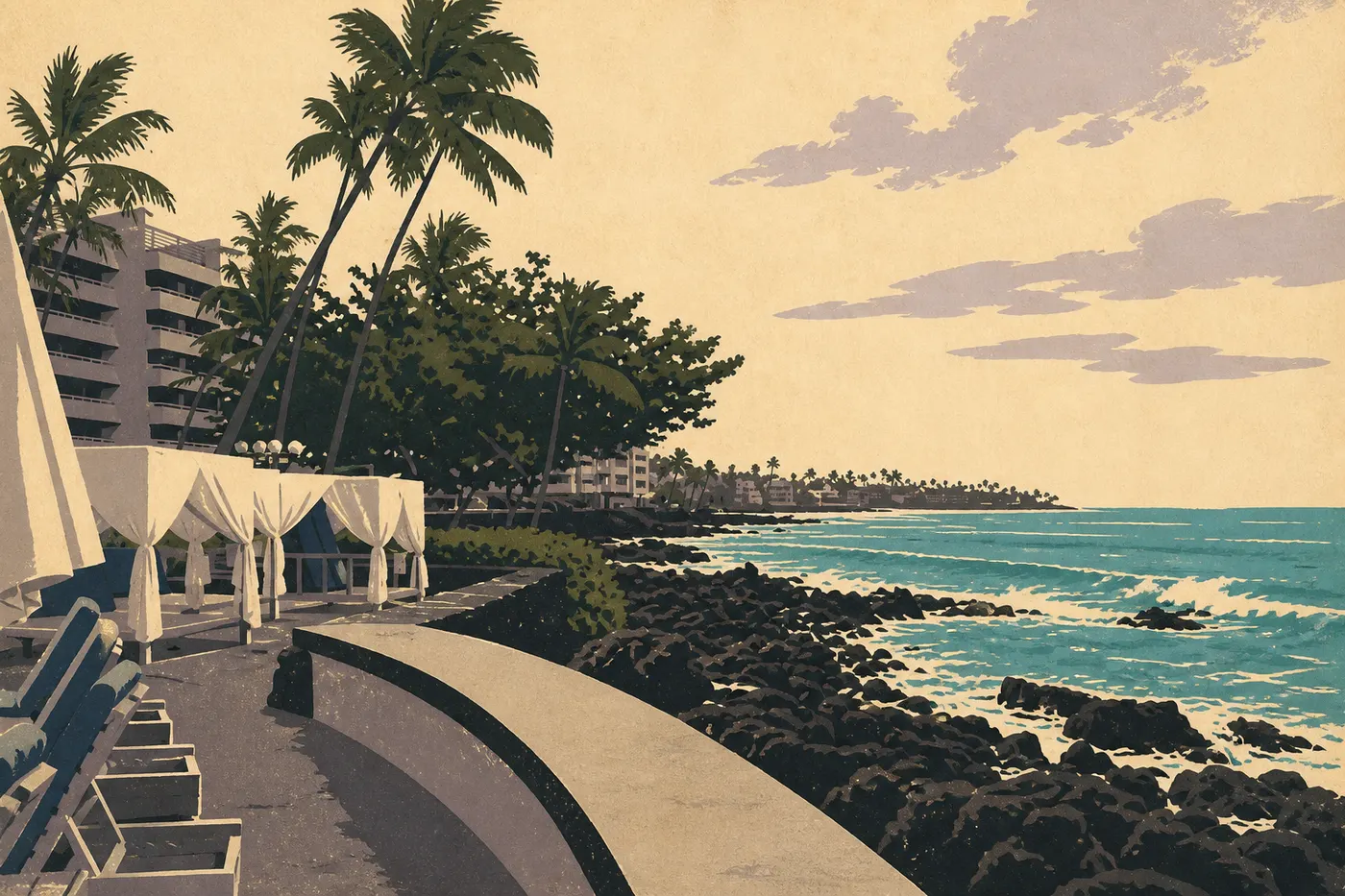
We pick up the car at Kona International Airport and reach Kailua-Kona within minutes. It's a small, unpretentious beach town stretched along Aliʻi Drive, with missionary churches, dive shops, and patios facing the sunset. The first evening is made for exactly that: grilled fish, local fruit juice, and the sun dropping straight into the Pacific while jet lag catches up with you.
The next day, we get a feel for the coast without pushing it. The slopes above town form the Kona coffee belt, one of the few places where coffee is grown on U.S. soil. The farms offer tours, and the tasting says more than a long explanation ever could. Farther south, pale-sand beaches appear one after another, often tucked at the end of a black-lava road that catches you off guard the first time. We don't linger too long. The main story is elsewhere, and this stop is mostly about breathing before turning north.
The north: Waimea, Kohala, and Waipio Valley
As we drive north, the landscape changes before our eyes. Lava gives way to grass, the heat fades, and we emerge onto broad upland pastures where herds graze. Welcome to Waimea, home of the paniolo, Hawaii's cowboys, and one of the country's largest ranches. We drive with the windows down through cool air that smells of wet grass, a world away from tropical postcard clichés.
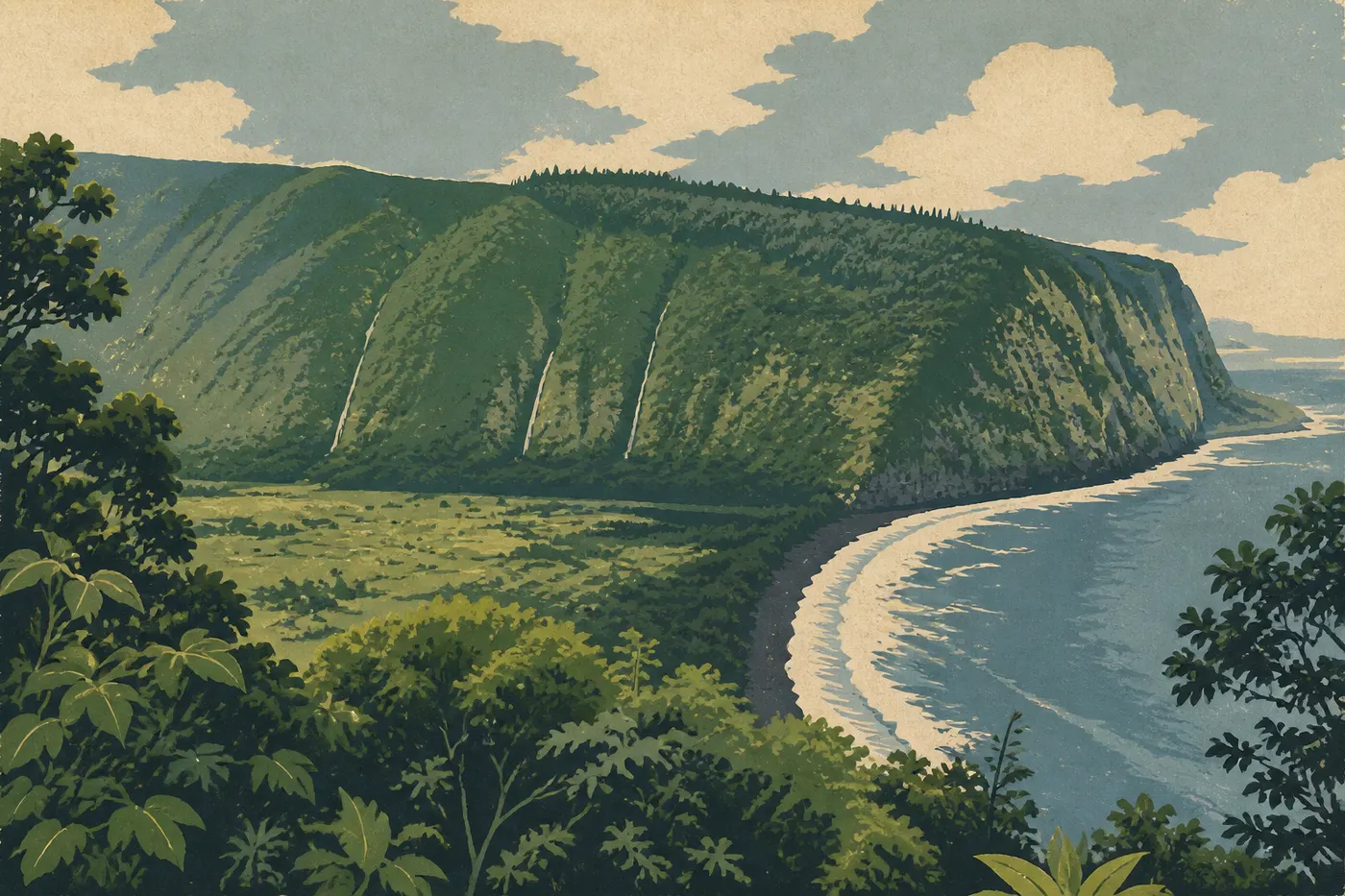
The payoff comes at the end of the road, north on the Kohala Peninsula. Waipio Valley suddenly opens below us, the Valley of the Kings: an amphitheater of steep green cliffs, with a black-sand beach at the bottom and waterfalls scoring the walls. The overlook is the right place to take it in. The road down is one of the steepest in the United States and is often reserved for residents, while the drop is easy to appreciate from above. We stay for a while in the silence, taking in the scale.
Hilo and the wet coast: Akaka Falls and the Hamakua Coast
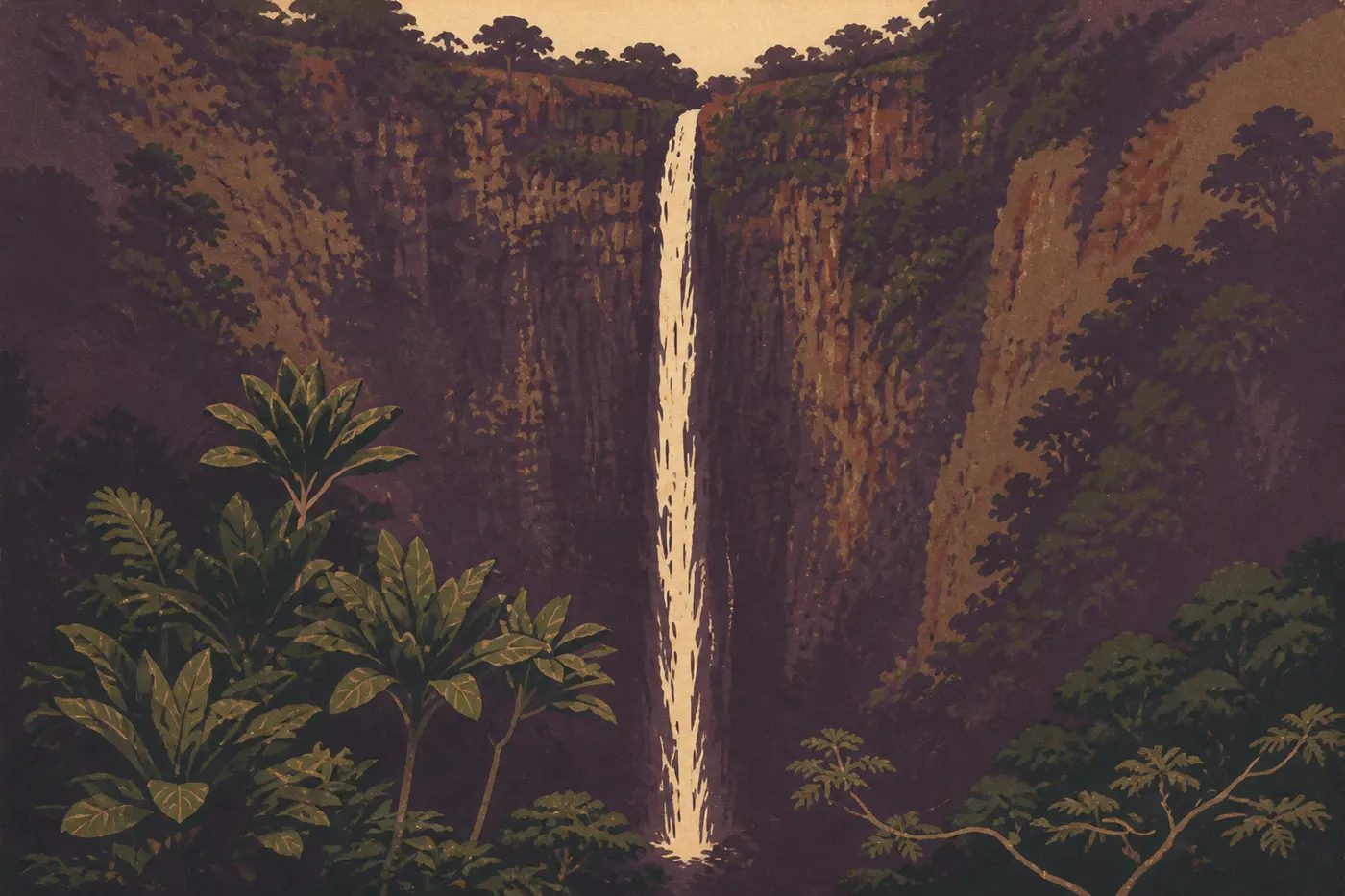
We cross to the other side, and the world turns green. The Hamakua Coast Road follows the old sugar coast, cut by deep ravines where water plunges through tree ferns. The detour to Akaka Falls is a must. A short forest loop leads to the foot of a waterfall that drops 442 feet in one clean plunge into a dripping green amphitheater. The air is saturated with water, everything drips, and within 10 minutes we understand why this side of the island carries the forest.
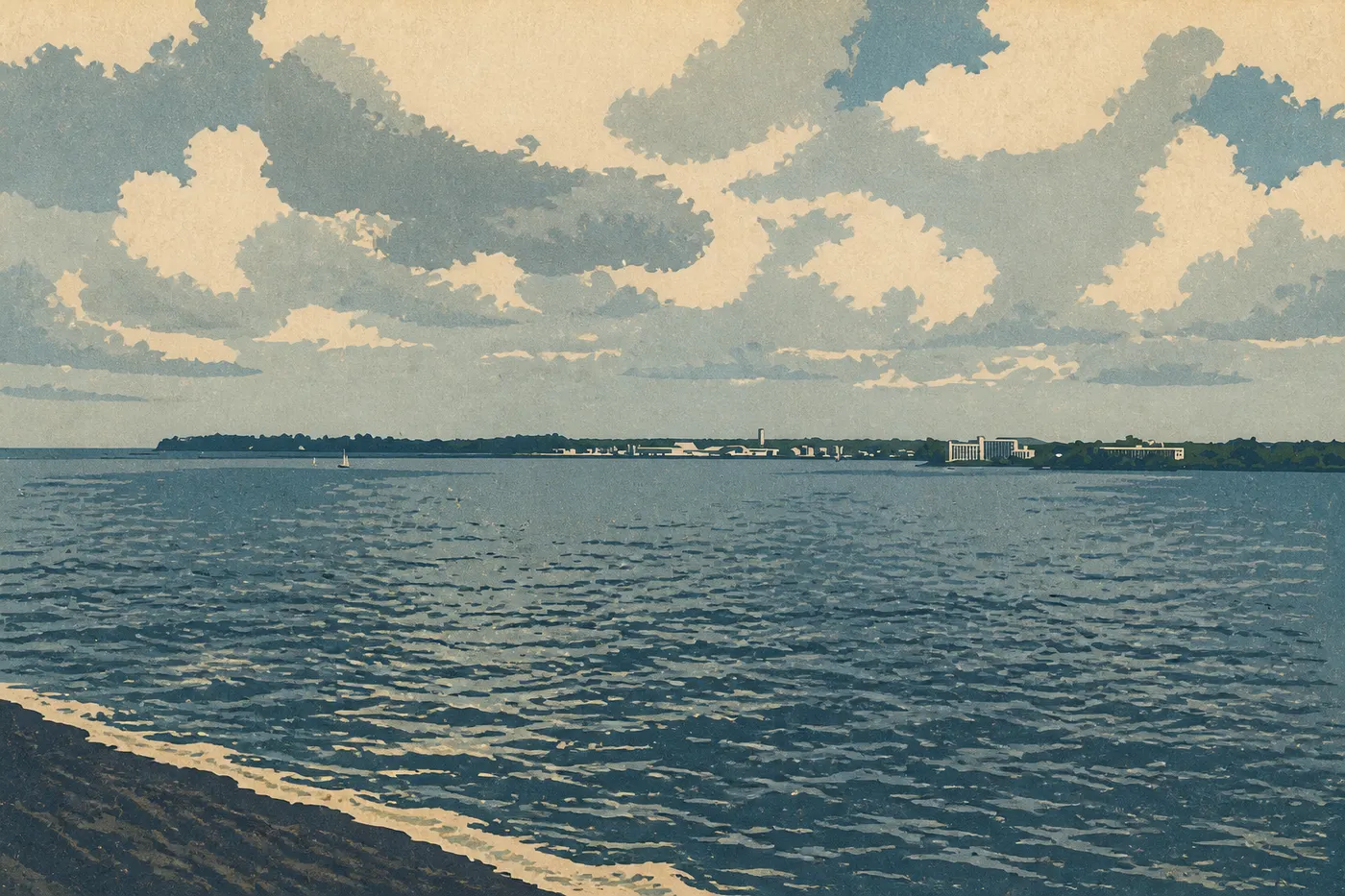
At the end of the coast, Hilo is a real city, the island's largest, with early-20th-century wooden facades, a market, and a horseshoe-shaped bay. It's a convenient, no-frills base for the middle of the trip. The sky is often heavy, but tropical rain has one useful quality: it moves through quickly. We wait out a shower under an awning and head back out 15 minutes later. If you want to understand volcanoes, the Pacific Tsunami Museum tells the darker story of living beside forces like these.
Hawaiʻi Volcanoes National Park: Kilauea and Chain of Craters Road
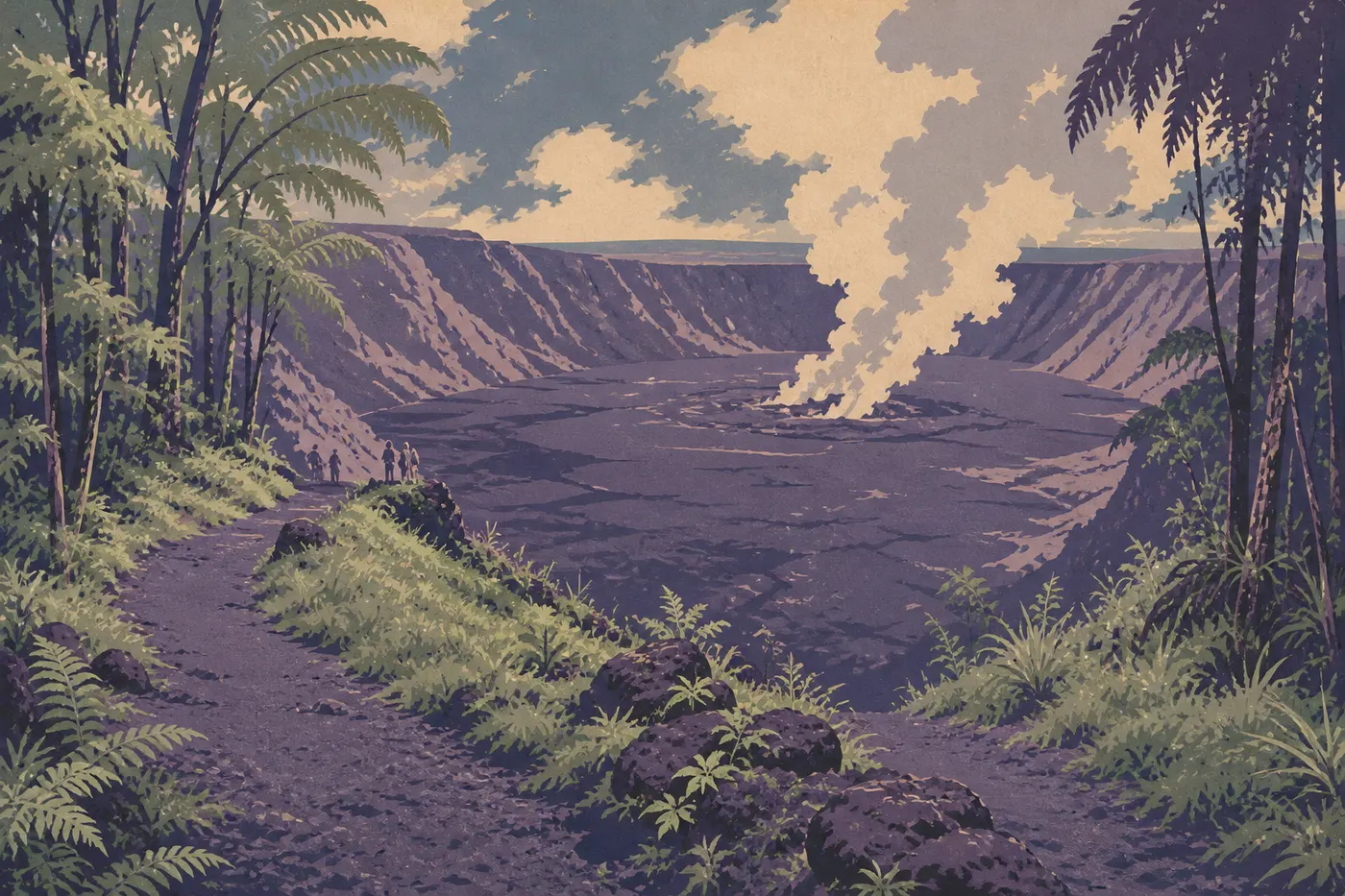
This is the trip's first high point, and it rewards patience more than effort. Hawaiʻi Volcanoes National Park protects two active volcanoes, including Kilauea, one of the most closely monitored volcanoes on the planet. From the edge of its caldera, we look down into the vast Halemaʻumaʻu crater, a pit that constantly sends up a gas plume. When an eruption is underway at the summit, the scene changes after dark. Lava glow lights up the bottom of the crater and reflects off the plume. It's free, quiet, and unforgettable.
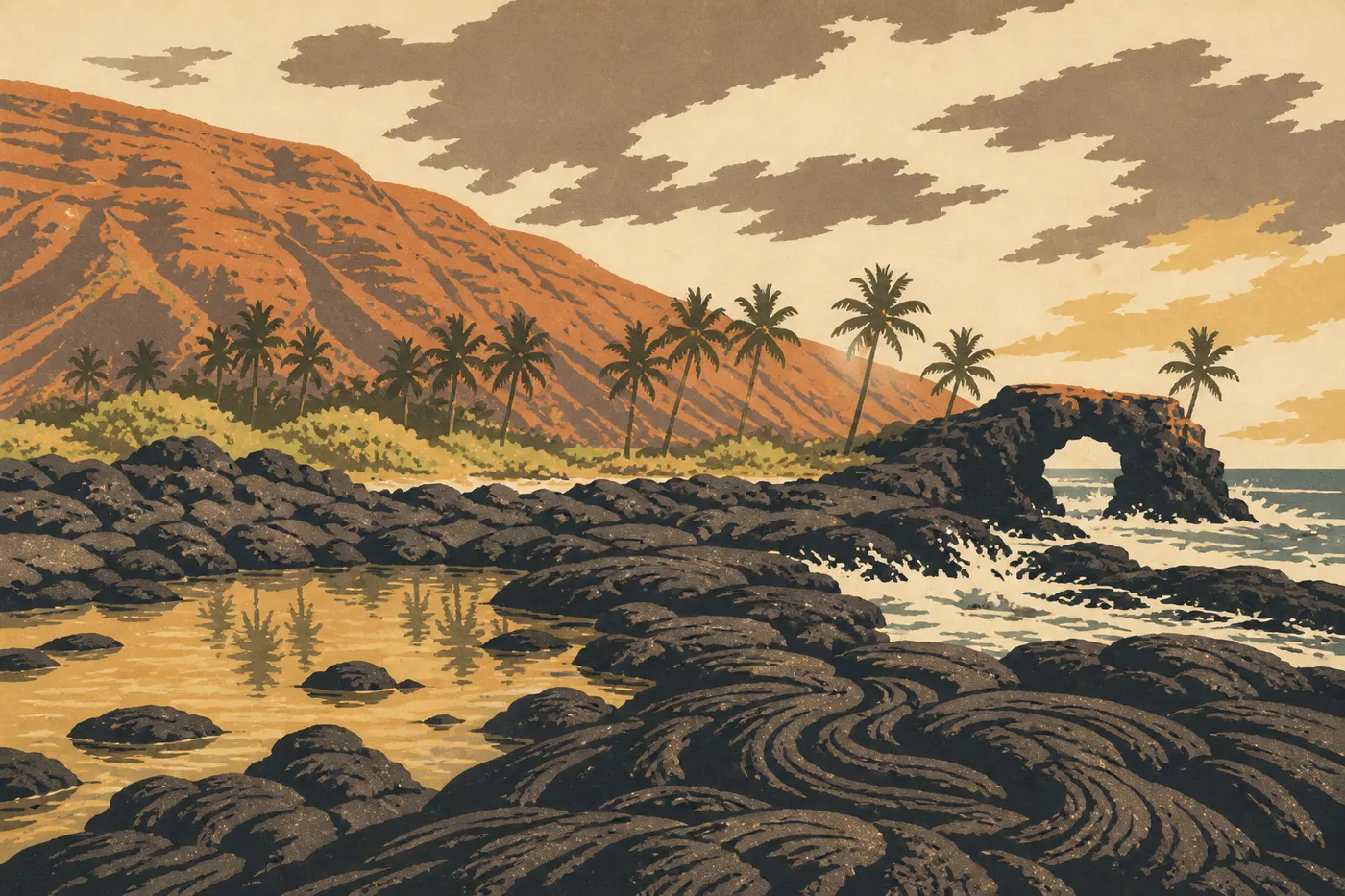
From there, Chain of Craters Road descends in sweeping turns from the summit to the ocean, more than 3,300 feet below, crossing old hardened lava flows that are black, glossy, and folded like frozen chocolate. At the bottom, the road ends abruptly where a flow once covered it, facing the Hōlei Sea Arch and the pounding surf. We walk a little across the lava, listen to the wind, and take in an island that is still being made beneath our feet.
Live volcano updates: what's happening with the eruption
Let's be honest about something that shapes many trips: no one can promise you lava. Kilauea works in episodes. It becomes active, stops, and starts again weeks later, sometimes at the summit and sometimes somewhere else. Some travelers find spectacular lava fountains; others find a quiet crater that only smokes gently. Both are the volcano's real face, and no agency controls the schedule.
The smart move is to check the USGS Hawaiian Volcano Observatory, which posts daily activity updates with maps and webcams. Before leaving, you can see whether an eruption is underway and where. In the park, rangers post the areas that are open and the best viewpoints for the current conditions, because those change with the activity. In short, leave some flexibility in your park plans. If a glow is expected one evening, everything else can wait.
The south: Punaluʻu, South Point, and Kealakekua Bay
We leave the high country for the island's wildest tip, the southern point. Our first stop is Punaluʻu, a volcanic black-sand beach lined with coconut palms where large green sea turtles come ashore to warm themselves in the sun. We watch from a distance, don't touch them, and leave them alone. They're protected, and this is their living room. The contrast between black sand, green palms, and gleaming shells is striking.
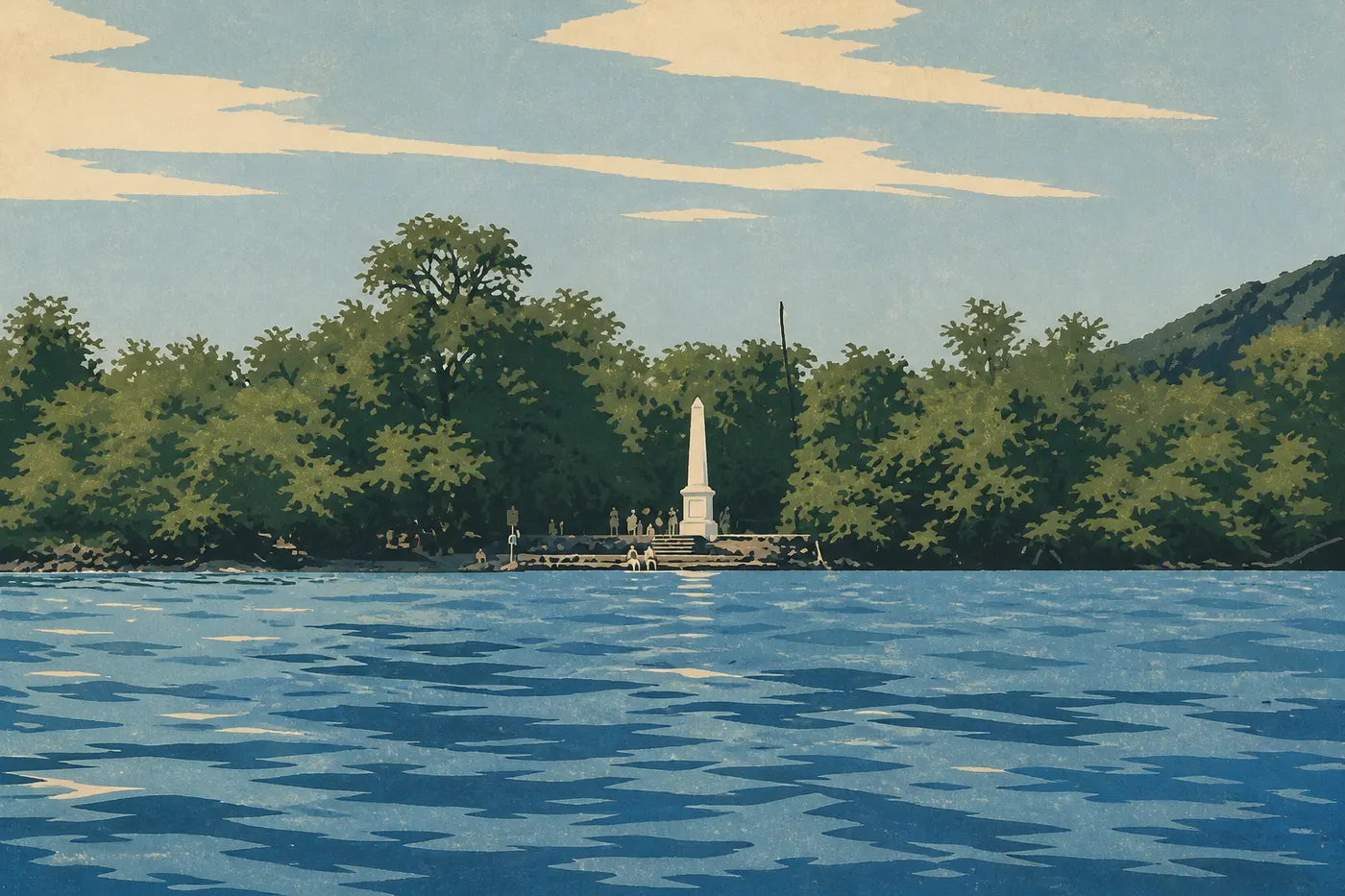
A little farther on, a rough track leads to South Point, the southernmost point in the 50 states, a windblown cape where the ocean pounds the cliffs. From there, a long hike leads to Papakōlea, one of the few green-sand beaches in the world, colored by olivine in the rocks. Heading back toward Kona, we close the loop through Kealakekua Bay, below the village of Captain Cook clinging to the slope. A white obelisk stands at the water's edge, reached mostly by sea, marking the spot where the navigator died in 1779 after being killed on this shore while returning from a voyage. This marine sanctuary, with its clear water, reveals some of the island's richest coral and fish habitat to snorkelers. It's a beautiful final image of Big Island before we return the car.
The hop to Maui: the flight, the car, and the Haleakala reservation
End of the first movement. We return the car in Kona and take an interisland flight to Kahului on Maui. It's about 40 minutes in the air, with several departures a day, a formality Hawaiians treat the way we treat a bus ride. Travel light, check as little luggage as possible, and leave some extra time on flight day. This isn't the moment to rush.
When we arrive, we rent another car at Kahului Airport. This is a separate agreement from the one on Big Island, so plan for it when you book. Rental companies don't offer one-way island-to-island rentals. There's one more formality that really matters, and you need to handle it before you leave: sunrise at the summit of Haleakala requires a reservation. Entering the park between 3 and 7 a.m. requires a timed-entry ticket purchased through recreation.gov. Tickets are limited, go on sale about two months ahead, and often sell out within minutes. A second batch is released 48 hours before the date. Without a ticket, you can't drive up to watch the day begin. Reserve it as soon as your dates are firm. Plan the rest of Maui around it.
Maui: the Road to Hana and sunrise at Haleakala
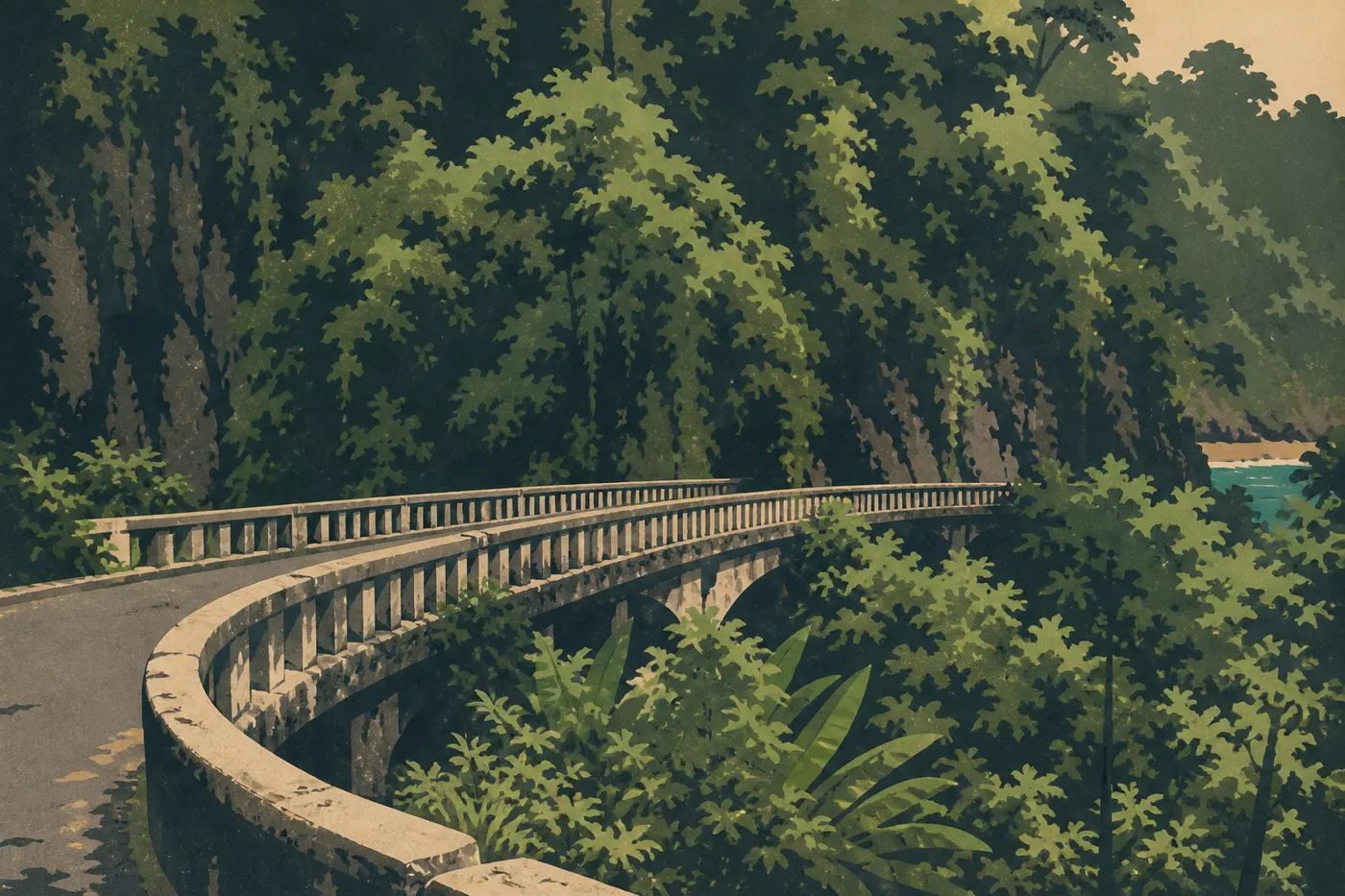
Maui comes down to two powerful images, and we give ourselves time to experience both. The first is the Road to Hana. From Paia, it winds along the northeast coast through the jungle, with roughly 600 curves and 50 one-lane bridges, waterfalls, red-sand beaches, and black-sand coves. The secret is not to treat Hana as the destination. The village at the end is just an excuse. The trip is the road itself, its stops, swimming holes, and fruit stands along the pavement. We drive slowly, yield on the bridges, and set aside the entire day.
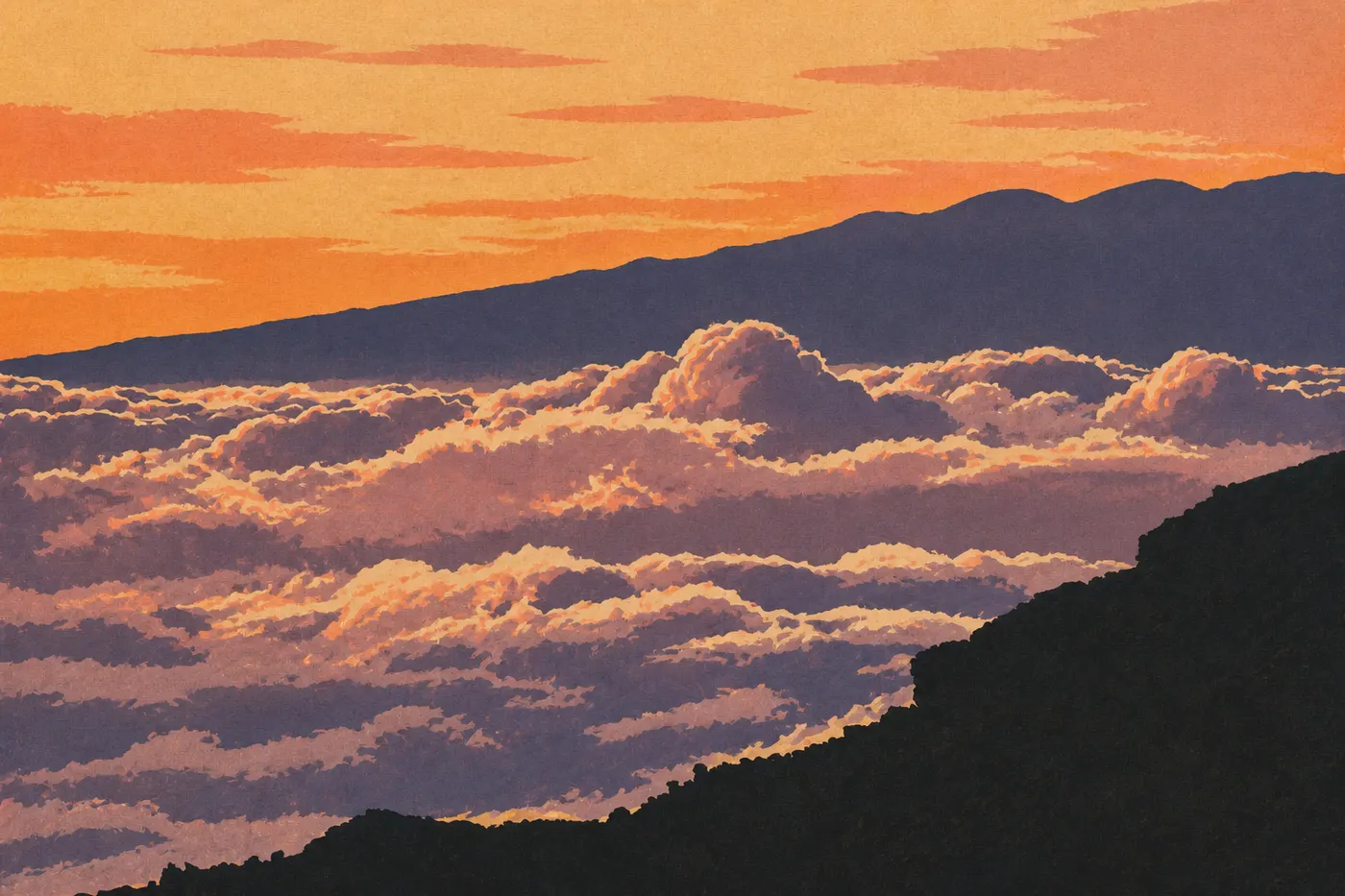
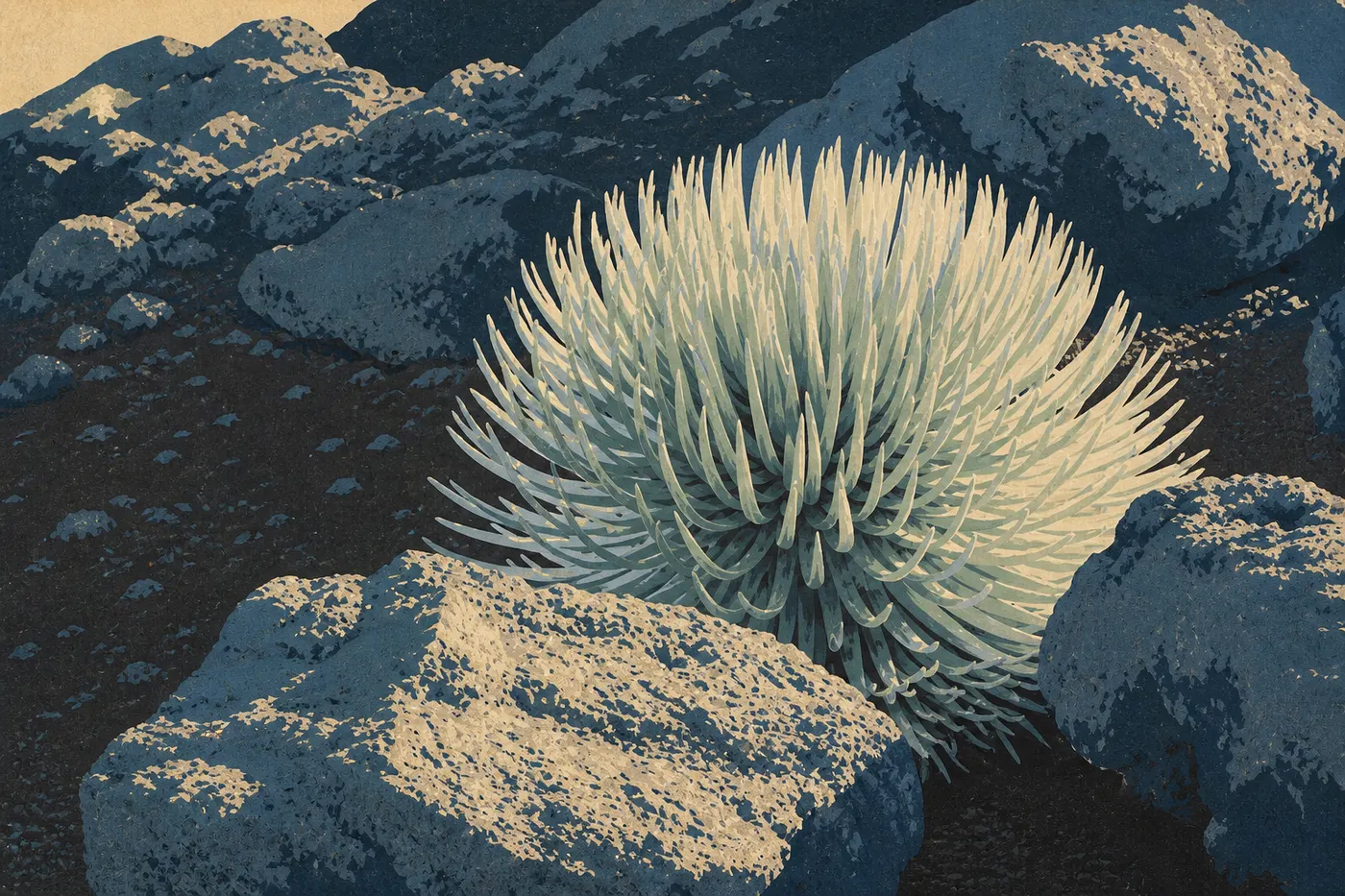
The second image is the climax of the whole trip, so we deliberately save the climb to the circled summit on the map for last. Long before dawn, we climb the Haleakala Highway to the summit of that dormant volcano, which rises above 10,000 feet. We step out of the car into biting cold, bundle up, and wait beside an enormous lunar crater. Then the sky turns pink, the sea of clouds catches fire below, and the sun rises over the ocean as if from another world. On the ash slopes grows a living thing found nowhere else: ʻāhinahina, the Hawaiian silversword, a ball of silver spines that blooms once in its life and then dies. Here, in the cold and the light, the trip finds its final image.
When to go, and what it costs
Hawaii is a year-round destination. Its tropical latitude smooths out the seasons. The real difference comes down to rain and crowds. The dry season, from April through October, offers the most reliable skies, including on Hilo's wet coast. Winter, from November through March, is wetter and rougher, but it's humpback whale season. The whales gather in large numbers in the channel between Maui and Big Island, and you may even see snow dusting Mauna Kea while you swim below. The biggest crowds and highest prices come around Christmas, spring break, and summer.
Hawaii isn't a budget destination, and two expenses weigh heavily. Lodging comes first, especially on the resort coasts and during high season. Booking early remains your best lever, while using two bases per island keeps you from multiplying hotel nights. Transportation comes next: two car rentals, the interisland flight, and fuel that costs more than elsewhere in the United States. Park entrance fees and the Haleakala reservation remain relatively modest. These are rough estimates, so build your budget from recent quotes. Island prices change quickly.
The national parks on this road trip
Circuit variations
Short version, Big Island only. Don't have 10 days? The Big Island loop fits into five to six days and already makes a complete trip, from Kona coffee to the volcanoes. Keep the car for the loop and skip the flight. Maui can wait for the next trip.
Tight two-island version. Have a week but want both worlds? Focus Big Island on Kona, Hilo, and Hawaiʻi Volcanoes National Park for four days, then spend three days on Maui for the Road to Hana and Haleakala. The story still holds together as long as you skip the south and don't rush.
Oahu option for arrivals in Honolulu. Many international flights land on Oahu first. Instead of making it a simple connection, spend two or three days there. The Pearl Harbor memorial, the North Shore's legendary waves, and the city of Honolulu make a complete prologue before you continue to Big Island or Maui on another interisland flight.
Frequently asked questions
How long does it take to visit Hawaii on a road trip?
Plan on 10 to 12 days for this itinerary: seven to eight days for the Big Island loop and its volcanoes, then three to four days for Maui. With one week, focus on one island or choose the highlights of both.
Do you really need to fly between the islands?
Yes. There is no bridge or car ferry between Big Island and Maui. The interisland flight takes about 40 minutes, with several departures a day. Return the car on one island and rent another on the next. They're separate agreements, so arrange both when you book.
How do you reserve sunrise at Haleakala?
Reaching the Haleakala summit between 3 and 7 a.m. requires a timed-entry ticket through recreation.gov. A limited number go on sale about two months ahead and sell quickly. A second batch is released 48 hours before the date. Reserve yours as soon as your dates are set.
Will we see lava flowing in Hawaiʻi Volcanoes National Park?
Maybe, but no one can guarantee it. Kilauea erupts in unpredictable episodes. Check the USGS Hawaiian Volcano Observatory before and during your trip for current activity, and leave some flexibility in your schedule. If a glow is expected one evening, everything else can wait.
Which island should you choose if you can visit only one?
Big Island, without hesitation, for a first nature-focused trip. It has active volcanoes, two climates, black sand, green sand, and wide-open spaces all on one island. Maui adds the Road to Hana and sunrise at Haleakala, a shorter second movement to save for the next time you return.