

Yellowstone: How Far to Stay From Wildlife
At Yellowstone, bears, bison and wolves are unpredictable wildlife. Here are the safety distances and what to know about bear spray.
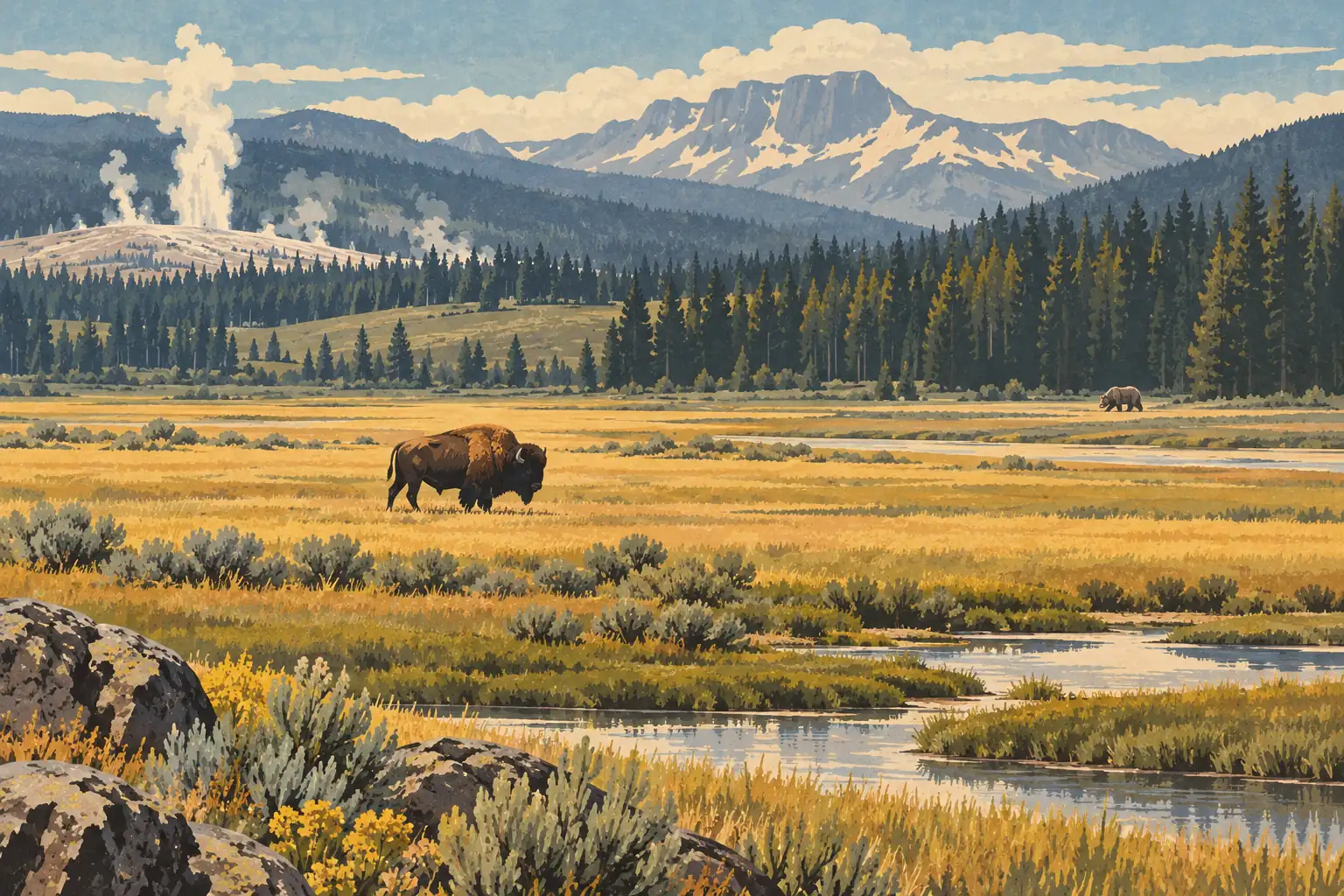
At Yellowstone, wildlife isn't scenery or an attraction. Bears, bison, wolves, mountain lions, and elk roam free, and they remain unpredictable. Every year, visitors forget that when they move in for a photo, and the park’s safety guidance makes the point plainly. The rule comes down to one simple idea: you're in their home, so adapt your behavior.
In practice, there are two distances to keep. Around large predators, including bears, wolves, and mountain lions, stay at least 100 yards away. That’s about the length of a football field. For bison, elk, and every other animal, 25 yards is the minimum. These aren't decorative recommendations. A bison that looks calm can charge quickly, and a cub is never alone. Its mother is close by.
The second habit is carrying bear spray. The park recommends having it with you at all times, including on a short walk where you might feel safe. You also need to know how to use it before you need it, so get familiar with the mechanism while you're calm, not during an encounter. There’s good news if you’re traveling light and flying in: several locations in the park rent, sell, or accept bear spray for recycling, so you don't have to carry an aerosol can that isn't allowed in your cabin bag.
These precautions don't take anything away from the experience. They do the opposite: when you're prepared, you observe more, for longer, and with peace of mind. We cover the seasons, areas, and logistics in the Yellowstone park guide, and the same habits matter throughout our road trip itinerary through the park. Safety is part of the trip here.