
Yellowstone and Grand Teton Road Trip: Our 8- to 10-Day Loop
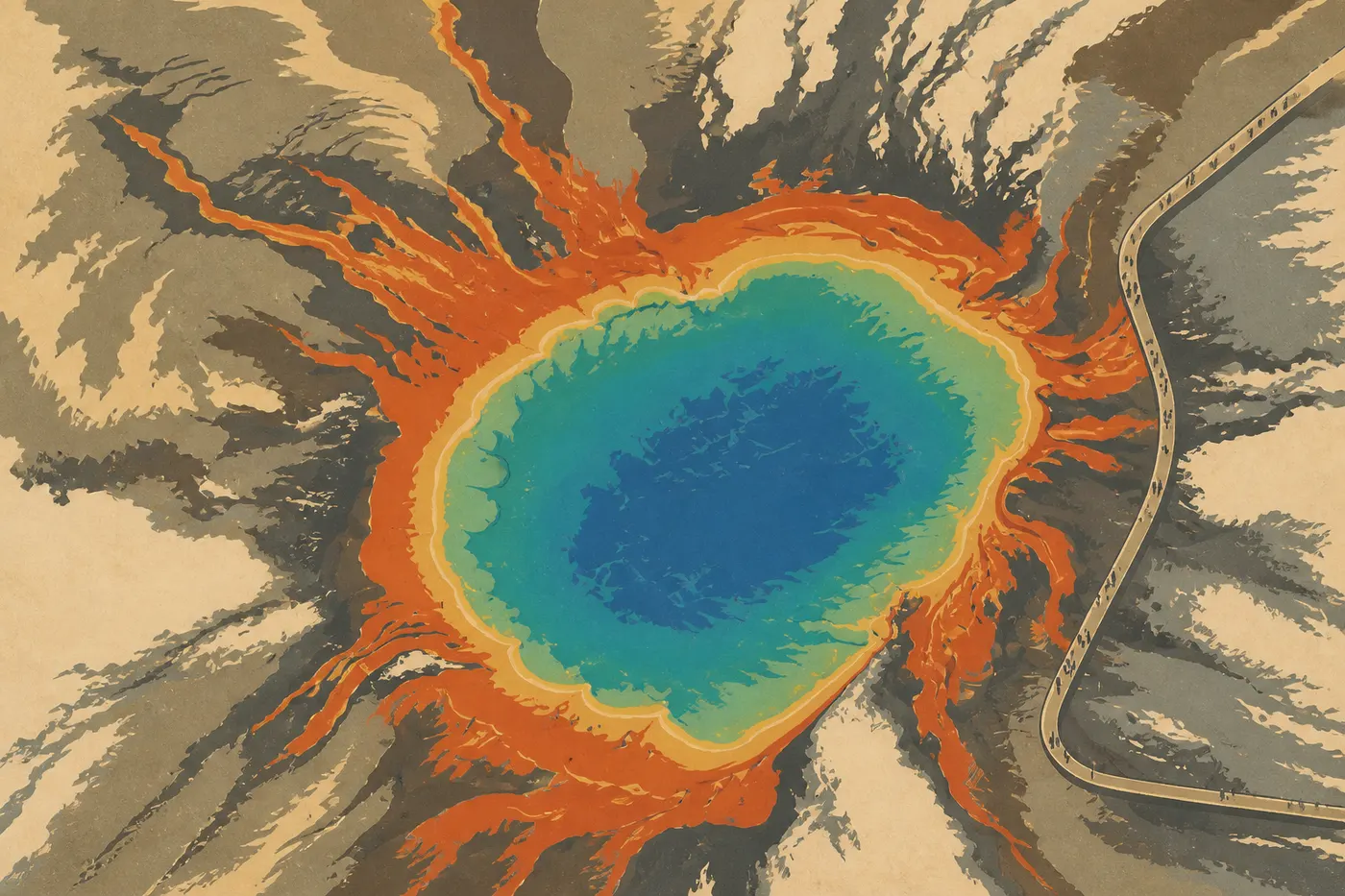
Six in the morning in Lamar Valley. A herd of bison crosses the road at a walk, steam rising from their nostrils, and there's nothing to do but turn off the engine and wait. Here, they decide. Sixty-two miles south, a hot spring 328 feet wide unfurls orange, green, and blue rings beneath a veil of steam, like an open eye in the middle of the plain. Elsewhere, a geyser shoots 98 feet of boiling water with clockwork punctuality, a canyon with yellow walls swallows a waterfall nearly twice as high as Niagara Falls, and white limestone terraces spill down in smoking steps. Then, to lift the curtain, a mountain range rises in one clean sweep above a sagebrush valley, with no foothills to announce it: the Tetons.
This road trip connects those images in a loop. It starts in Salt Lake City, heads north through Mormon valleys to Jackson, opens onto Grand Teton, then enters Yellowstone from the south and makes the full circuit: geysers first, then the lake, the yellow canyon, Mammoth, and Lamar Valley wildlife all the way north. We leave to the west, head back down through the Idaho plains, and return to Salt Lake City eight to ten days later with our heads full of steam and bison. This is the world's first national park and its mountain neighbor, brought together in one trip.
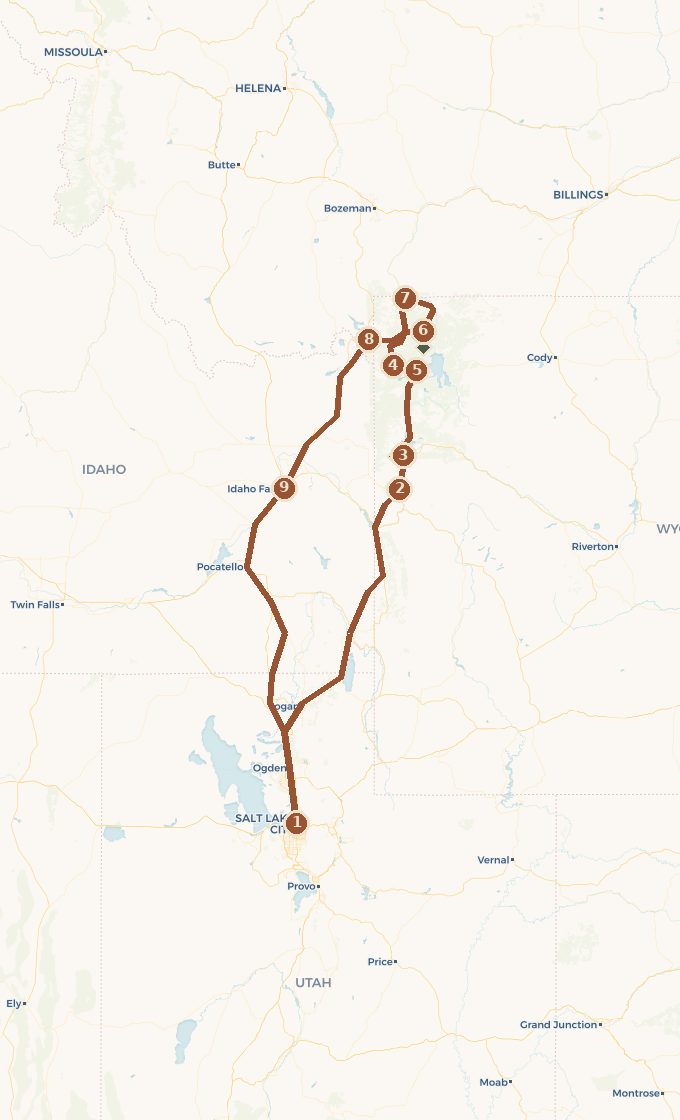 Base map © OpenStreetMap · © CARTO
 - 1. Salt Lake City
- 2. Jackson Hole
- 3. Jenny Lake et les Teton
- 4. Old Faithful et les bassins de geysers
- 5. West Thumb et le lac Yellowstone
- 6. Le Grand Canyon du Yellowstone
- 7. Mammoth Hot Springs et Lamar
- 8. West Yellowstone
- 9. Idaho Falls, la route du retour
1 stop national park on the route detour
Which way to drive the loop, and how long to spend
You can drive the loop in either direction, but one tells the story better than the other. From Salt Lake City, two roads head north: the Mormon valleys route through Jackson to the east, and the Idaho plains route through West Yellowstone to the west. Take them east first and then west, and the story builds. Do it backward, and it loses momentum.
So we drive clockwise, and we stand by it. Going up through Star Valley puts the Tetons on stage first. These stark mountains prepare your eye before the geothermal country. Yellowstone becomes the main event, revealed from south to north, geyser after geyser, until Lamar Valley wildlife provides the emotional high point one morning at the very end. We then leave through the west and head back down through Idaho. The agricultural plains provide a logical decompression after ten intense days, not a failed opening act. Reverse the route and you'd see Yellowstone before the Tetons and finish among potato fields. The better drama is this way.
As for timing, plan on eight to ten full days. That's the minimum for these two parks. Yellowstone's Grand Loop Road alone traces a 155-mile figure eight, and you don't just pass through this park. You live in it for a few days. In eight days, the loop works if you keep the nights tight. In ten, it has room to breathe, with two wildlife mornings instead of one. Beginners often make the mistake of counting miles. Here, everything looks close on the map and moves slowly on the ground, bison traffic included.
Act I. Salt Lake City and the Mormon valleys route
We pick up the car in Salt Lake City, backed by its great salt lake and the wall of the Wasatch Mountains. The city deserves half a day to get over jet lag: Temple Square and its Mormon geometry, a third-wave coffee shop, and one last big-box store before the parks. This is the trip's logistics base, not the trip itself.
It really begins when we take US 89 northeast. We leave the metro area, follow the lake for a while, then the road sinks into Star Valley, a long green corridor between two ridges where Mormon farms placed their barns and herds in the 19th century. Driving is easy, the landscape grows emptier, and you feel the elevation rising without thinking about it. Allow the day to reach Jackson: roughly five hours of driving, plus stops. This is the warm-up, the moment you realize you've really left the city behind.
Act II. Jackson and the Tetons, mountains without foothills
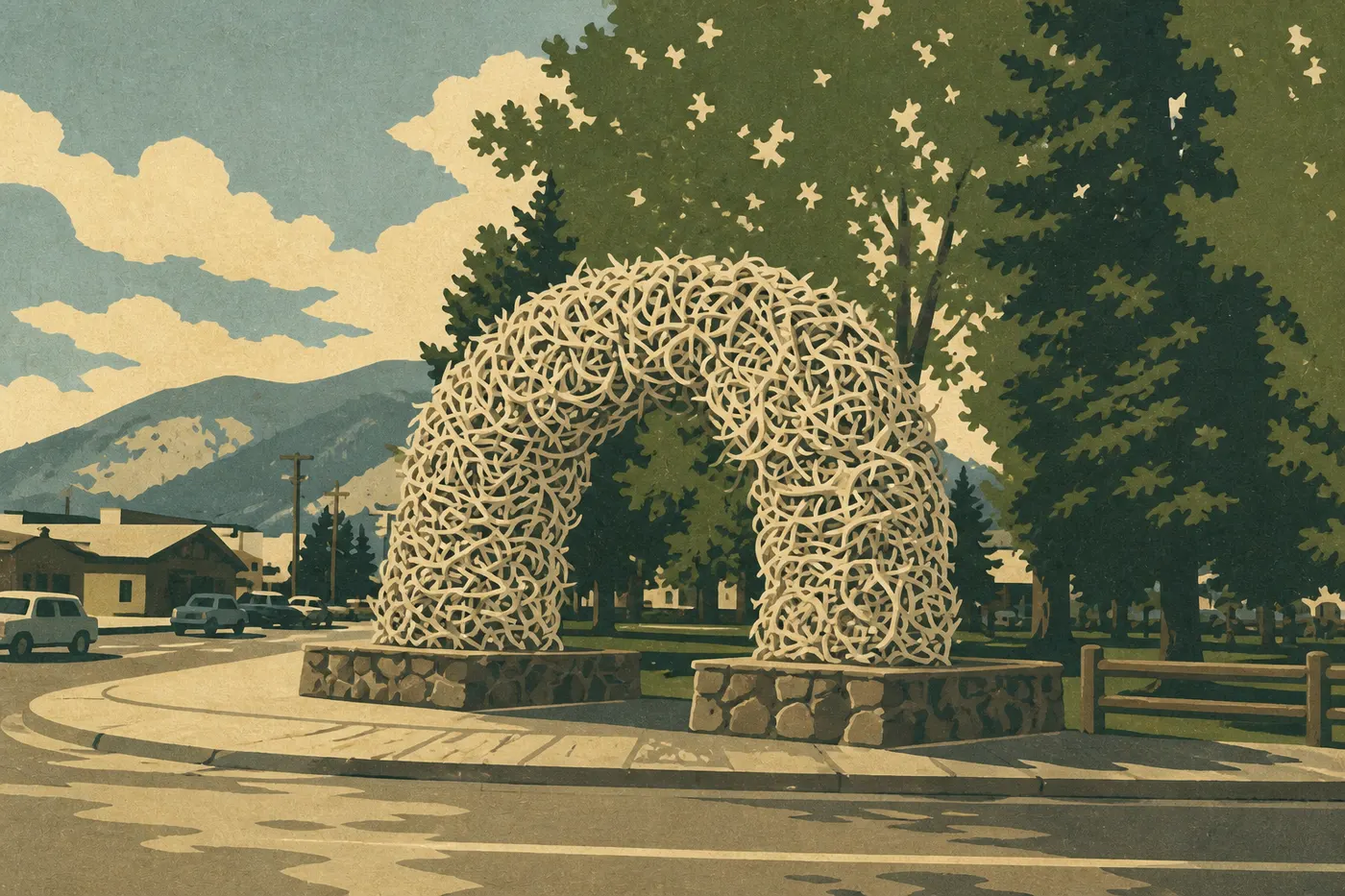
Jackson welcomes travelers beneath four elk-antler arches, set at the corners of its central square and made from the antlers deer shed every winter in the nearby refuge. This small Western town plays its part without overdoing it: boardwalks, saloons, galleries. You sleep there, eat there, gear up, then head north, because the real show is only minutes away.
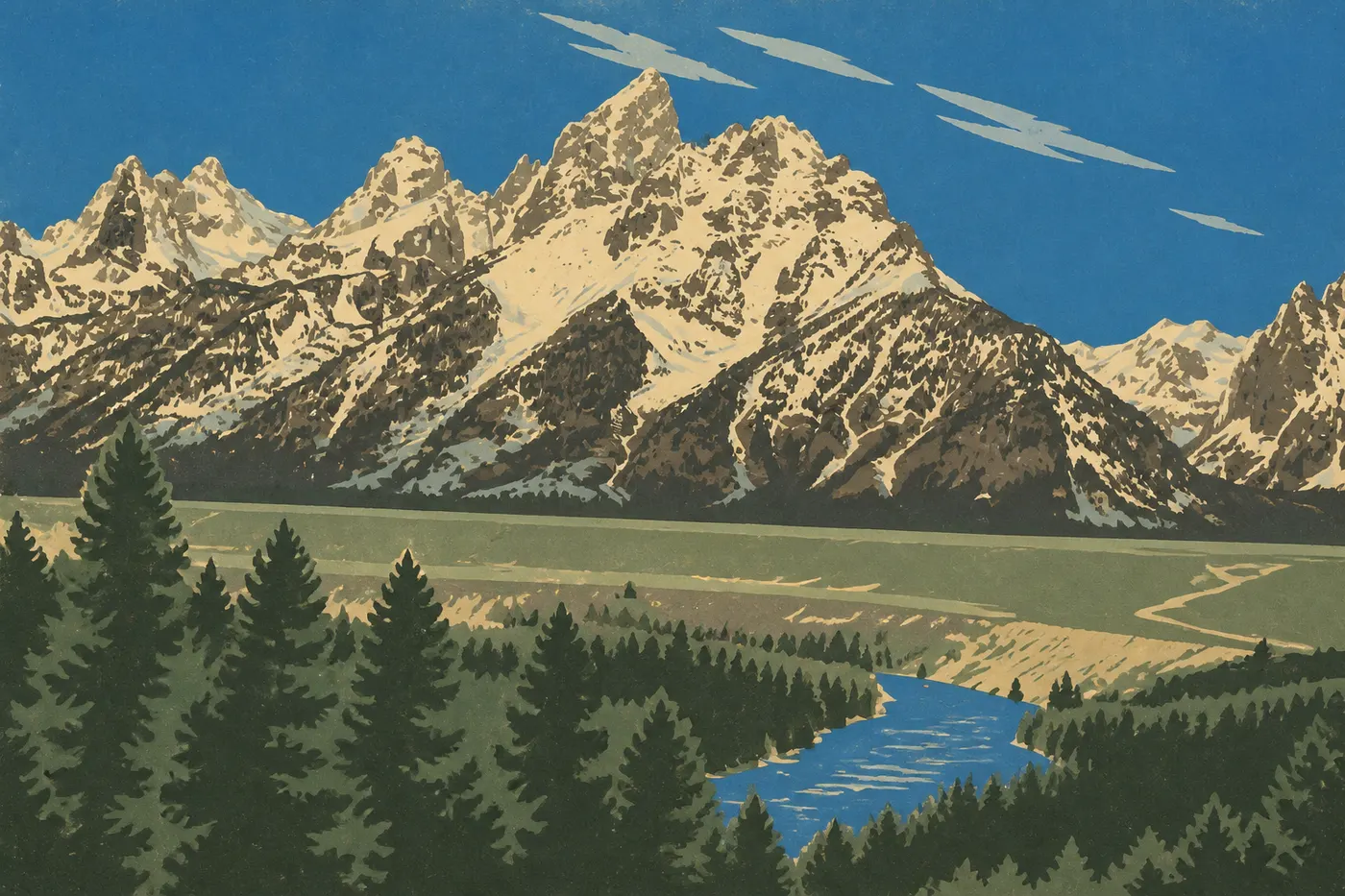
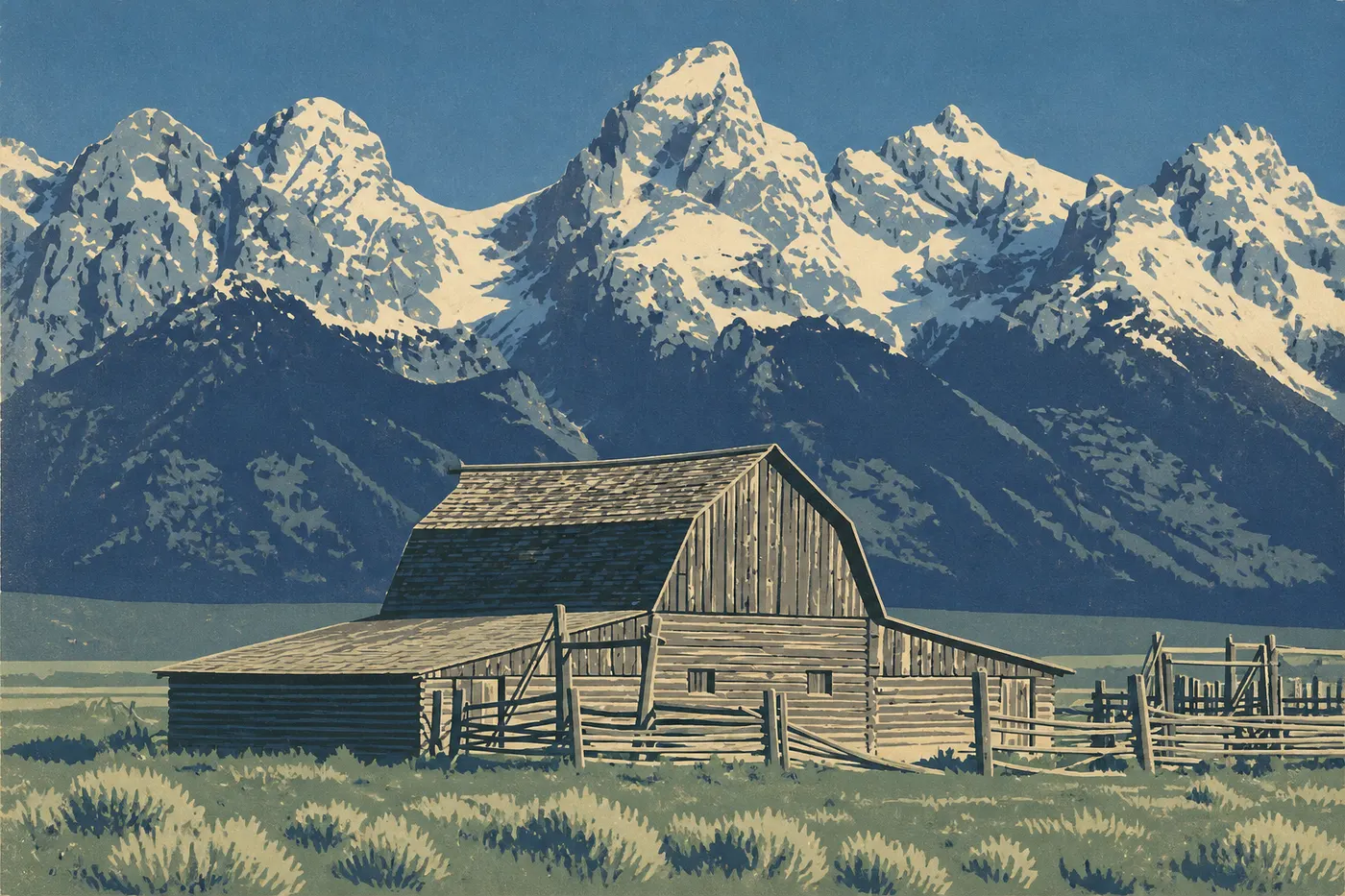
The Tetons have no foothills. Where most ranges rise in stages, this one bursts straight out of Jackson Hole, more than 6,500 feet of gray granite rising above a plain already 6,500 feet above sea level. The summit, Grand Teton, reaches nearly 13,780 feet. The name comes from French trappers, who saw in these three peaks an anatomy they were missing. At their base, the Snake River winds through sagebrush, and Snake River Overlook frames the exact photograph Ansel Adams made famous. A little farther on, the barns of Mormon Row set their gray wood against the mountains, remnants of settlers who plowed this unforgiving valley.
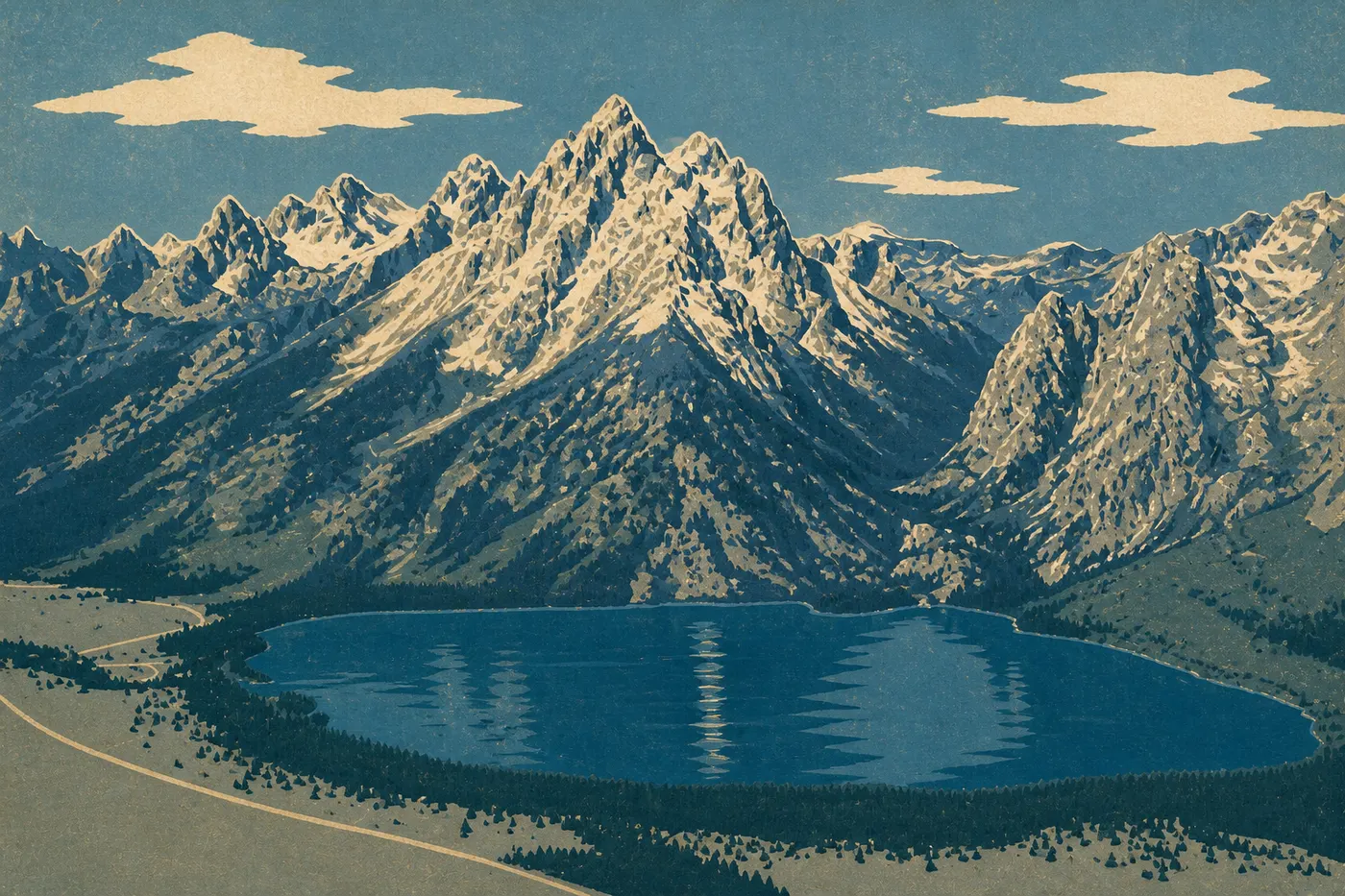
The heart of the park is Jenny Lake, a glacial lake tucked beneath the cliffs. A shuttle boat crosses the water and drops you at the start of a short hike to Hidden Falls and Inspiration Point. Otherwise, walk around the lake or settle for the east shore, where the Tetons reflect without a ripple in the early morning. Grand Teton takes a full day to see, two if you're hiking. Take the second day. Most travelers race through this park to reach Yellowstone, and they're missing the point.
Act III. Southern Yellowstone: geysers, Old Faithful, and the lake
We cross the South Entrance, and the ground changes character. Yellowstone sits on a volcanic caldera where the Earth's crust is only 1.2 to 3.1 miles thick. That's where its 500 geysers come from, along with two-thirds of all the geysers on the planet, its hot springs, and its mud pots. The park is an open geology textbook, and it steams everywhere.
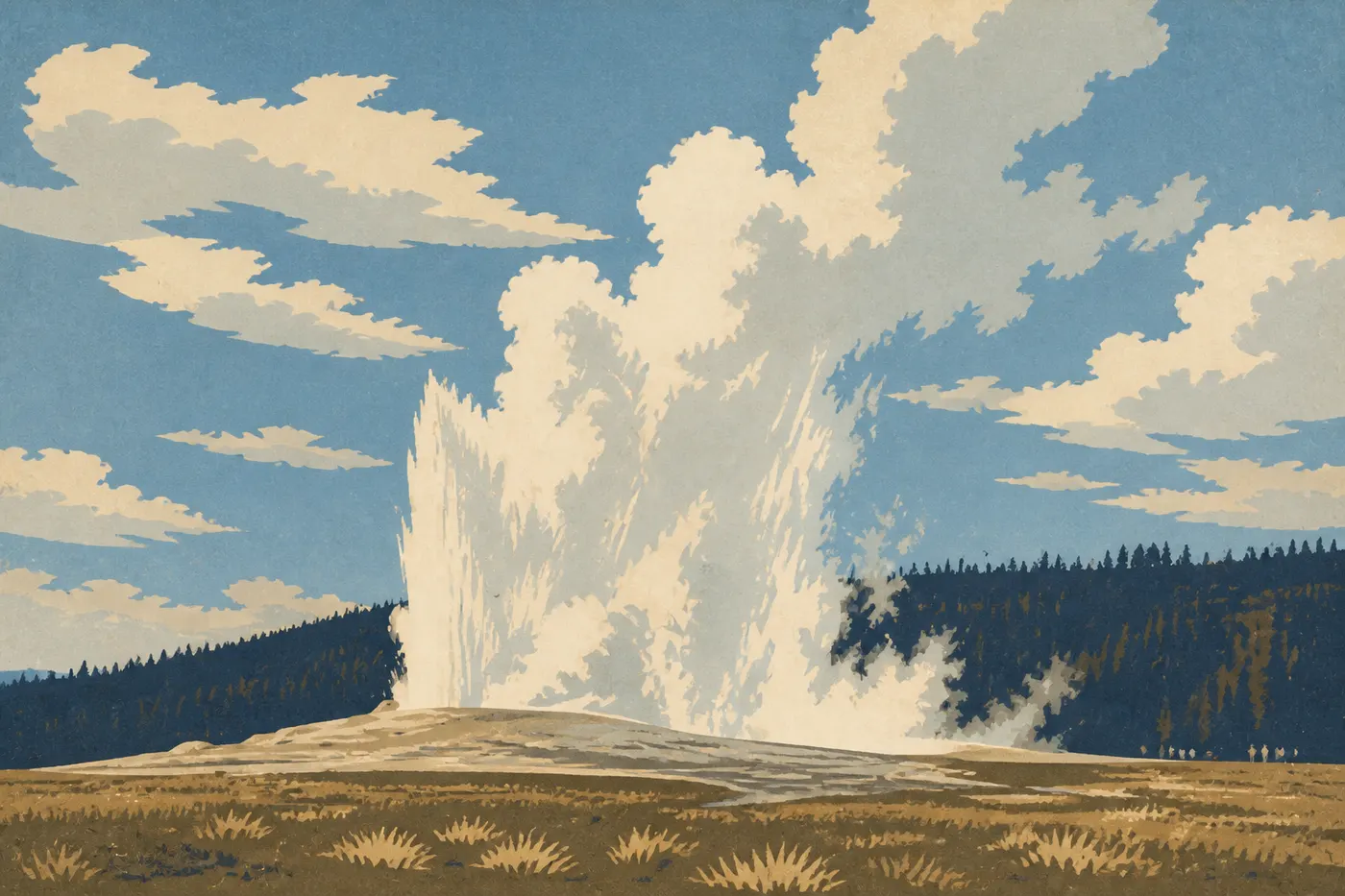
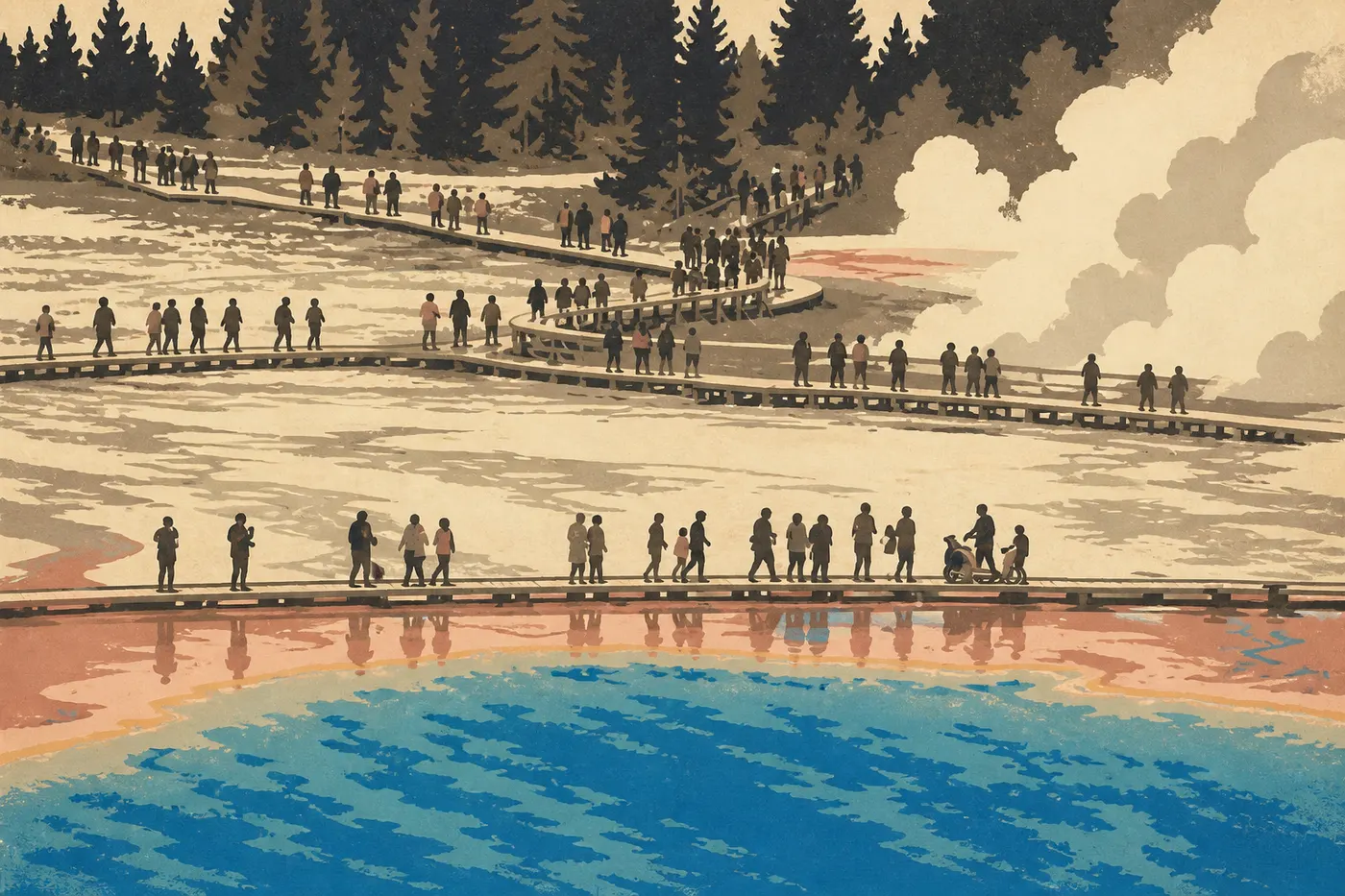
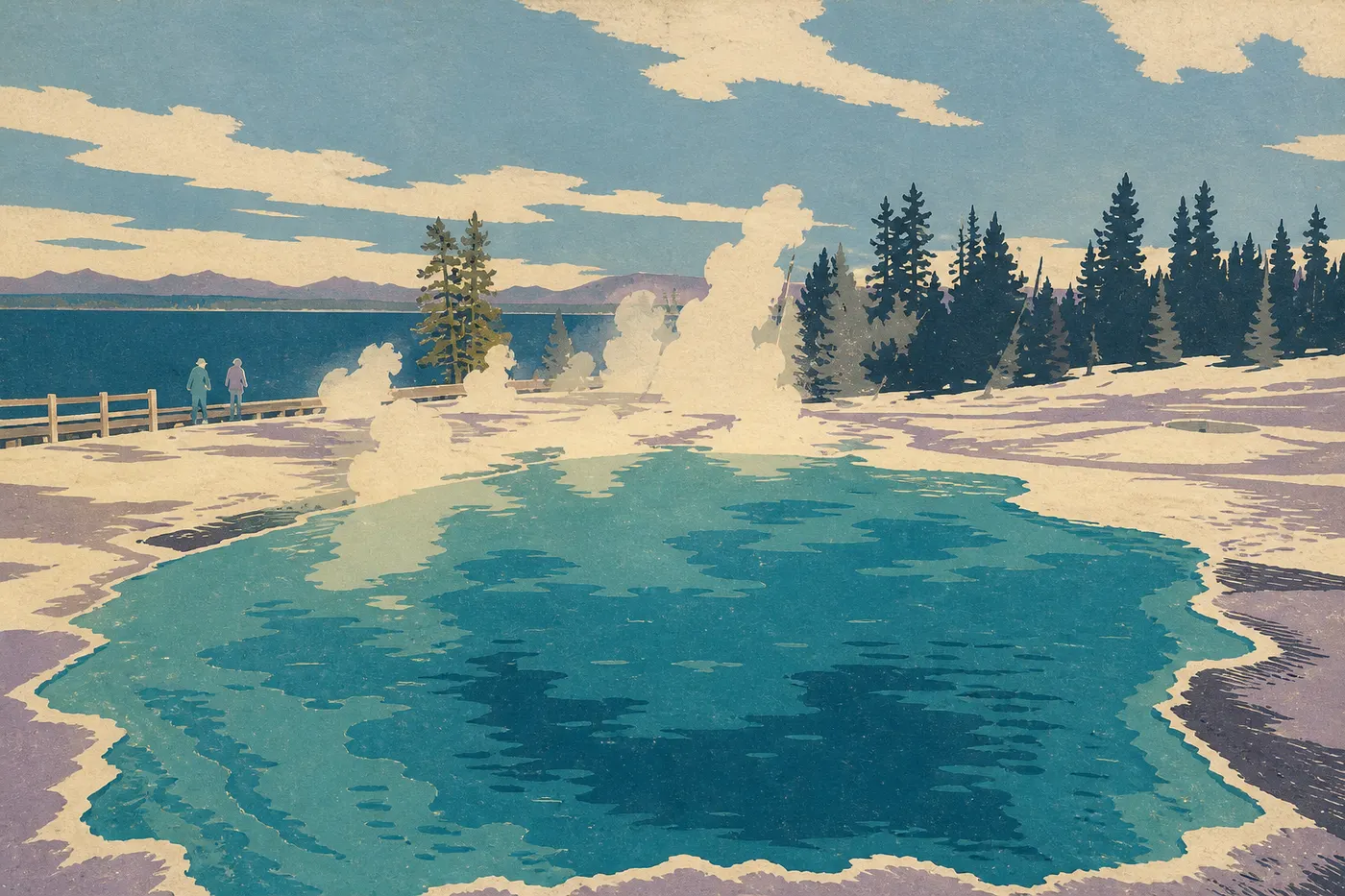
Old Faithful leads off, and although it's neither the tallest nor the biggest, it's the most dependable. It shoots a column of boiling water about 98 feet high every hour and a half, give or take 15 minutes, and rangers post the expected time of the next eruption. Around it, the Upper Geyser Basin packs the world's highest concentration of geysers into a few miles of boardwalks. A little farther north, don't miss Grand Prismatic Spring, the largest hot spring in the United States. It's 328 feet across, and its orange and green rings come from mats of bacteria, each thriving at its own temperature. You can see it at ground level from the Midway Geyser Basin boardwalks, but its colors really come together from the Fairy Falls overlook, a little higher up.
Then the road reaches Yellowstone Lake, called Yellowstone Lake on the signs, the largest high-elevation body of water in North America, sitting above 7,500 feet. At West Thumb, a geothermal basin pours blue pools right along the shore: hot springs a few steps from an icy lake, one of the park's sharpest contrasts. This is where we catch our breath, walk along the water, and let the first day of steam settle.
Act IV. The northern loop: the canyon, Mammoth, and Lamar Valley
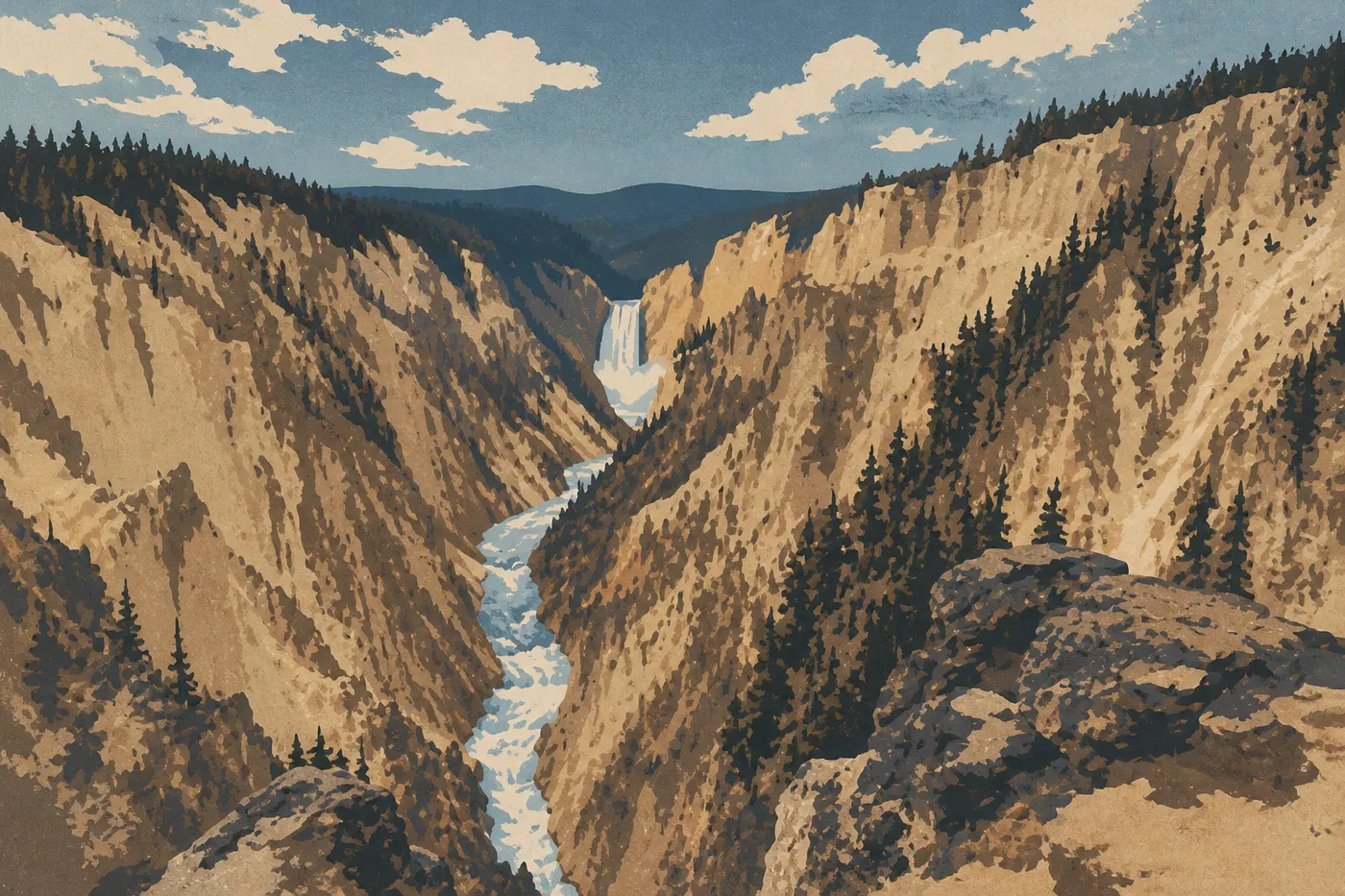
The northern half of the figure eight builds steadily. First comes the Grand Canyon of the Yellowstone, a cut of yellow, ocher, and pink rock carved by the river into altered rhyolite. These walls gave the park its name, the "yellow stone." The Lower Falls plunge 308 feet, almost twice the height of Niagara Falls, and Artist Point frames them exactly as painter Thomas Moran captured them in 1871, in a painting that helped persuade Congress to protect the place.
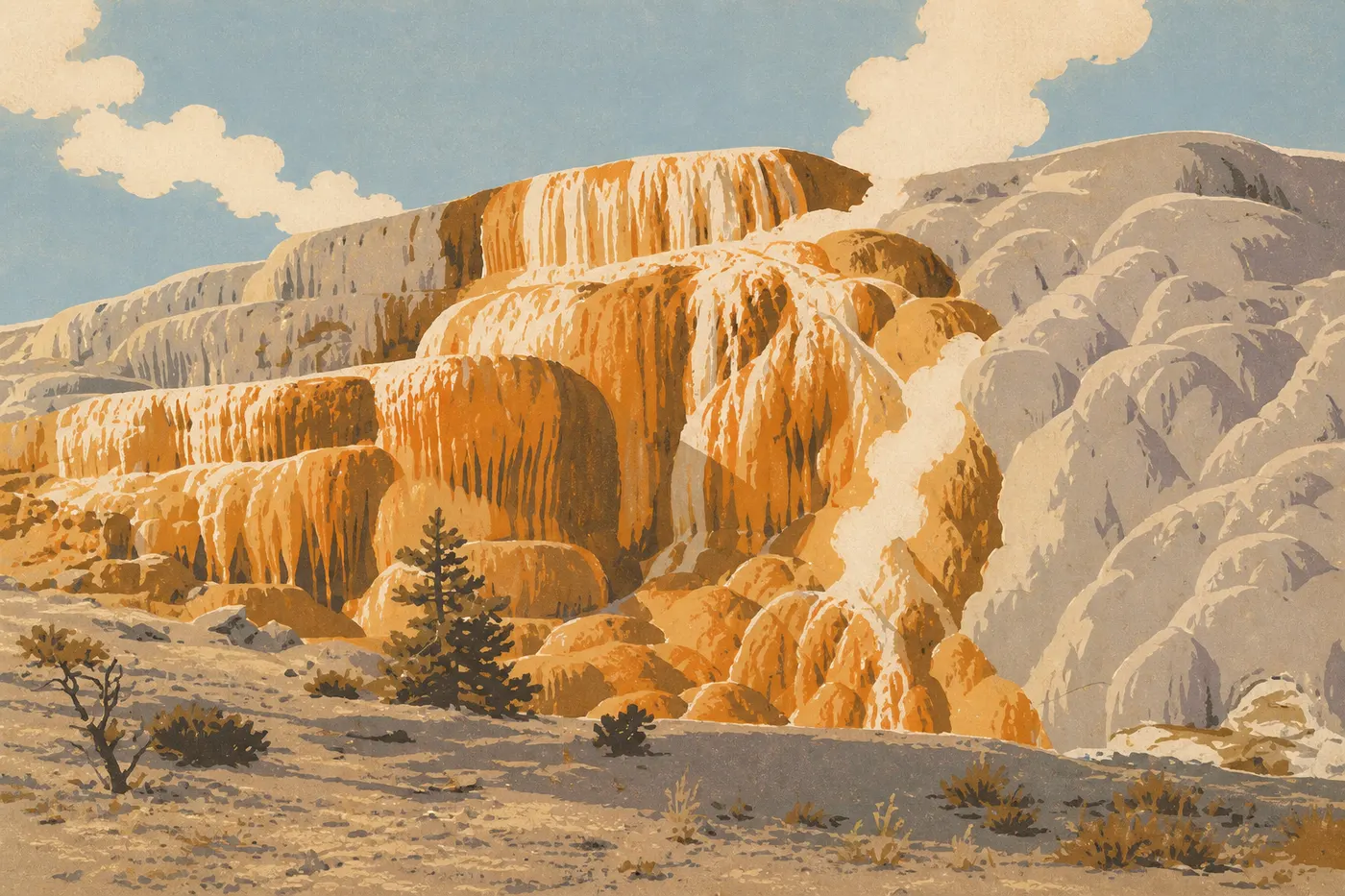
Farther north, Mammoth Hot Springs stacks up its travertine terraces, white limestone deposited by hot water in steps and constantly reshaped. A spring flowing this year may be dry next year, and the boardwalk does its best to follow this changing landscape. This is also the park's historic headquarters, with buildings from the old military fort and elk grazing the lawns as if nothing were unusual.
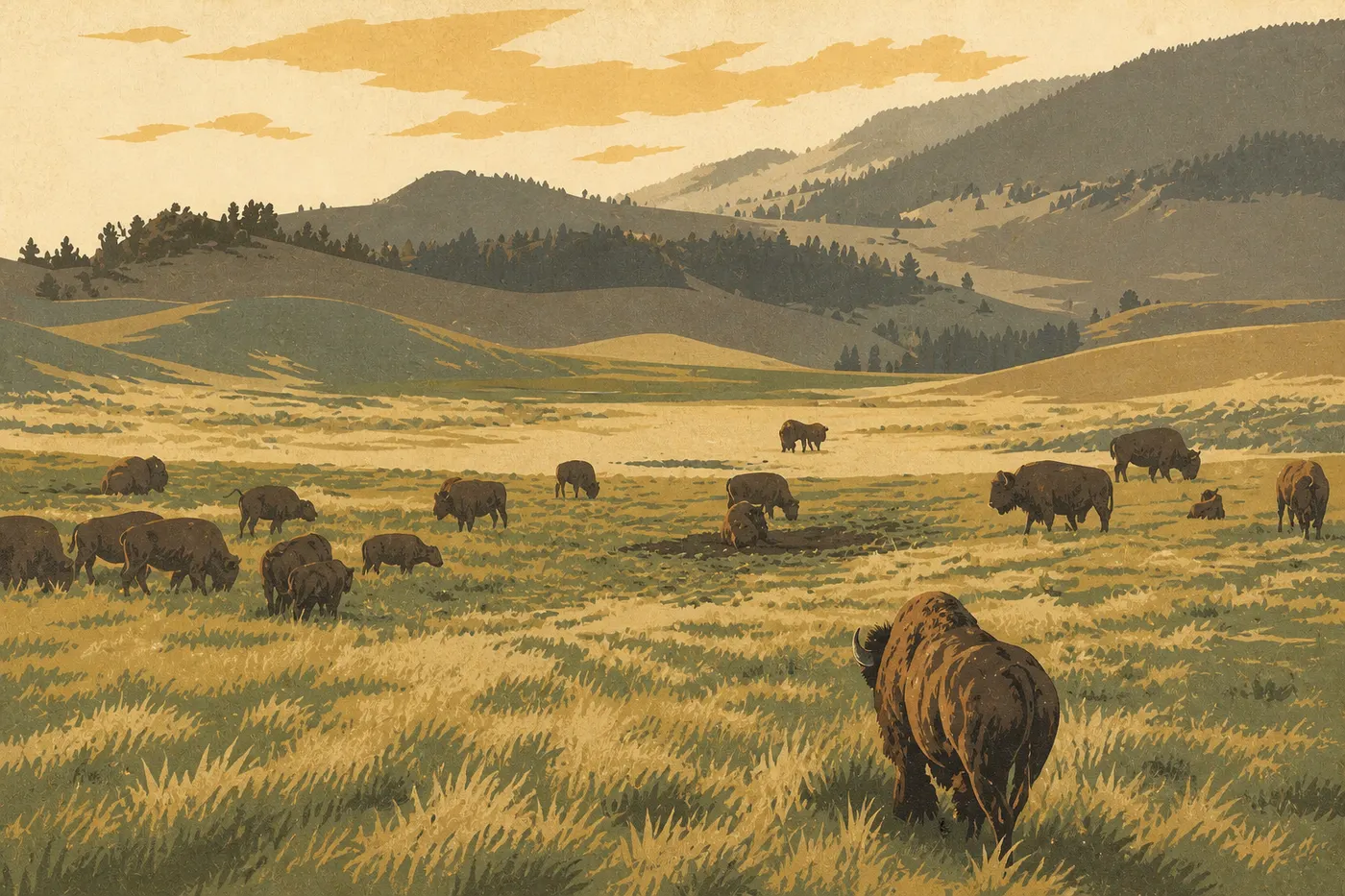
Then comes the northern highlight, one you need to earn by getting up early: Lamar Valley, in the northeast corner, nicknamed the American Serengeti. At sunrise and dusk, its broad meadows fill with herds of bison and elk, and sometimes bears or wolves. The wolves were reintroduced to the park in 1995 after 70 years away. We pull onto a shoulder, take out the binoculars, and whisper. This is the moment nobody forgets.
Act V. The western exit and the return through Idaho
We leave Yellowstone through the west, at West Yellowstone, a gateway town entirely oriented toward the park. It's the right place to return the rented bear spray, fill the tank, and buy postcards. Then US 20 runs south through Idaho, and the scenery empties out all at once: lava plateaus, potato fields, silos, the agricultural West the trip hadn't shown us yet.
Idaho Falls makes a convenient stop along the way, with its landscaped falls on the Snake River, the same river we watched wind past the Tetons 621 miles earlier. From there, the road reaches Salt Lake City in half a day. This final stretch isn't spectacular, and that's fine. After ten days of geysers and bison, the back seat is asleep, and we replay the trip backward in our heads. The loop closes where it began.
The real wildlife
Yellowstone and Grand Teton aren't zoos, and that's their whole value. The animals live here, and we're only guests. Bison appear everywhere, often blocking the road. Elk graze right in the villages. Black bears and grizzlies are most often seen in spring and along the forest edge. For big wildlife, two places beat all the rest: Lamar Valley in the northeast and Hayden Valley in the center, at dawn or dusk, binoculars around your neck.
The distance rule isn't a courtesy. It's a survival law: at least 100 yards from bears and wolves, and 25 yards from bison, elk, and everything else. Bison, docile-looking as they are, injure more visitors every year than bears do. They run three times faster than a person and charge without warning. Never close the distance for a photo.
As for bears, bear spray is a hiker's life insurance. You can't take it on a plane, so rent it in West Yellowstone or Jackson and return it when you leave. Keep it accessible, not buried in your pack, learn how to use it before your first hike, and make noise on trails so you never surprise an animal.
Book ahead, or sleep outside
Lodging is the real puzzle on this loop. The lodges and campgrounds inside the parks, run by concessioners, open reservations about a year ahead, and the most iconic places, such as Old Faithful Inn with its log frame, fill within days of opening. If you want a night inside the park, lock in the date 365 days out, without hesitation.
When there's no room inside, we fall back on the gateway towns, and geography decides: West Yellowstone to the west, Gardiner at the North Entrance, Cody to the east, and Jackson to the south for the Teton section. Each adds driving morning and evening, but offers more choice and often better prices. A proven strategy is to sleep two or three nights south, around Jackson, for the Tetons and the start of Yellowstone, then move one or two nights north, around Gardiner, for the canyon, Mammoth, and Lamar. That way, you don't cross the whole park every day.
Then there's camping, a real solution here rather than a consolation prize. The parks have several campgrounds. Some take reservations, while others are first-come, first-served in the morning. A well-pitched tent at Lamar or near the lake puts you there at dawn, before the buses have disgorged their crowds. Just check the food-storage rules. In bear country, anything that smells goes in a vehicle or an approved food locker.
When to go, and what it costs
This loop has a short season, dictated by snow and elevation. Most of Yellowstone's interior roads close from early November through late April or May, and the full loop is truly practical only from late May to early October. June through September is the real window. We prefer mid-September: summer crowds recede, nights turn cool, and elk bugling echoes through the valleys. In high summer, July and August offer every road open, but also full parking lots by 9 a.m. and bison traffic at any hour. Winter closes most of the park to cars. Only the road from Mammoth to Cooke City stays plowed, and travel is limited to guided snowcoach tours.
Whatever the season, elevation dictates your wardrobe. You're around 6,500 feet everywhere, and a summer night can drop close to freezing. Bring layers, even in July.
As for the budget, the biggest expense is still the car, rental plus gas, on a loop of about 932 miles. Lodging comes next in high season, especially inside park lodges. Booking early is the best way to save, and camping cuts the bill in half. Watch for one cost specific to these two parks: since 2026, Yellowstone and Grand Teton have charged foreign visitors a surcharge. Buying the America the Beautiful pass gets around it and also covers all the country's national parks. These are rough figures. Build your exact budget from recent quotes, since rates change from one season to the next.
The national parks on this road trip
Variations on the loop
Variation from Denver, two extra days. Landing in Colorado instead of Utah? From Denver, allow two extra days of driving to reach the Tetons through Wyoming's open country, and the same on the way back. The loop gets longer but keeps its logic: you still arrive from the south and leave through the west.
Extension to Glacier, all the way north. If time isn't an issue, continue from Yellowstone into Montana and Glacier, with its glacial lakes and Going-to-the-Sun Road, a full day's drive north of Mammoth. That's another trip grafted onto this one, best saved for longer itineraries.
Condensed version, eight days. Don't have ten days? Keep the entire loop by combining the lake and geyser days, and settle for one wildlife morning in Lamar. The story still works. You lose rest, not stops.
Frequently asked questions
How long do you need to visit Yellowstone and Grand Teton?
Allow eight to ten days for the full loop from Salt Lake City. That's the minimum for these two parks. Yellowstone's Grand Loop Road alone traces a 155-mile figure eight, and Grand Teton deserves a full day by itself.
Which direction should you drive the loop from Salt Lake City?
Clockwise: head up through Jackson and the Tetons, circle Yellowstone from south to north, exit to the west, and return through Idaho. That keeps the mountains as the opening act, Lamar wildlife as the high point, and the plains as decompression.
What's the best time of year for this road trip?
Late May to early October, when all the interior roads are clear. June through September is ideal, with a preference for mid-September: fewer people, elk bugling, and the park still open. Winter closes most of Yellowstone to cars.
Where should you stay to visit both parks?
Inside the parks if you book a year ahead. Otherwise, use the gateway towns: Jackson to the south for the Tetons, and West Yellowstone or Gardiner to the north for Yellowstone. Two bases, one south and one north, keep you from crossing the park every day.
Do you need bear spray?
Yes, if you're hiking. You can't take it on a plane, so rent it in West Yellowstone or Jackson, keep it accessible, and return it when you leave. Follow the distance rules too: 100 yards from bears and wolves, 25 yards from bison. Then you're set.