

bringing food into the USA what to declare: What to Pack
Learn which foods to declare when entering the United States, how ingredients and origin affect admission, and how to prepare your bags for inspection.
By David Sanchez · · 8 min read
A sandwich for the flight, cheese as a gift, or a few supplies for visiting the parks: food also goes through inspection when you enter the United States. If you're searching for bringing food into the USA what to declare, the rule is simple: all food must be declared, even items that seem harmless. Whether it is allowed in depends on factors including its ingredients, origin, and processing, not just its packaging.
What food must you declare when entering the USA?
Declare every food item you are carrying, including cookies, food gifts, and leftovers from your in-flight meal. This requirement applies to food in your carry-on, checked bags, or vehicle when entering by land.
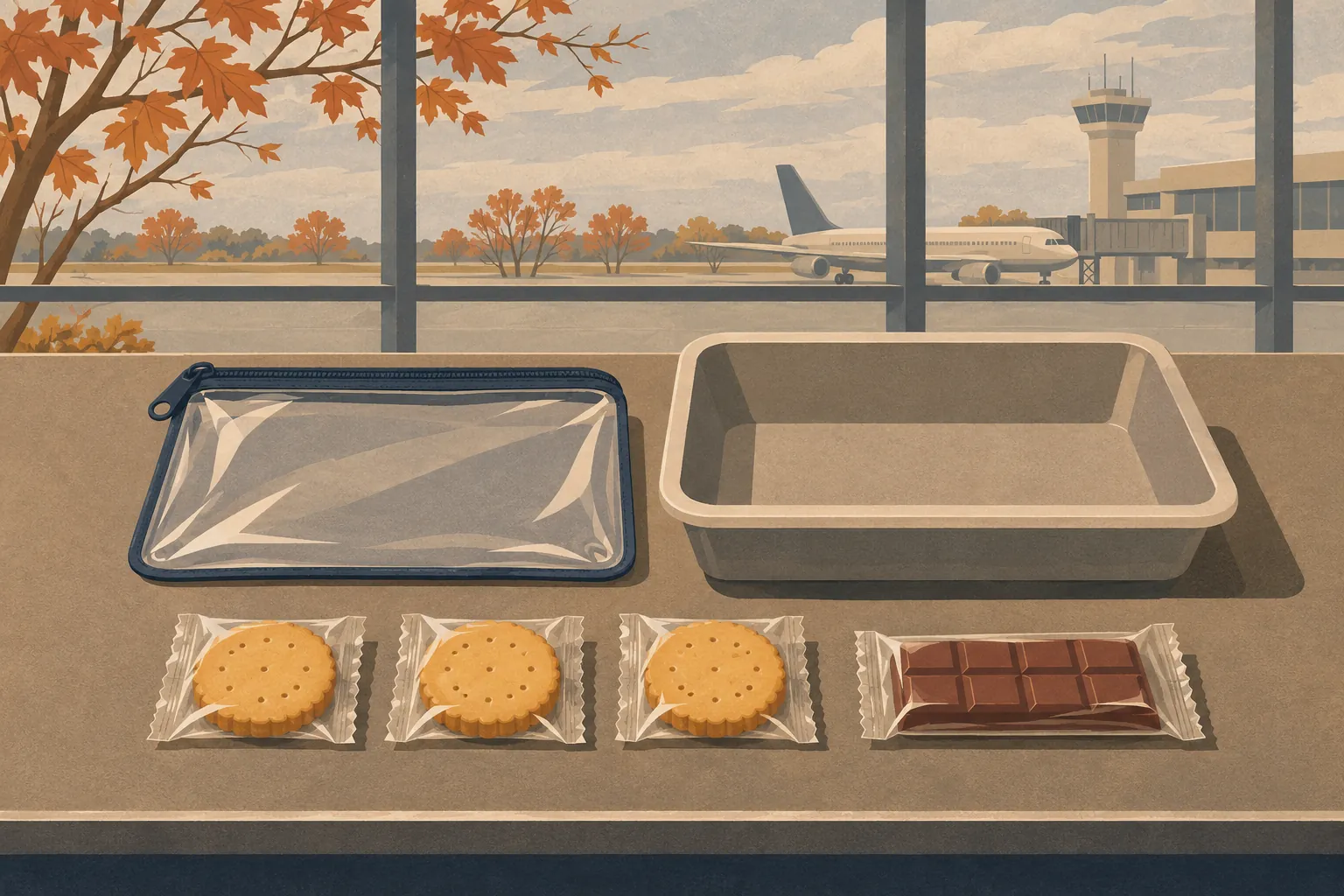
The official CBP guidance makes no exception for a small snack. Even a product that is usually allowed must be declared. Agricultural restrictions can change, so check your product before you leave.
Answer the questions in the arrival process you are directed to use, then tell the officer about your food before inspection. If a question seems unclear, explain that you are carrying food and show it to the officer.
Declaring food does not mean it will be allowed in. Inspectors check the products and decide whether they can enter. Neither sealed packaging nor proof of purchase replaces this inspection.
Your ESTA application and any circumstances requiring a U.S. visa concern your travel authorization; they do not determine whether your food can enter.
Which foods can you bring based on their ingredients and origin?
The guidance below reflects CBP and USDA APHIS pages consulted on November 21, 2026. It applies to food travelers bring with them for personal use. Start with the ingredients: plain pasta and meat-filled pasta raise different questions.
| Food category | Guidance from the authorities | Origin and conditions to check |
|---|---|---|
| Meat, dry sausage, pâté | Restrictions depend on the species, animal diseases, and processing | Country or region of origin; vacuum sealing alone is not enough |
| Cheese | Solid hard or soft cheeses containing no meat and not pouring like a liquid are allowed by APHIS regardless of origin | Distinguish solid cheese from liquid preparations and meat fillings |
| Milk and infant formula | Conditions depend on origin; special provisions apply to young children and certain powdered products | Quantity, labeling, origin, and ingredients |
| Eggs and foods containing eggs | Restrictions depend on avian diseases; exceptions relate in particular to cooking | Origin, thorough cooking, and the form of the product |
| Fresh or frozen fruits and vegetables | Almost all are prohibited, even if cut up or served on the plane | Do not assume a small quantity will be allowed |
| Canned fruits and vegetables | Commercially canned products are allowed if declared; home-canned products are prohibited | Check whether the product is a prepared dish containing other ingredients |
| Dried fruit | Most is subject to specific requirements; some types, including raisins, dates, and figs, are generally allowed | Identify the exact fruit and how it was prepared |
| Nuts and spices | Nuts that have been roasted, cooked, or ground are among those allowed; many dried spices are allowed, with exceptions | Check raw nuts, shells, seeds, and citrus leaves |
| Bread, cookies, chocolate | Generally allowed according to CBP | Check fillings and any special ingredients |
Cured meats require extra caution. USDA APHIS explains the restrictions on meat. Certain dry-cured hams and salamis from regions of France, Germany, Italy, and Spain cannot enter in travelers' luggage. An exception for certain commercially sterilized products does not mean that every canned or vacuum-sealed product is allowed.
Milk and eggs: check the specific category. The USDA guidance on dairy products and eggs includes provisions for small quantities of liquid milk for infants or young children, sufficient for several days. Certain products containing powdered milk must be properly labeled and carried in small quantities. These provisions do not automatically exempt a child's meal containing meat.
Plant products: freezing does not make a prohibited item acceptable. The guidance on fruits and vegetables specifically distinguishes fresh, frozen, dried, and canned products. For nuts and spices, also identify how they were processed and which plant parts they contain.
Most seafood is not regulated by APHIS. That does not amount to blanket permission to import it: other requirements may apply. Breading containing milk or eggs, for example, requires checking with APHIS.
Carry-on bags, checked bags, and the border: three separate checks
Entry into the United States. Agricultural inspections target pests and diseases that could affect plants or animals. Putting food in a checked bag does not change its entry requirements. A product you can take on a plane may still be refused at the border.
Airport security. Separately check the security rules at your departure and connecting airports, especially for liquids, sauces, and spreadable foods. Do not assume a rule allowing infant milk through security also applies to U.S. agricultural requirements.
Airline requirements. Also ask your airline about the containers and cooling equipment you plan to use. Our page on choosing an airline for a trip to the United States can help you plan this part of your journey. Airline approval does not guarantee that the food will be allowed into the country.
We recommend checking each set of requirements separately before packing. This helps you avoid discovering at inspection that an allowance applied to only one stage of your trip.
Homemade food or uncertain origin: how to prepare for inspection
Keep original packaging and receipts: APHIS recommends them as proof of origin. Pack your food together so you can easily show it to inspectors.
For homemade food, write down the ingredients and their origins, where known. This list helps explain what the food contains, but it does not replace any documentation that may be required. Home-canned fruits and vegetables remain prohibited.
The country where you bought a product does not always establish its relevant origin. Check the information available on the product and its ingredients. Buying something in Canada does not exempt it from inspection when you enter the United States.
If you do not know something, say so. For questions about a specific product, contact the appropriate plant or animal product team listed on the APHIS page before departure.
According to CBP, you can surrender declared personal food supplies that are prohibited at the border and continue your trip. APHIS states that fully declaring agricultural products carries no penalty, even if they are refused entry. This guidance applies to agricultural inspection and does not cover other violations.
Failing to declare food, however, can lead to confiscation and penalties. When planning a road trip through the American West, we therefore recommend buying supplies for your stay after you arrive.
Our advice: pack light and buy groceries after arrival
First-time visitors or couples. We would pack a few cookies or some chocolate in clearly identifiable packaging, after checking the fillings. We would leave fresh and frozen fruit at home: almost all are prohibited. We also advise against filling a suitcase with cured meats, whose entry restrictions involve more than simply having vacuum-sealed packaging.
Families with a young child. We would prepare the food needed for the journey and keep the labels. For liquid milk, the provision cited covers small quantities sufficient for several days, without setting a universal allowance. We would check each prepared meal separately, especially if it contains meat, and then check the air travel requirements.
Budget travelers or tent campers. We favor grocery shopping after entering the United States. That way, your meals during your stay will not depend on whether the food you brought is allowed in. You can then plan your camping meals with suitable equipment and storage.
Our approach is straightforward: we would leave behind any everyday food item that cannot be properly identified. For an essential food, we would ask APHIS for a specific answer before departure.
Frequently asked questions
Do you have to declare cookies and chocolate when entering the USA?
Cookies and chocolate must be declared when entering the United States, just like all other food. CBP generally considers them admissible, but their ingredients may affect the inspection. Keep the packaging.
Can you bring vacuum-sealed cheese or dry sausage into the United States?
The rules for bringing vacuum-sealed cheese or dry sausage into the United States differ by product. APHIS allows solid cheeses containing no meat that do not pour like a liquid. Dry sausage falls under meat restrictions; vacuum sealing does not guarantee entry.
Can you keep fruit or a sandwich from the flight to eat after arrival?
If you keep fruit or a sandwich from the flight for after arrival, you must declare it. Almost all fresh fruit is prohibited, even if it was served on the plane. A sandwich must be assessed based on its ingredients.
What happens if a declared food item is refused entry?
A declared food item that is refused entry can be surrendered at the border following the officer's instructions. APHIS states that there is no penalty when all agricultural products are declared, even if they cannot enter. This does not guarantee that the items will be returned to you.