
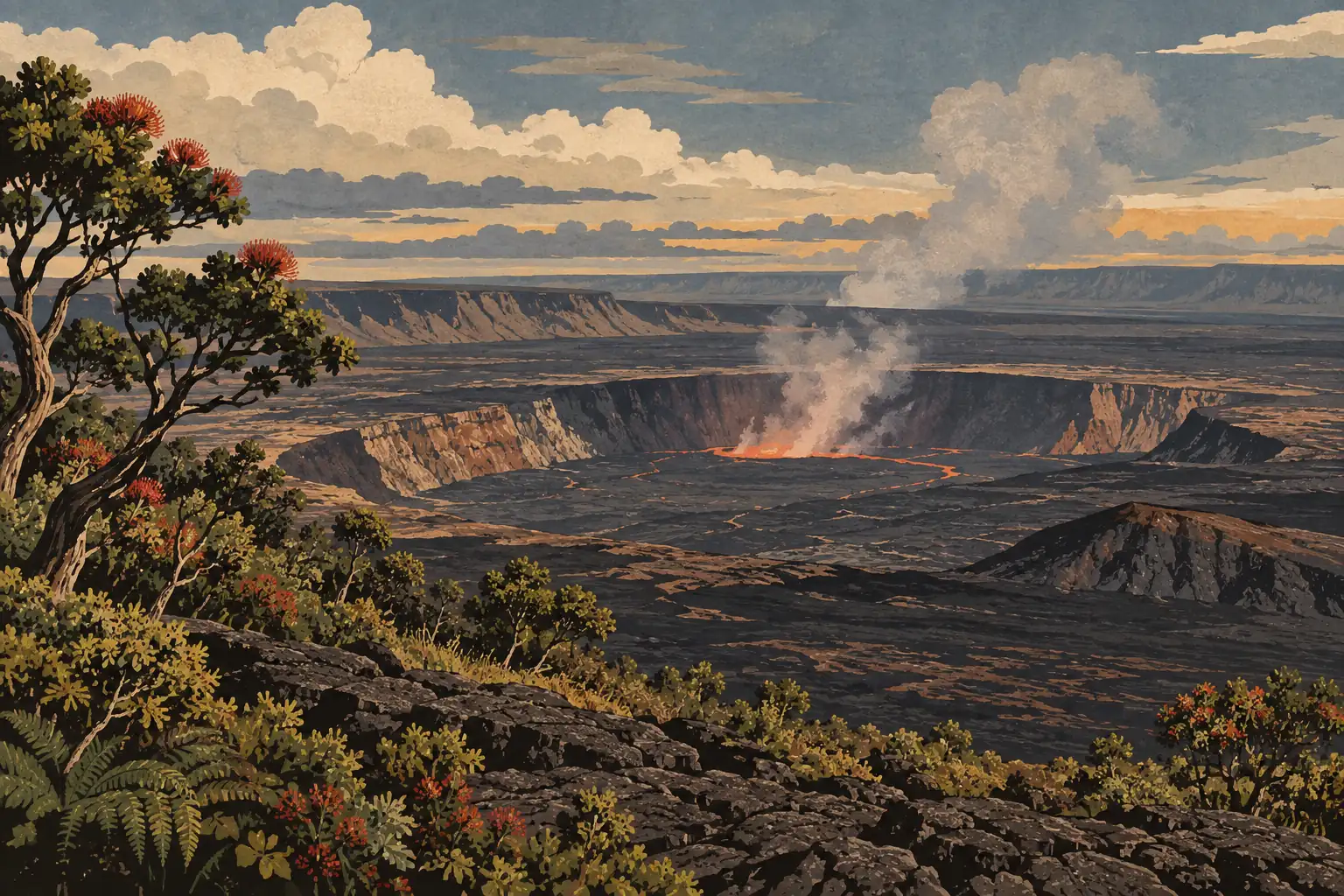
Kīlauea Is Erupting: What It Means for Your Visit
Kīlauea is active again: closed areas, shifting air quality, and an unpredictable rhythm. Here's how to visit Hawaiʻi Volcanoes with peace of mind.
By Erika Müller,
Kīlauea, one of the most active volcanoes on the planet, is currently going through an eruptive phase. If you're planning a trip, that doesn't mean canceling. It means adjusting your visit and being extra careful.
The rangers' first rule is simple. Never cross into closed areas. These boundaries aren't drawn at random. They mark the zones exposed to flying debris, ground collapse, and the most concentrated gases. Staying on the right side of the barriers is the foundation of your safety.
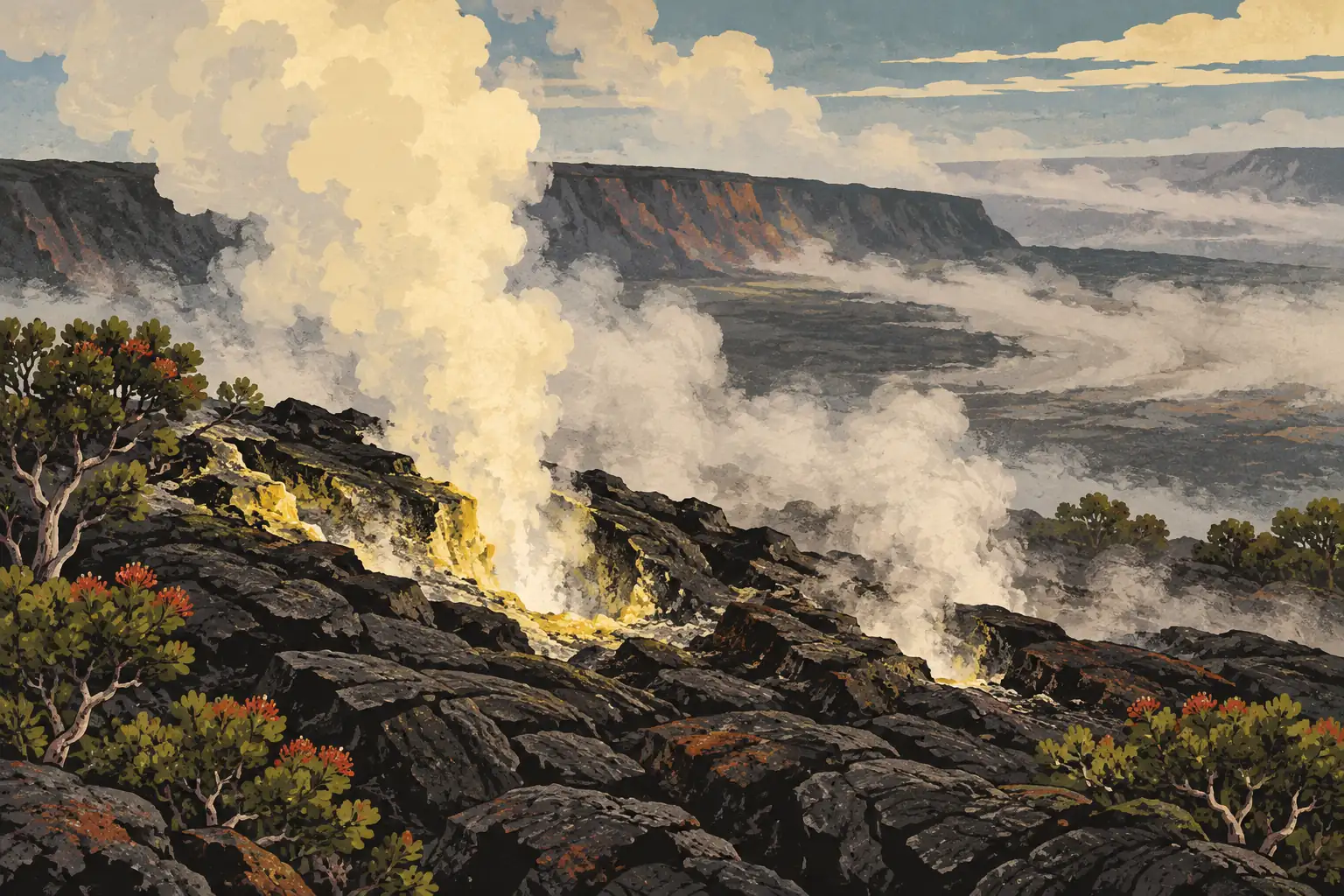
The second thing to watch is air quality. An eruption releases volcanic gases that mix into the park's air. Keep an eye on the bulletins posted on site and follow the day's guidance, especially if you're traveling with young children, older adults, or anyone with respiratory issues.
Kīlauea's timing is worth a closer look. The volcano keeps no schedule. It can come alive for a single morning, then fall silent for weeks before waking up without warning. What that means for you is simple: no one can promise you'll see lava on the day you show up. So plan a flexible itinerary, keep a few time slots open if you can, and check the real state of the activity right before you head to the trails.
This start-and-stop rhythm is also what makes the place so special. You're walking on land that's shaping itself before your eyes, at its own pace.
To plan your trip, lean on our guide to Hawaiʻi Volcanoes, where we cover the access points, trails, and viewpoints. And if you're dreaming of a bigger journey across the islands, check out our road trip itinerary that runs through the park to fit this stop in at the right time.