

Hawaiʻi Volcanoes: The Hōlei Sea Arch Has Collapsed into the Pacific
As of October 1, 2026, the famous Hōlei Sea Arch is gone. Here's what it means for visiting the park's coast.
By Erika Müller,
Bad news if you were hoping to photograph one of the most recognizable shapes along the Hawaiian coast. As of October 1, 2026, the Hōlei Sea Arch has collapsed into the Pacific Ocean. The stone span, carved by the sea over centuries, no longer bridges the water. It gave way and joined the waves at the foot of the cliffs.
If you're planning a trip to Hawaiʻi Volcanoes, it's worth knowing before you go. This iconic coastal viewpoint is gone, and no photo will make up for not seeing it in person. We'd rather give you a heads-up than let you drive out to a landmark that no longer exists.
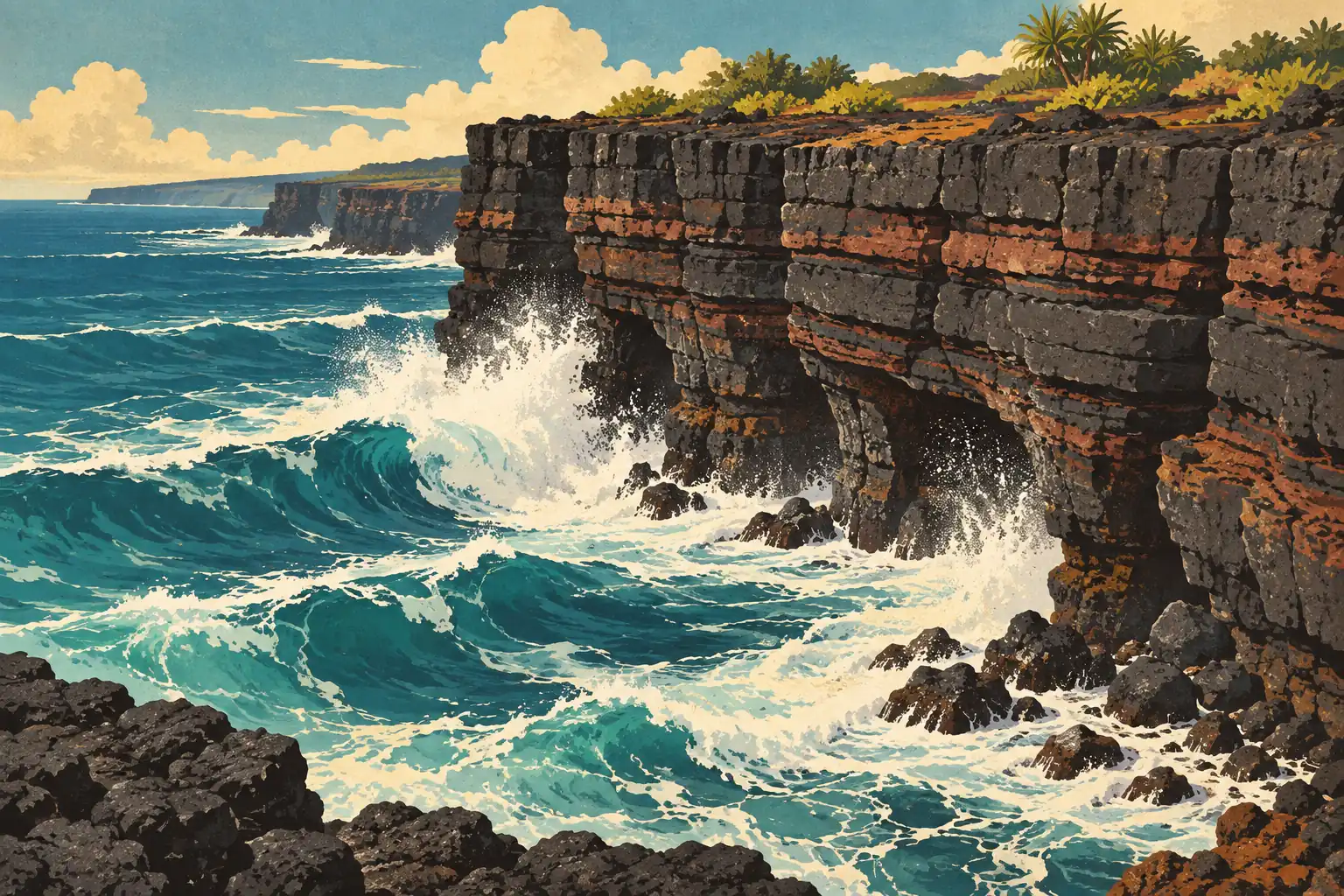
The collapse wasn't a complete surprise. The park's coastline is known for its wild, rugged character, pounded around the clock by the ocean. The rock here is young and volcanic, and the sea shapes it and then takes it back without pause. The Hōlei Sea Arch was the most recent standout formation on this ever-shifting shore, and its fall is a fitting example of a coast that keeps remaking itself.
So should you write off this stretch of coast? Not at all. Chain of Craters Road still drops all the way down to the ocean, and the landscape of hardened lava meeting the open blue is still striking. Just don't build your visit around the Hōlei Sea Arch alone. Plan the drive for the beauty of the whole coastline, not for a single shot.
To map out your days, we cover the rest of the park, from the calderas to the active flows, in our guide to Hawaiʻi Volcanoes. And if you're putting together a bigger trip across the islands, take a look at our road trip itinerary that runs through this park to connect this coast with the other highlights of the island.
One last tip from the field: on this living coastline, respect the barriers and the signs. The lava cliffs can give way without warning, and your safety comes before any photo.